Ukraine's General Staff reports 1,820 Russian losses and 9,757 kamikaze drones in 24 hours
What happened
The Ukrainian General Staff, posting on its Telegram channel @GeneralStaffZSU, published a daily tally at 08:00 on 21 October 2026 covering the previous 24 hours. It reports 1,820 Russian personnel losses, along with 11 tanks, 16 armored combat vehicles, 44 artillery systems, one multiple rocket launcher system, two air defense systems, four ground robotic systems, 407 vehicles, two items of special equipment, and 1,820 drones. The same post records 269 combat clashes. It also states that Russian forces carried out 86 airstrikes using 302 guided aerial bombs, launched 9,757 kamikaze drones, and conducted 2,735 shellings of settlements and troop positions, 13 of them with rocket artillery. These are the Ukrainian side's own figures, presented as an official tally rather than independently verified data.
Context and assessment
The report is a national aggregate rather than a single strike, so its significance lies in the scale it describes and in the activity logged in Kyiv during the same hours. Between 02:25 and 03:43 UTC, Ukrainian air monitoring recorded one and then two or more jet-powered Geran-3 drones, a Shahed variant, over or heading toward Kyiv. This fits the pattern of nighttime waves of long-range drone launches that have targeted the capital. If the figure of 9,757 kamikaze drones in one day is accurate, it would point to a sustained campaign rather than episodic raids. The 302 guided aerial bombs suggest tactical aviation is being used against front-line positions, which the 86 airstrikes reflect. A separate General Staff report on cumulative losses, published at 03:35 UTC, contained no figures in the excerpt, so the daily tally cannot be cross-checked against it. Zelensky's 20 October statement that Russia is on Iran's side in the Iran conflict sits in the same news cycle. It does not bear directly on the tally but shows the political framing Kyiv is emphasizing. Operationally, the mix of drones, glide bombs and artillery suggests Russia is combining deep strikes with attritional fire along the front, although the source does not say where those strikes landed.
Sources and confidence
Only one channel reported this: the Telegram account of the Ukrainian General Staff, which is also the originating official source for the tally. No independent outlet or Russian-side source in the dataset corroborates the figures, so cross-confirmation is absent (source count 1). The score of 8.1 reflects a regular official publisher with a consistent format, offset by single-source status and the fact that the figures are self-reported by a party to the conflict. Confidence would rise with matching figures from independent monitors or aggregators, or with reconciliation against the cumulative loss report. It would fall if corrections were issued or if the personnel and drone counts prove to be a reporting error.
Location
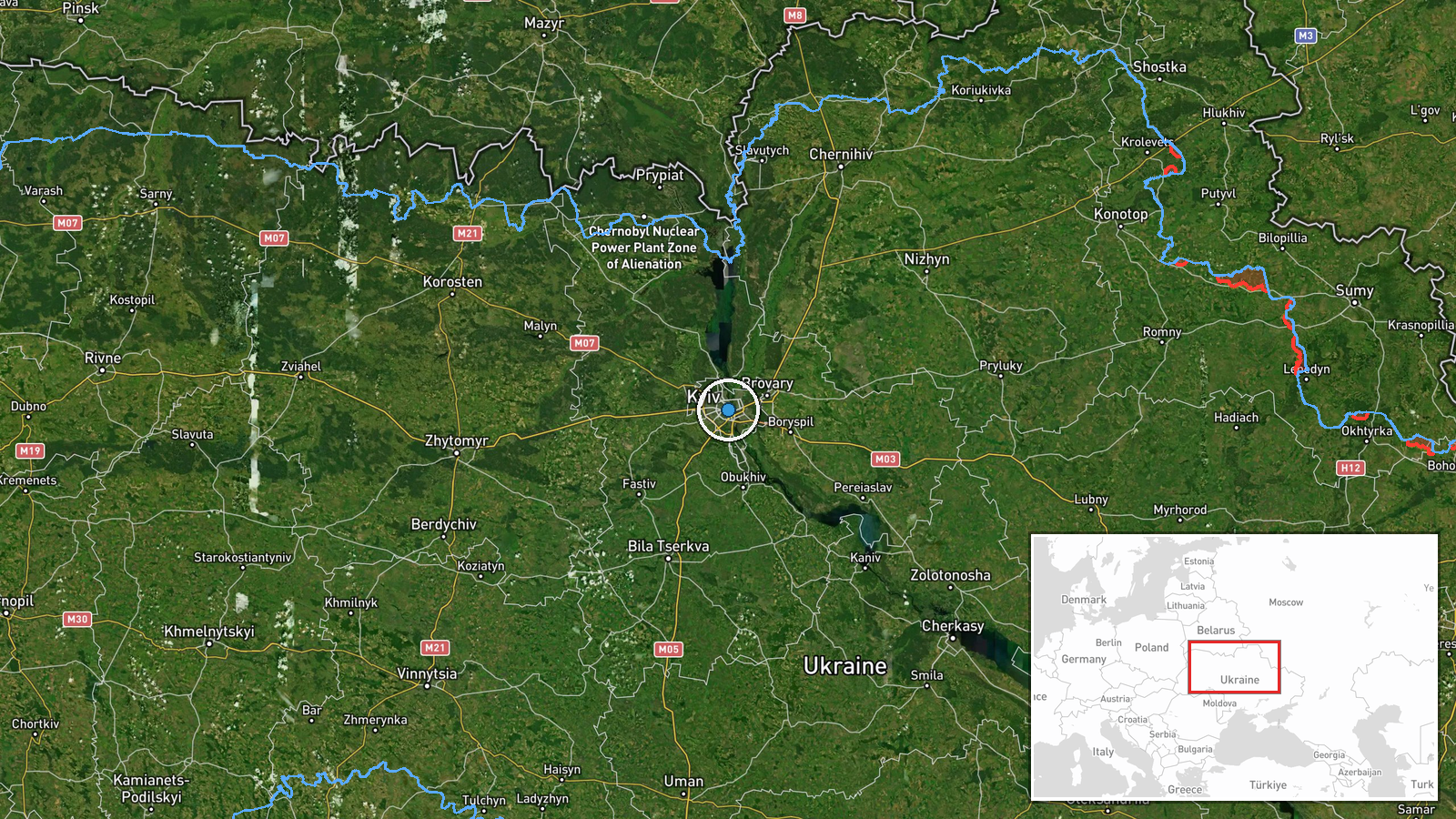
The pin is placed at Kyiv city center (50.4501, 30.5234) at settlement precision, because the General Staff publishes from the capital and the report covers the entire front. It is not the location of the reported losses or strikes, which are spread across the front line and areas the summary does not name. Kyiv sits on the Dnipro River in north-central Ukraine, and the nearby drone transits were logged over the city itself.
Related events nearby
- Russian drone attack in Kyiv set a vehicle ablaze, burning a man alive; a Ukrainian woman was filmed weeping.2026-10-21 06:21 UTC · UAS Strike · Kyiv, Ukraine
- Ukrainian air monitoring: 1 Russian jet-powered Shahed (Geran-3) drone heading toward Kyiv.2026-10-21 03:43 UTC · Drone Transit · Kyiv, Ukraine
- Ukrainian General Staff publishes cumulative Russian combat losses for 24.02.2022 through 21.10.2026; the exce2026-10-21 03:35 UTC · Report · Kyiv, Ukraine
- Ukrainian air monitoring: 2+ Russian jet-powered Shahed (Geran-3) drones over Kyiv.2026-10-21 02:37 UTC · Drone Transit · Kyiv, Ukraine
- Ukrainian air monitoring: 1 Russian jet-powered Shahed (Geran-3) drone over Kyiv.2026-10-21 02:25 UTC · Drone Transit · Kyiv, Ukraine
▶ View this event on the live map

Intel Mapper aggregates open-source reports from monitored Telegram and X channels, geolocates them, cross-checks duplicates across sources and assigns a confidence score. Entries are updated as new confirmations arrive. Read how we verify events.