Ukraine reports two Russian airstrikes with six guided bombs and 47 shellings on Kharkiv border axes
What happened
Ukraine's General Staff reported on Telegram that Russian forces carried out two aviation strikes using six guided aerial bombs (KAB) over the past day, and conducted 47 shellings of Ukrainian positions and settlements in the North Slobozhansky and Kursk directions. One of the shelling incidents reportedly involved multiple launch rocket systems (MLRS). The Ukrainian wording refers to 'the aggressor' and does not name specific settlements or impact sites for the aviation strikes, so exact targets remain unidentified. The post was published on 22 October 2026 at 05:07 UTC and covers the previous day's activity, meaning the strikes are dated 21 October. The event is recorded as an airstrike, with Russia as the attributed actor.
Context and assessment
The North Slobozhansky and Kursk directions are Ukrainian military terms for sectors of the front in northeastern Kharkiv Oblast, close to the Russian border and the Kursk and Belgorod regions. This area has seen repeated fighting since the early stages of the full-scale invasion, and Kharkiv city and its surroundings remain a recurring focus for missile, drone and glide-bomb attacks. The related events from the previous day fit this pattern. Ukrainian air monitoring logged several drone transits, including Shahed-type and jet-powered Geran-3 drones heading toward Kharkiv Oblast and the city, and a Banderol mini cruise missile passing Kharkiv. Separately, a combat report described three Russian attacks on Ukrainian positions on the Southern Slobozhanshchyna axis near Starytsia, Vovchanski Khutory and toward Izbytske. Taken together, these reports may indicate sustained pressure across several sectors at once. Guided aerial bombs are typically used against fortified positions and frontline concentrations within reach of launch aircraft, so their use alongside artillery and rocket fire may suggest an effort to support ground activity. The sources do not confirm intent, and the link between the strikes and the ground attacks is an inference.
Sources and confidence
The only source is a single Telegram channel, the Ukrainian General Staff (@GeneralStaffZSU), which is an official military channel and usually among the first to publish daily summaries. No independent outlet or satellite imagery is listed as cross-confirming the strikes. The confidence score of 8.0 reflects the official origin and specific counts, but it is held below the maximum because the figures are unverified by a second party and do not identify targets. Confidence would rise with independent confirmation, such as local officials or regional military administration reports naming affected settlements, or geolocated imagery of impact sites. It would fall if later reporting revised the counts or disputed the attack types.
Location
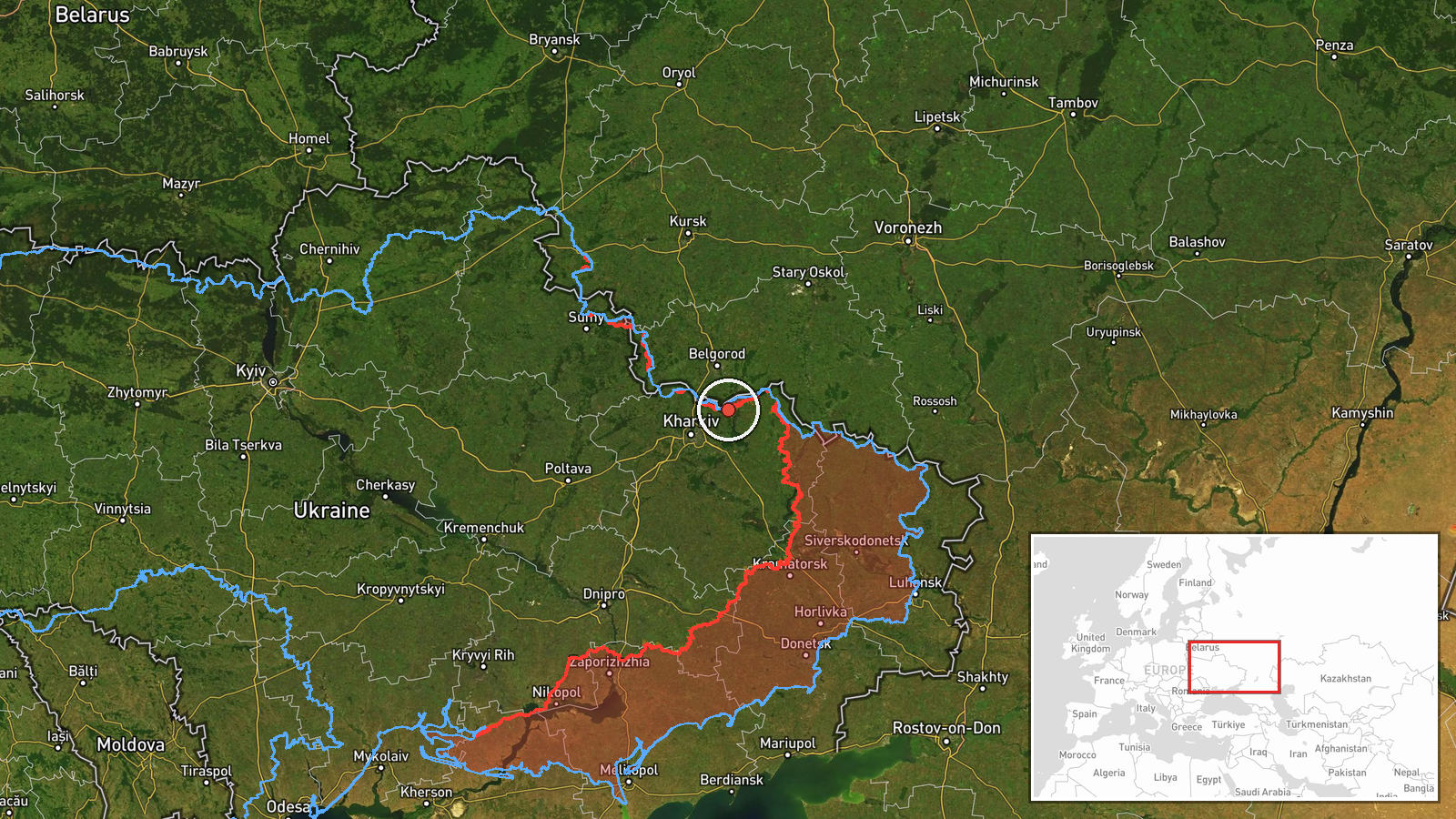
The location is recorded only at regional level as North Slobozhansky direction, Kharkiv Oblast, so the coordinates are an approximate point within that sector rather than a specific settlement or facility. The geo precision is marked as region and location confidence as low. The area is flat steppe and farmland in northeastern Kharkiv Oblast, with river valleys, forest belts and scattered villages, and it lies near the border with Russia. Kharkiv city is to the southwest, and the Starytsia and Izbytske area referenced in related reports lies within the wider Slobozhansky front.
Related events nearby
- Russian forces attacked Ukrainian positions three times on the Southern Slobozhanshchyna axis near Starytsia, 2026-10-21 19:03 UTC · Combat · Starytsia, Kharkiv Oblast, Ukraine
- Ukrainian air monitoring: 1 Russian Shahed-type drone passing eastern Kharkiv Oblast, heading south.2026-10-21 09:50 UTC · Drone Transit · eastern Kharkiv Oblast, Ukraine
- Ukrainian air monitoring: 1 Russian Shahed-type drone heading toward Kharkiv.2026-10-21 18:10 UTC · Drone Transit · Kharkiv, Ukraine
- Ukrainian air monitoring: 1 Russian Banderol mini cruise missile passing Kharkiv, heading south.2026-10-21 11:01 UTC · Cruise Missile · Kharkiv, Ukraine
- Ukrainian air monitoring: 2+ Russian jet-powered Shahed (Geran-3) drones heading toward Kharkiv Oblast.2026-10-21 08:06 UTC · Drone Transit · Kharkiv Oblast, Ukraine
▶ View this event on the live map

Intel Mapper aggregates open-source reports from monitored Telegram and X channels, geolocates them, cross-checks duplicates across sources and assigns a confidence score. Entries are updated as new confirmations arrive. Read how we verify events.