Multiple Russian Geran-3 drones tracked over Ovruch heading westward
What happened
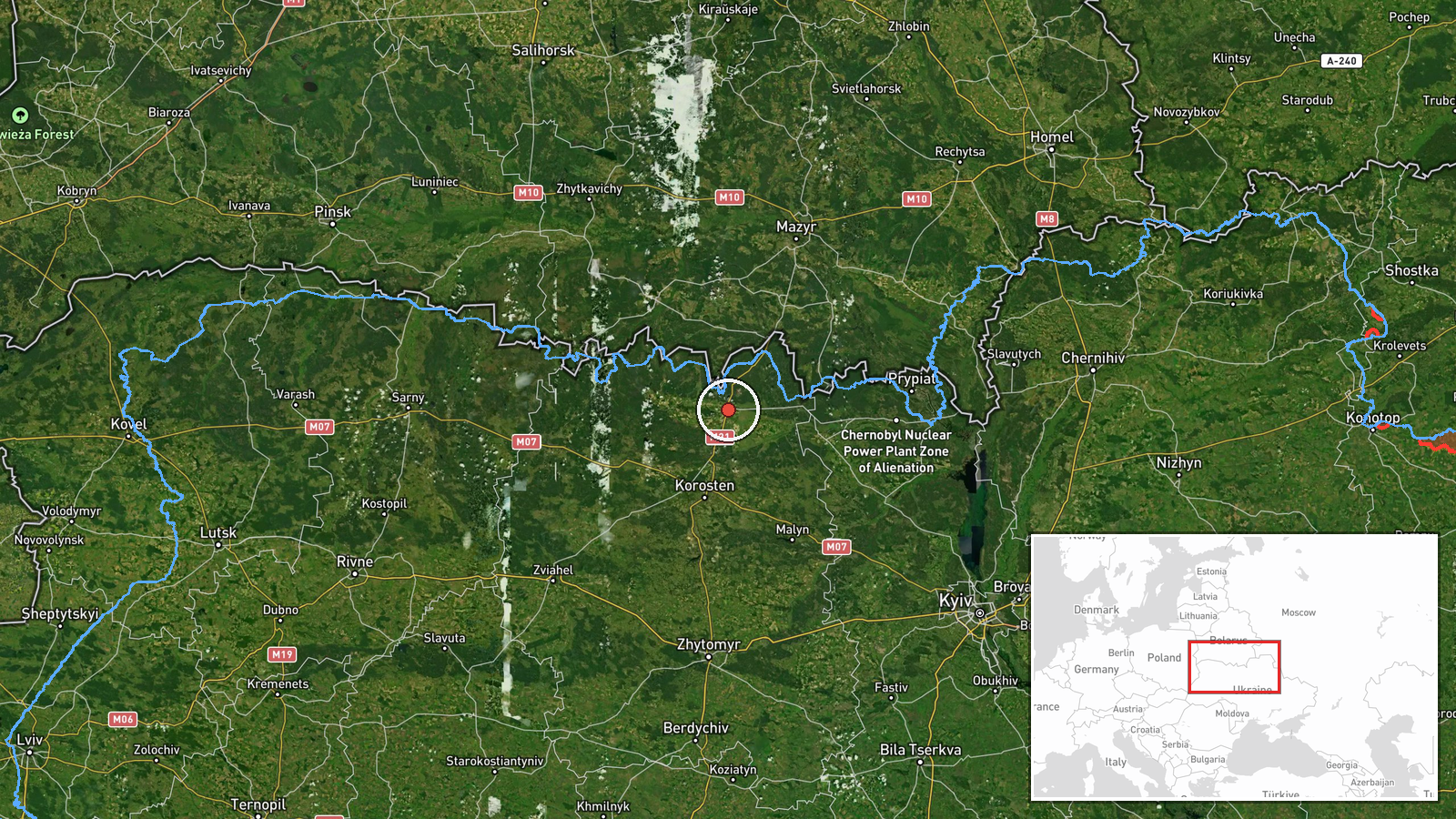
Ukrainian air monitoring detected two or more Russian jet-powered Shahed (Geran-3) drones transiting over Ovruch in Zhytomyr Oblast on the morning of October 15, heading westward. The report was posted by the official Kyiv Post's Security Service of Ukraine channel on Telegram. Geran-3 drones are cruise missile-type systems capable of sustained flight and payload delivery over extended ranges.
Context and assessment
Ovruch sits in northwestern Zhytomyr Oblast, approximately 150 kilometers north of Kyiv and near the Belarusian border. The October 15 morning hours saw sustained Shahed transit activity across northern and central Ukraine, with at least five separate drone detections recorded between 01:57 and 07:38 UTC across Zhytomyr, Rivne, and neighboring oblasts. The westward heading from Ovruch suggests potential routing toward targets in western Ukraine or continuation of a broader strike sequence. Multiple contemporaneous sightings indicate either a coordinated wave or extended operational tempo, consistent with patterns of Russian drone operations targeting infrastructure and military positions across Ukrainian territory.
Sources and confidence
Reported solely by Telegram channel @kpszsu (official Security Service of Ukraine account). No independent cross-confirmation visible in provided data. Confidence of 8.0 reflects high credibility of the source channel and consistency with corroborating drone detections in nearby areas on the same date, though single-source reporting and transit-only status (no impact confirmed) introduce some uncertainty.
Location
Ovruch is a settlement in northwestern Zhytomyr Oblast near the Belarus border at approximately 51.33°N, 28.80°E. The town lies in the Pripyat River valley region, historically significant and currently positioned in an active air monitoring zone. Nearby settlements include Olevsk to the north and Krasiatychi to the southwest, where additional drone activity was detected the same morning.
Related events nearby
- Ukrainian air monitoring: 1 Russian jet-powered Shahed (Geran-3) drone transiting northern Zhytomyr Oblast hea2026-10-15 03:44 UTC · Drone Transit · Northern Zhytomyr Oblast, Ukraine
- Ukrainian air monitoring: 1 Russian jet-powered Shahed (Geran-3) drone transiting from northern Zhytomyr Oblas2026-10-15 01:57 UTC · Drone Transit · Northern Zhytomyr Oblast to Northern Rivne Oblast,
- Ukrainian air monitoring: 1 Russian jet-powered Shahed (Geran-3) drone from Zhytomyr Oblast toward Chopovychi.2026-10-15 05:52 UTC · Drone Transit · Chopovychi, Ukraine
- Ukrainian air monitoring: 1 Russian jet-powered Shahed (Geran-3) drone heading toward Krasiatychi.2026-10-15 03:36 UTC · Drone Transit · Krasiatychi, Ukraine
- Ukrainian air monitoring: 1 Russian jet-powered Shahed (Geran-3) drone over Olevsk.2026-10-15 03:59 UTC · Drone Transit · Olevsk, Ukraine
▶ View this event on the live map

Intel Mapper aggregates open-source reports from monitored Telegram and X channels, geolocates them, cross-checks duplicates across sources and assigns a confidence score. Entries are updated as new confirmations arrive. Read how we verify events.