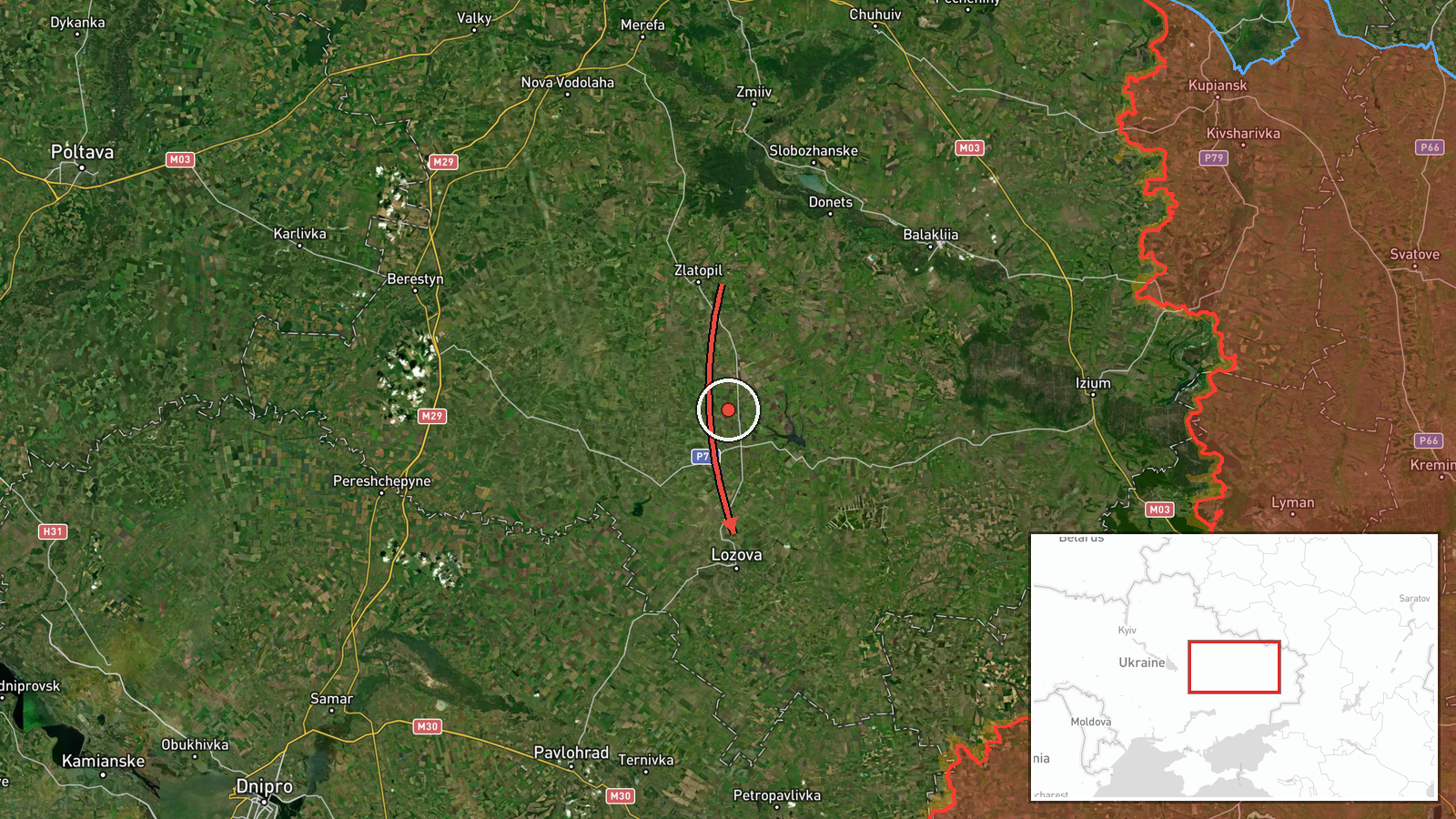
Russian Banderol cruise missile reported heading toward Lozova in eastern Ukraine
What happened
Ukrainian air monitoring reported detection of one Russian Banderol mini cruise missile launched from Kharkiv Oblast on a trajectory toward Lozova on October 15 at approximately 13:49 UTC. Lozova is a significant settlement in eastern Kharkiv Oblast. The report comes from official Ukrainian air defense monitoring channels. No immediate strike confirmation or damage assessment was provided in the available data.
Context and assessment
Lozova sits on a key transportation corridor in Kharkiv Oblast and has been subject to repeated Russian air strikes and drone attacks throughout the conflict. The detection of this Banderol missile follows a sustained pattern of Russian air activity across the region on October 15, including multiple Shahed-type drone transits toward targets in central and eastern Ukraine, as well as a separate Banderol cruise missile report targeting Samar. The Banderol is a smaller standoff weapon typically used against infrastructure and fixed positions. The continued targeting of this area may indicate Russian efforts to disrupt Ukrainian supply lines or infrastructure in the eastern operational zone.
Sources and confidence
Source: Telegram channel @kpszsu (Ukrainian air monitoring official account). Single-source report with no independent cross-confirmation in available data. Confidence score of 8.0 reflects the official nature of the monitoring channel and consistency with documented attack patterns, but lack of secondary verification limits certainty about strike outcome. Confirmation of impact or interception would raise confidence; lack of follow-up reporting may indicate successful air defense response.
Location
Lozova is a settlement located at approximately 48.89°N, 36.31°E in eastern Kharkiv Oblast. It lies on the Lozova River in the broader Donbas region, positioned along a major transportation corridor between Kharkiv city and central Ukraine. The town is situated roughly 70 kilometers south-southwest of Kharkiv city proper.
Related events nearby
- Ukrainian air monitoring: 1 Russian Shahed-type drone from Kharkiv Oblast toward Lozova.2026-10-15 05:09 UTC · Drone Transit · Lozova, Ukraine
- Ukrainian air monitoring: 1 Russian jet-powered Shahed (Geran-3) drone from Kharkiv Oblast toward Blyzniuky.2026-10-15 03:35 UTC · Drone Transit · Blyzniuky, Ukraine
- Russian jet-powered Shahed (Geran-3) drone detected in northern Dnipropetrovsk Oblast near Yuriivka, heading w2026-10-15 10:15 UTC · Drone Transit · Yuriivka, Dnipropetrovsk Oblast, Ukraine
- Ukrainian air monitoring: 2+ Russian jet-powered Shahed (Geran-3) drones over east of Pavlohrad.2026-10-15 09:52 UTC · Drone Transit · east of Pavlohrad, Ukraine
- Ukrainian air monitoring: 1 Russian Banderol mini cruise missile heading toward Samar.2026-10-15 10:38 UTC · Cruise Missile · Samar, Ukraine
▶ View this event on the live map

Intel Mapper aggregates open-source reports from monitored Telegram and X channels, geolocates them, cross-checks duplicates across sources and assigns a confidence score. Entries are updated as new confirmations arrive. Read how we verify events.