Russian Shahed drone tracked over Iziaslav in northwestern Ukraine
What happened
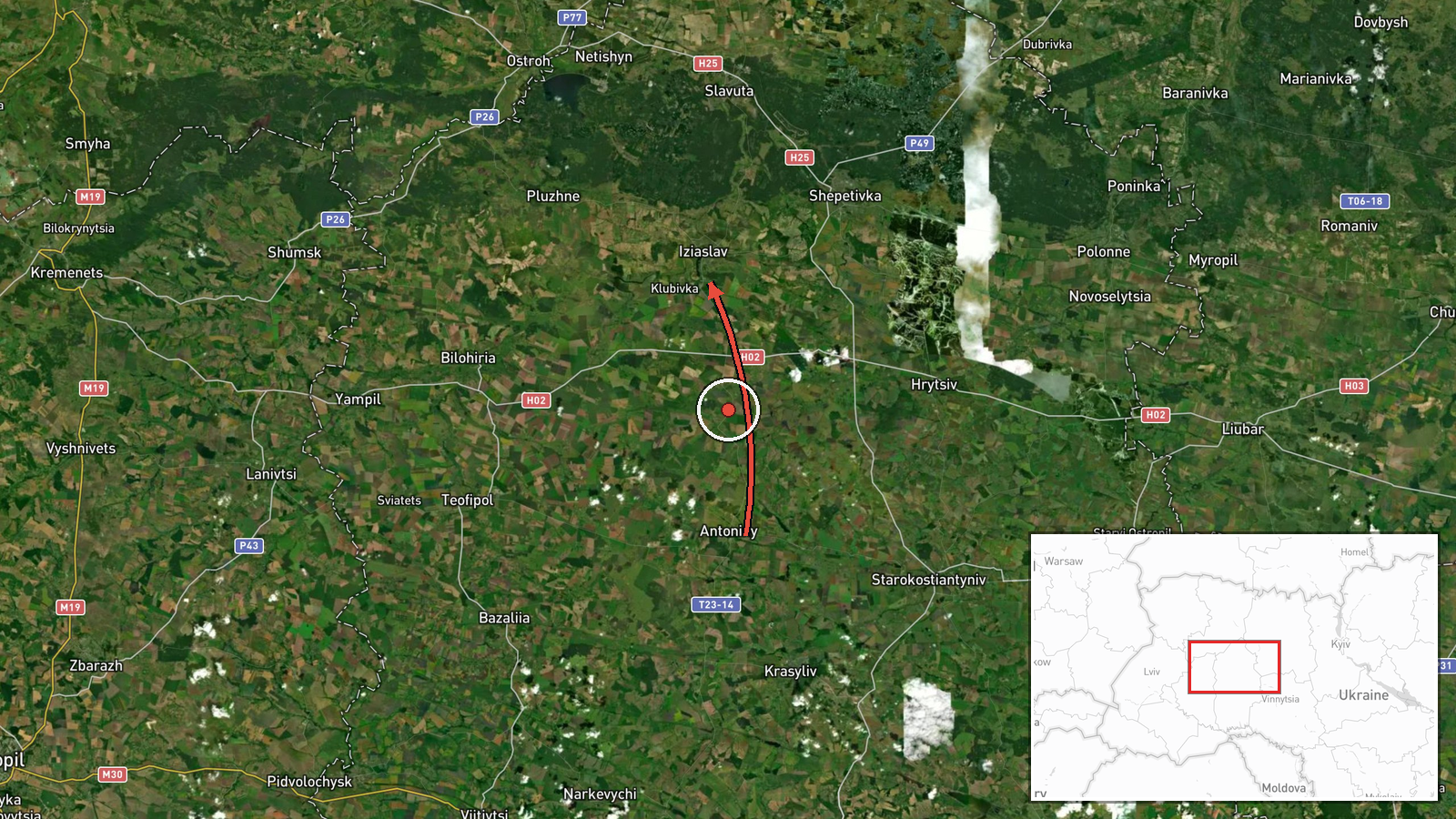
Ukrainian air monitoring reported one Russian jet-powered Shahed (Geran-3) drone transiting over Iziaslav, a town in Rivne Oblast, on the evening of October 15. The drone was detected heading in the direction of the Rivne region. The report was issued by the Ukrainian Air Force's public monitoring channel. This sighting follows a series of similar drone detections across northwestern Ukraine throughout the day.
Context and assessment
Iziaslav lies in northwestern Ukraine, in an area that has seen sustained Russian drone activity targeting infrastructure and military positions. The detection represents part of a coordinated wave of Shahed drone transits observed across Khmelnytskyi, Vinnytsia, and Rivne Oblasts on October 15, with multiple aircraft reportedly moving through the region in a northwesterly direction. Such concentrated drone movements may indicate Russian attempts to overwhelm air defenses or strike distributed targets across a wide area. The Shahed-131 and Shahed-136 (marketed as Geran-2 and Geran-3) are loitering munitions with ranges exceeding 2,000 kilometers, typically employed against power infrastructure and military facilities.
Sources and confidence
The report originates from a single Ukrainian source: the official Telegram channel of the Ukrainian Air Force's public notification system (@kpszsu). Cross-confirmation from independent sources is absent. The confidence score of 8.0 reflects the credibility of the official Ukrainian channel but is tempered by single-source reporting. Confirmation from Ukrainian air defense statements, third-party monitoring, or detection by allied intelligence would strengthen confidence.
Location
Iziaslav is a town in western Rivne Oblast, approximately 180 kilometers northwest of Kyiv. The town sits near the Polish border in a region characterized by agricultural lowlands and scattered settlements. Iziaslav is positioned along a common flight corridor for Russian drones approaching northwestern Ukraine from the east.
Related events nearby
- Ukrainian air monitoring detected 1+ Russian jet-powered Shahed (Geran-3) drone(s) transiting northern Vinnyts2026-10-15 18:02 UTC · Drone Transit · Starokostiantyniv, Ukraine
- Ukrainian air monitoring: 2+ Russian jet-powered Shahed (Geran-3) drones passing Khmelnytskyi, heading toward 2026-10-15 17:35 UTC · Drone Transit · Krasyliv, Ukraine
- Ukrainian air monitoring: 1 Russian jet-powered Shahed (Geran-3) drone over Rivne Oblast.2026-10-15 17:19 UTC · Drone Transit · Rivne Oblast, Ukraine
- Ukrainian air monitoring: 1 Russian jet-powered Shahed (Geran-3) drone from Khmelnytskyi Oblast toward Rivne O2026-10-15 09:48 UTC · Drone Transit · Rivne Oblast, Ukraine
- Ukrainian air monitoring: 2+ Russian jet-powered Shahed (Geran-3) drones passing Olevsk, heading toward Rivne 2026-10-15 07:47 UTC · Drone Transit · Rivne Oblast, Ukraine
▶ View this event on the live map

Intel Mapper aggregates open-source reports from monitored Telegram and X channels, geolocates them, cross-checks duplicates across sources and assigns a confidence score. Entries are updated as new confirmations arrive. Read how we verify events.