Ukrainian alert: jet-powered Shahed over Volyn changed course toward Lutsk
What happened
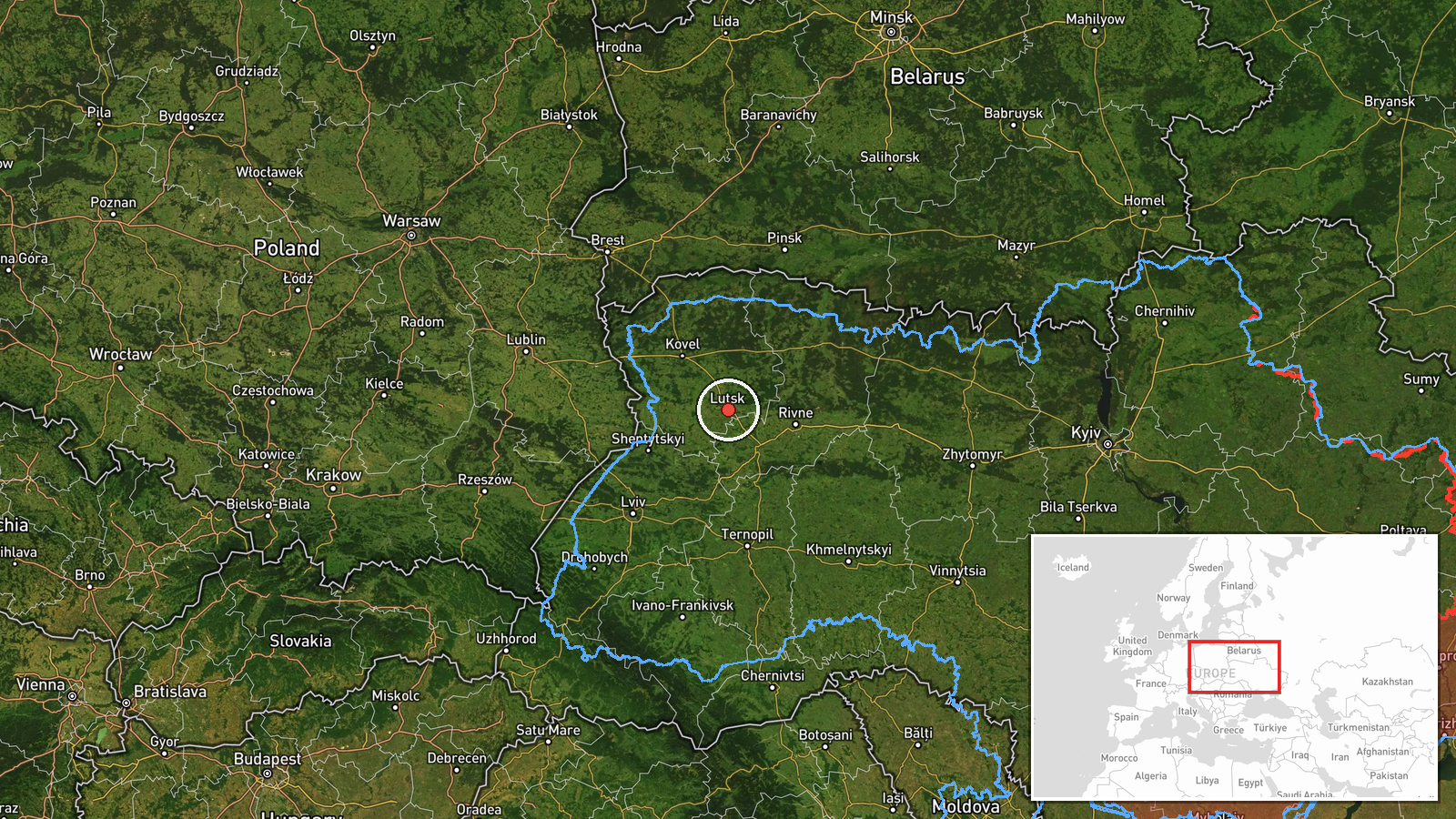
Ukraine's Telegram channel @kpszsu, which relays Ukrainian air monitoring alerts, reported on 19 October 2026 at 18:18 UTC that one Russian jet-powered Shahed, designated Geran-3, over Volyn Oblast had changed direction and was moving toward Lutsk. The original Ukrainian wording describes a jet-type UAV in Volyn that changed course and is heading for Lutsk. The report does not describe any impact, casualties, or damage, and no independent confirmation appeared in the data provided. The alert belongs to a sequence of same-day drone transit reports in northwestern Ukraine, several of which named Lutsk or Kivertsi as destinations. Because this is a monitoring notice rather than a strike report, it records a flight path and not an outcome.
Context and assessment
Volyn borders Poland and Belarus, and Lutsk is its administrative centre, so drone movements toward the city draw attention both for their proximity to NATO territory and for the pressure they place on a regional population centre. The related events show a pattern of repeated Geran-3 transits across Volyn and neighbouring Rivne throughout 19 October, with earlier reports describing drones heading toward Lutsk and a later one toward Kivertsi, a settlement northeast of the city. Taken together, the reports suggest a sustained rather than isolated flight pattern. The jet-powered Geran-3 variant is generally understood to be faster and harder to intercept than the older piston-engined Shahed design, which may explain why monitoring channels track each airframe individually. A change of heading toward a specific city could indicate a target, a decoy routing, or a drone being redirected after losing its original course, and the available data cannot distinguish among these. Operationally, the pattern is consistent with long-range strike or saturation activity that uses multiple drones over several hours, but nothing in the reporting confirms intent or a specific aim.
Sources and confidence
The event rests on a single Telegram channel, @kpszsu, which is the only source listed. The related events come from the same type of air monitoring feed, which makes them useful for establishing a timeline but not independent confirmation. Single-channel reporting of drone movements is common during active air raids, and the content is a flight-path notice rather than a claim about damage, so the score of 8.0 reflects a credible official-style alert with no cross-confirmation. Confidence would rise with a matching report from a second Ukrainian air force or regional military administration channel, or from independent flight tracking. It would fall if later updates contradicted the heading change or if the drone was reported as downed or lost without a reliable explanation.
Location
The location is recorded only at regional level, Volyn Oblast, and the location confidence is marked low. The coordinates given, 50.75 north and 25.33 east, sit close to Lutsk, the oblast capital, so the point marker should be read as an approximation tied to the city and its surroundings, not as a confirmed position. Volyn is a largely flat, forested region in northwestern Ukraine, with the Styr and Stokhid river systems and the Polesie lowlands to the north. The position of the drone at the time of the alert is not stated in the report.
Related events nearby
- Ukrainian air monitoring: 1 Russian jet-powered Shahed (Geran-3) drone over Volyn Oblast.2026-10-19 18:41 UTC · Drone Transit · Volyn Oblast, Ukraine
- Ukrainian air monitoring: 1 Russian jet-powered Shahed (Geran-3) drone heading toward Lutsk.2026-10-19 04:34 UTC · Drone Transit · Lutsk, Ukraine
- Ukrainian air monitoring: 1 Russian jet-powered Shahed (Geran-3) drone heading toward Lutsk.2026-10-19 03:17 UTC · Drone Transit · Lutsk, Ukraine
- Ukrainian air monitoring: 1 Russian jet-powered Shahed (Geran-3) drone passing Volyn Oblast, heading west; 2+ 2026-10-19 02:42 UTC · Drone Transit · Volyn Oblast, Ukraine
- Ukrainian air monitoring: 1 Russian jet-powered Shahed (Geran-3) drone from eastern Rivne Oblast toward Volyn 2026-10-19 02:42 UTC · Drone Transit · Volyn Oblast, Ukraine
▶ View this event on the live map

Intel Mapper aggregates open-source reports from monitored Telegram and X channels, geolocates them, cross-checks duplicates across sources and assigns a confidence score. Entries are updated as new confirmations arrive. Read how we verify events.