Mi-28 attack helicopter damaged in Ukrainian strike on Saki Airbase, Crimea
What happened
A Russian Mi-28 attack helicopter sustained damage during Ukrainian operations targeting Saki Airbase in Crimea on October 3, according to a Telegram report. The incident occurred as part of ongoing combat operations in the region. The source material, posted in Russian, refers to damage to the Mi-28 at one of the airbases during an attack, though specific details regarding the extent of damage or operational status remain unclear from the single report available.
Context and assessment
Saki Airbase has been a recurring target for Ukrainian strikes throughout the conflict due to its role in supporting Russian air operations across southern Ukraine. The damage to a Mi-28—a dedicated attack helicopter relied upon for close air support and anti-tank operations—suggests continued Ukrainian efforts to degrade Russian rotary-wing capabilities in Crimea. This report aligns with broader Ukrainian targeting patterns, including a concurrent UAS strike on a Russian maintenance facility in Kherson Oblast on the same day and Russian tactical aircraft positioning near firing lines. Such operations may indicate Ukrainian attempts to constrain Russian air support capacity ahead of potential operational movements.
Sources and confidence
Reported by Telegram channel @supernova_plus only. Single-source reporting limits confidence; no corroboration from other open-source channels has been identified. Confidence score of 6.0 reflects the plausible nature of the claim and consistency with known Ukrainian targeting priorities, offset by lack of independent verification and limited operational detail in the original statement.
Location
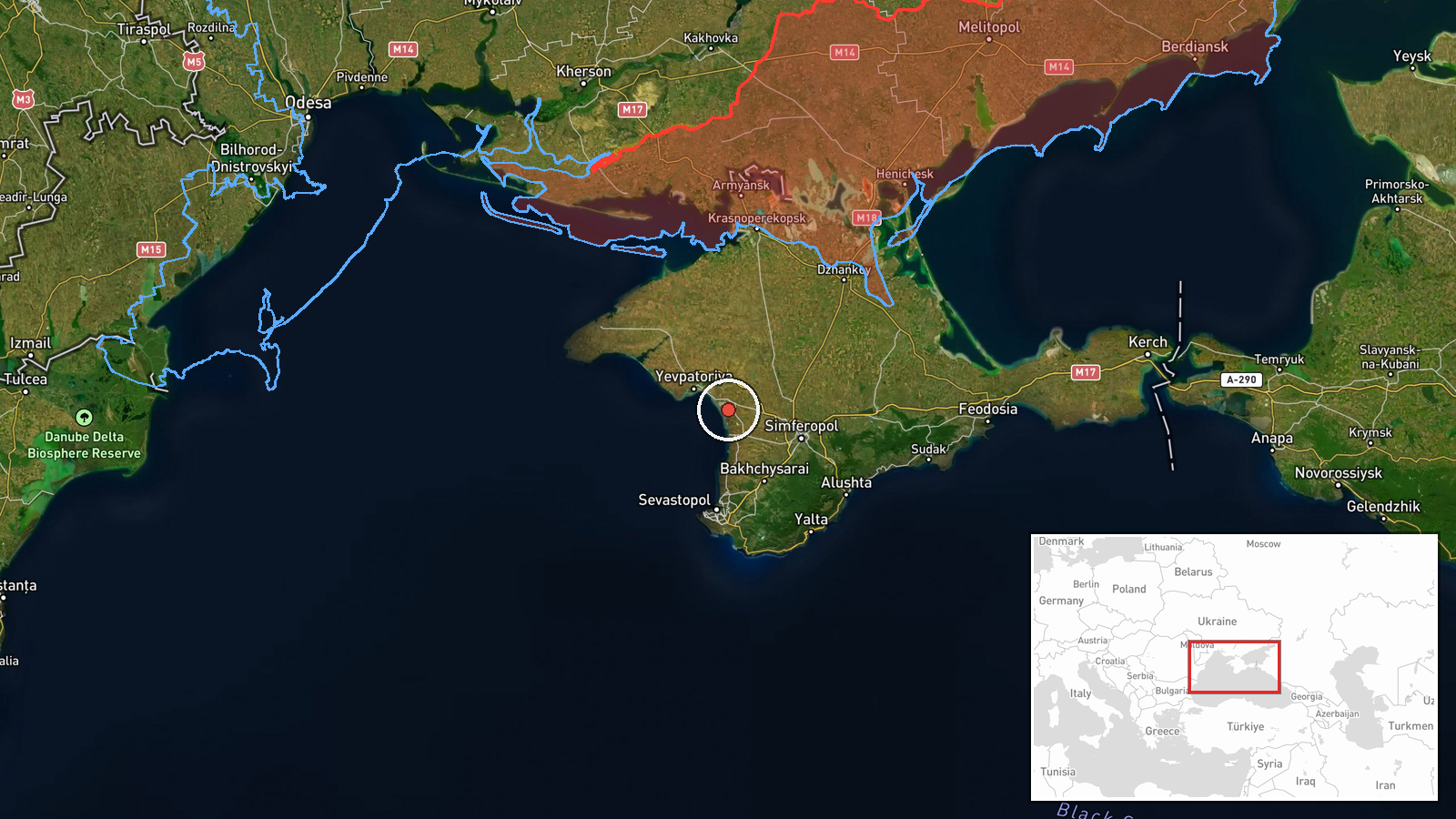
Saki Airbase, located in western Crimea approximately 65 kilometers west-southwest of Simferopol. The airbase is situated in a relatively flat, coastal region near the Black Sea. Coordinates place the facility in the Saki settlement area, a known Russian military aviation hub hosting multiple fixed and rotary-wing aircraft types throughout the conflict.
Related events nearby
- Russian tactical aviation aircraft positioned at firing lines over Crimea for probable launches of guided air-2026-10-03 01:21 UTC · Combat Aircraft · Crimea, Ukraine
- Ukrainian forces struck a Russian occupier repair/maintenance base near Hromivka in Kherson Oblast. Damage ass2026-10-03 07:29 UTC · UAS Strike · Hromivka, Kherson Oblast, Ukraine
▶ View this event on the live map
Intel Mapper aggregates open-source reports from monitored Telegram and X channels, geolocates them, cross-checks duplicates across sources and assigns a confidence score. Entries are updated as new confirmations arrive. Read how we verify events.