Single Telegram channel reports massive attack on Moscow Oblast; weapon, targets unconfirmed
What happened
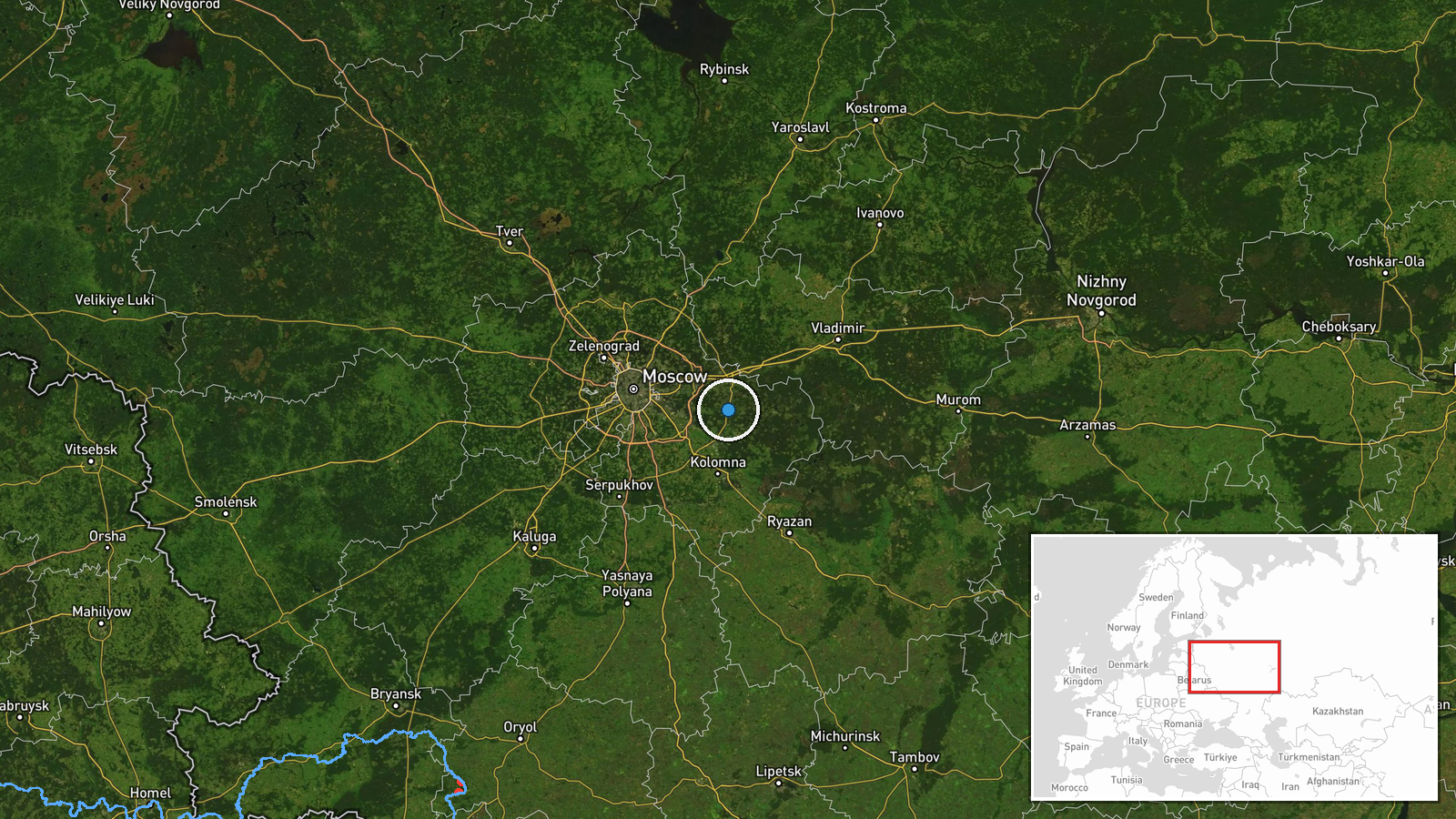
A Telegram channel, @supernova_plus, reported on 21 October 2026 at 23:33 UTC that Moscow Oblast in Russia was under a massive attack. The original Russian-language post, in translation, says the oblast is under a mass attack and ends with an ellipsis, so it appears to be a brief, early alert. The report does not specify the weapon type, the targets, or any casualties or damage. The event is classified as a UAS strike, meaning an attack by unmanned aerial systems, and the actor is listed as Ukraine. That attribution reflects the database entry and the channel's framing rather than an official statement in the record. No confirmation from Russian or Ukrainian authorities appears in the data at the time of writing, and the location is given only at regional level.
Context and assessment
Moscow Oblast surrounds the Russian capital and contains a dense mix of government-linked facilities, military logistics sites, defense industry plants, transport hubs and large suburban populations, so any reported strike there draws attention well beyond its immediate effects. The report arrives on a day of intense diplomatic activity. Kremlin aide Yuri Ushakov said Moscow is ready for trilateral talks with Washington and Kyiv in mid-November, and Putin reportedly told envoy Steve Witkoff that Russia has further ideas to share. Earlier the same day, per WSJ, the Kremlin warned Berlin that the failed Leipzig-Halle Airport drone attack would not be the last, a sign that drone activity is being framed as a wider escalation issue across Europe. If the Moscow report were confirmed, it could be read as an attempt to add pressure during negotiations or to demonstrate reach toward the capital. Equally, a single unverified alert during a period of heavy messaging may reflect information operations rather than a real operational pattern, so the event should be read cautiously.
Sources and confidence
The event rests on one Telegram channel, @supernova_plus, with a source count of one and no cross-confirmation from wire services, official Russian statements, or independent observers. This single-source status, combined with the brief and incomplete original text and a regional-only location, explains the modest confidence score of 6.3. Confidence would rise with independent reporting from established outlets, statements from Moscow regional or federal officials, air defense notices, or geolocated imagery showing impact sites. It would fall if the channel's content were contradicted, if no further reports appeared, or if the channel had a record of unreliable claims.
Location
The location is recorded at region level for Moscow Oblast, and the coordinates are an approximate point within the oblast rather than a verified settlement or facility. The precision is low and confidence is rated low, so no specific town, site or street should be inferred. Moscow Oblast wraps around the city of Moscow and includes wooded areas, suburban towns, rail and highway corridors, and the Moscow Ring Road. Any locality within the region could be affected by the reported attack.
Related events nearby
- Unconfirmed reports of drone debris in Moscow Oblast, likely from interception of an attack north of Moscow. W2026-10-22 00:26 UTC · Drone Shootdown · Moscow Oblast, Russia
- Kremlin aide Yuri Ushakov says Moscow is ready for trilateral talks with Washington and Kyiv in mid-November. 2026-10-21 13:31 UTC · Statement · Moscow, Russia
- Per WSJ, the Kremlin warned Berlin via back channels that the failed Leipzig-Halle Airport drone attack would 2026-10-21 12:34 UTC · Statement · Moscow, Russia
- Kremlin says Putin will review and assess every proposal presented by U.S. envoy Steve Witkoff, amid Ukraine-w2026-10-21 10:41 UTC · Statement · Moscow, Russia
- Putin says he will raise a possible Putin-Trump-Xi meeting in China in talks with US envoy Witkoff, and Russia2026-10-21 10:21 UTC · Diplomacy · Moscow, Russia
▶ View this event on the live map
Intel Mapper aggregates open-source reports from monitored Telegram and X channels, geolocates them, cross-checks duplicates across sources and assigns a confidence score. Entries are updated as new confirmations arrive. Read how we verify events.