Unconfirmed Telegram reports of drone debris in Moscow Oblast after a reported interception
What happened
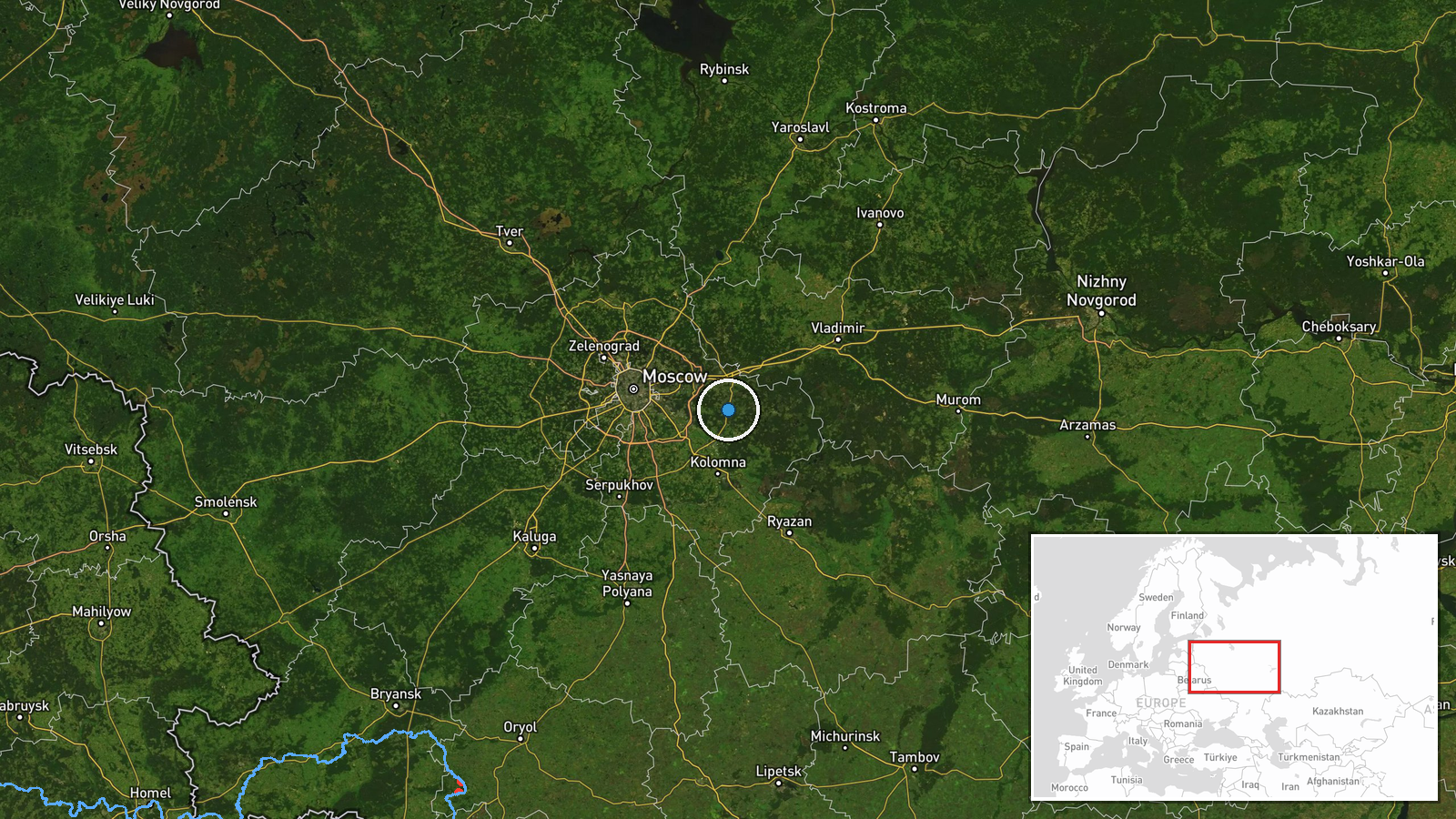
A single Telegram channel, @supernova_plus, reported unconfirmed drone debris in Moscow Oblast, Russia, on 22 October 2026 at 00:26 UTC. The channel's terse original wording, 'мособласть обломки' (roughly 'Moscow Oblast debris'), does not describe a specific impact site, damage or casualties. The summary attributes the debris to the interception of an attack north of Moscow, but the weapon type is not confirmed. The attacker is listed as Ukraine on the basis of that channel's framing rather than any official statement. No independent outlet in the dataset corroborates the report, so the event is recorded as a drone shootdown with reported debris, not as a confirmed strike.
Context and assessment
Moscow Oblast surrounds the Russian capital, so debris reports there carry political weight even when the details are thin. The event sits within a cluster of related activity. About fourteen hours earlier, on 21 October at 23:33 UTC, another report described a massive attack on Moscow Oblast, though its weapon type, targets and impact are unspecified. That suggests a possible sustained series of long-range drone raids toward the capital's approaches, although the data does not establish whether these were linked operations. The same day brought diplomatic signals. Kremlin aide Yuri Ushakov said Moscow is ready for trilateral talks with Washington and Kyiv in mid-November, and Putin reportedly planned to raise a possible Putin-Trump-Xi meeting with envoy Steve Witkoff. A WSJ-reported warning to Berlin that the failed Leipzig-Halle drone attack would not be the last, as Germany weighs NATO Article 5, adds to the sense of a broader contest over escalation. Operationally, if such raids were occurring, interceptions near Moscow would scatter debris over regional territory, which could explain the report, but this remains a hedged inference rather than a documented pattern.
Sources and confidence
The report rests on one Telegram channel, @supernova_plus. No cross-confirmation appears in the data from Russian officials, Moscow Oblast authorities, Ukrainian statements, or wire services. The confidence score of 5.7 reflects a single unverified source, an unspecified weapon type, very brief wording, and a region-level location. Confidence would rise with independent geolocated imagery of debris, a regional or defence ministry statement, wire-service confirmation, or several channels showing consistent photos. It would fall if the report were retracted, if air-defence reporting contradicted it, or if the debris were traced to another origin.
Location
The location was set at regional level, not to a settlement or facility, and the coordinates 55.5943 and 38.9044 are an approximate centre point for the area north of Moscow. Confidence is low. Moscow Oblast encircles the capital and is mostly forest, farmland and small towns, with rivers and reservoirs in its north and the Moscow-Volga canal running through part of it. These coordinates should not be used to pinpoint where any debris fell.
Related events nearby
- Moscow Oblast reported under a massive attack; weapon type, targets and impact details are not specified in th2026-10-21 23:33 UTC · UAS Strike · Moscow Oblast, Russia
- Unconfirmed Telegram report of alarm and concern in the Domodedovo airport area, Moscow Oblast; no impact or w2026-10-22 01:13 UTC · Siren · Domodedovo International Airport area, Moscow Obla
- Kremlin aide Yuri Ushakov says Moscow is ready for trilateral talks with Washington and Kyiv in mid-November. 2026-10-21 13:31 UTC · Statement · Moscow, Russia
- Per WSJ, the Kremlin warned Berlin via back channels that the failed Leipzig-Halle Airport drone attack would 2026-10-21 12:34 UTC · Statement · Moscow, Russia
- Kremlin says Putin will review and assess every proposal presented by U.S. envoy Steve Witkoff, amid Ukraine-w2026-10-21 10:41 UTC · Statement · Moscow, Russia
▶ View this event on the live map
Intel Mapper aggregates open-source reports from monitored Telegram and X channels, geolocates them, cross-checks duplicates across sources and assigns a confidence score. Entries are updated as new confirmations arrive. Read how we verify events.