Russian Shahed-136 drones continue transiting over Kyiv Oblast
What happened
Ukrainian air monitoring detected multiple Russian Shahed-136 reactive-engine unmanned aerial vehicles in transit over Kyiv Oblast on August 31 at approximately 06:58 UTC. The drones were tracked across the region as part of continued Russian air operations. The report comes from the Telegram channel @war_monitor, which cited Ukrainian air defence monitoring data without specifying exact interception or strike outcomes from this particular transit event.
Context and assessment
Kyiv Oblast has faced sustained Russian drone operations over recent days. On August 30 alone, Ukrainian officials reported detection of nearly 1,500 Russian drones across four days, with approximately 800 being jet-powered variants like the Shahed-136. The transit pattern reflects Russia's ongoing strategy of deploying long-range loitering munitions toward the capital region. Related detections on August 30–31 tracked individual drones near Boryspil, Brovary, and other populated areas. Air raid sirens have been activated repeatedly across Kyiv districts, indicating sustained threat levels. Ukraine's development of interceptor drone systems appears a direct response to this operational tempo.
Sources and confidence
Single source: Telegram channel @war_monitor citing Ukrainian air monitoring. No cross-confirmation from Ukrainian official military or SBU channels noted in available data. Confidence score of 6.0 reflects the single-source reporting and lack of independent verification. Confirmation from official Ukrainian air defence statements or secondary channels would raise confidence; absence of any follow-up reporting on interceptions would lower it.
Location
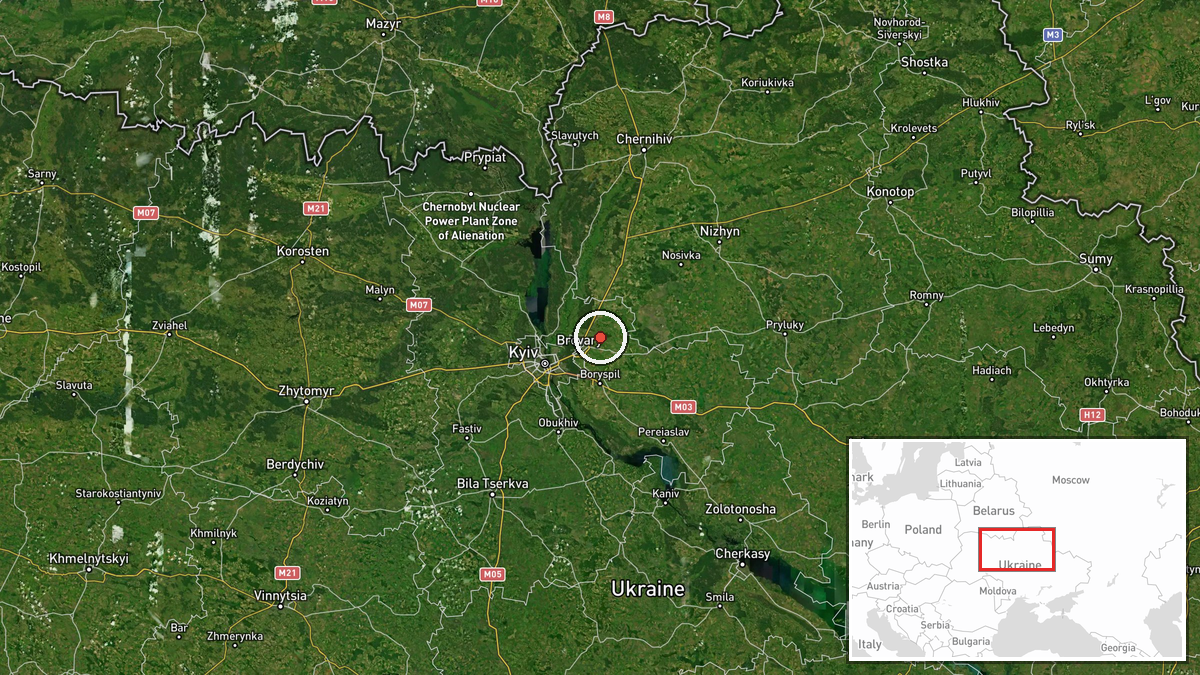
Kyiv Oblast, a region surrounding Ukraine's capital city. The detection coordinate (50.578°N, 30.951°E) places the report near central Kyiv Oblast. Related drone transit events on August 30–31 pinpointed activity near Boryspil airport, Brovary district, and villages including Krushynka and Velyka Dymerka, suggesting multiple transit corridors across the region.
Related events nearby
- Ukrainian air-monitoring channel issues ballistic missile threat alert for Boryspil, Kyiv Oblast. Suspected ba2026-08-31 23:27 UTC · Siren · Boryspil, Kyiv Oblast, Ukraine
- Russian multi-wave ballistic and cruise missile attack on Kyiv and Kyiv Oblast on 01 September 2026. 11 killed2026-09-01 06:04 UTC · Ballistic Missile · Kyiv, Kyiv City, Ukraine
- Russian Zircon hypersonic ballistic missiles detected transiting from Pryatin toward Kyiv. Part of ongoing mul2026-08-31 23:34 UTC · Ballistic Missile · Kyiv, Kyiv City, Ukraine
- Russian reconnaissance or kamikaze drone (reactive/jet-powered UAV) transiting through Krasiatychyi, Kyiv Obla2026-08-31 20:38 UTC · Drone Transit · Krasiatychyi, Kyiv Oblast, Ukraine
- Two Russian reactive (jet-powered) Shahed-variant kamikaze drones detected transiting along the Kyiv-Chernihiv2026-09-01 05:27 UTC · Drone Transit · Kyiv-Chernihiv Border Region, Ukraine
▶ View this event on the live map
Intel Mapper aggregates open-source reports from monitored Telegram and X channels, geolocates them, cross-checks duplicates across sources and assigns a confidence score. Entries are updated as new confirmations arrive. Read how we verify events.