Russian Kalibr cruise missiles transit Rivne Oblast toward Cherkasy
What happened
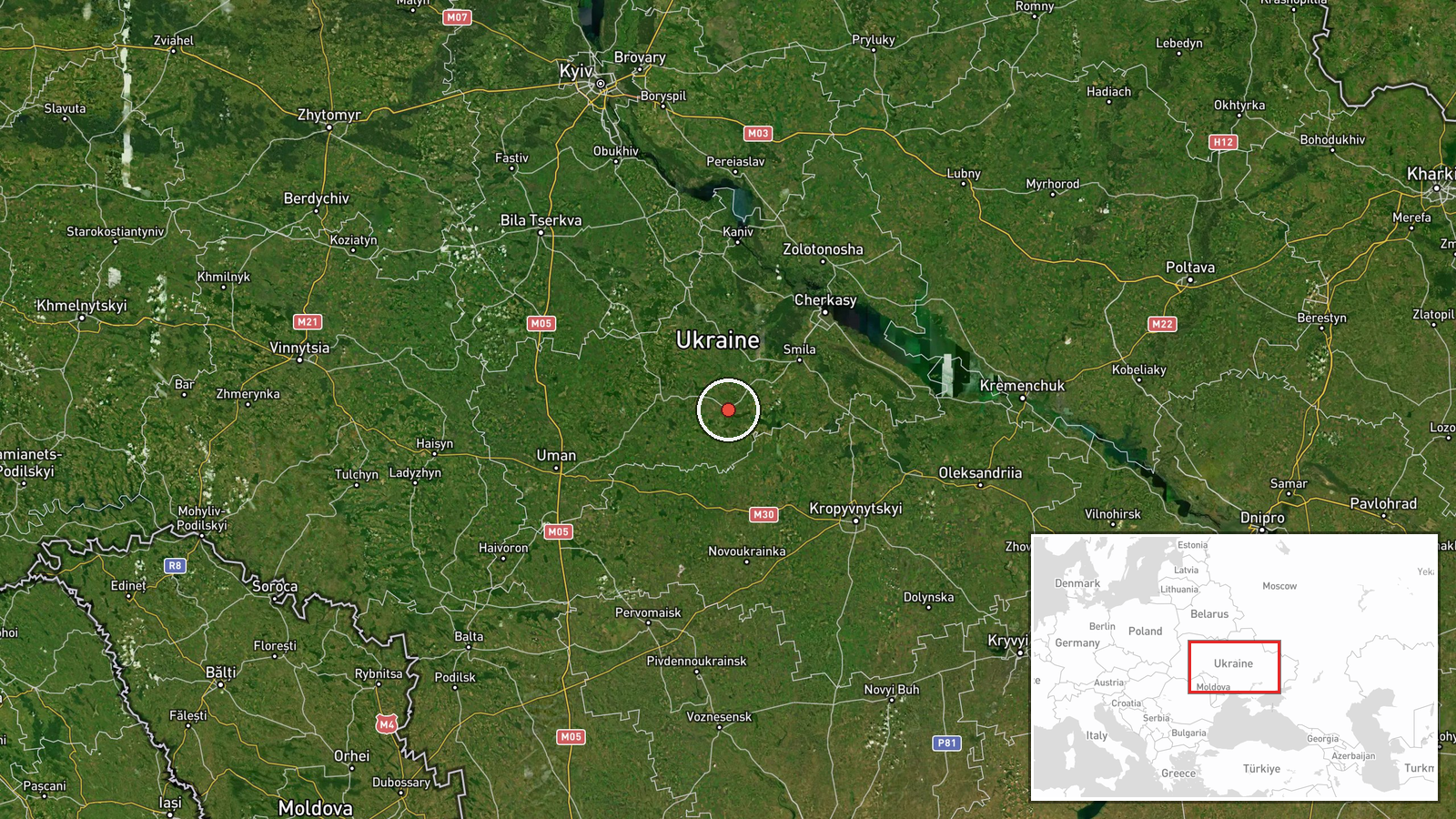
One group of Russian Kalibr cruise missiles was tracked transiting Ukrainian airspace over Rivne Oblast on 31 August at approximately 23:15 UTC, reportedly heading toward Zvenyhorodskyi district in Cherkasy Oblast. The missiles originated from the Black Sea, continuing a pattern of Black Sea Fleet cruise missile strikes documented throughout the day. The report was made by the Telegram channel @war_monitor.
Context and assessment
Cherkasy Oblast, located in central Ukraine along the Dnipro River, has been a recurring target in Russian strike campaigns. This transit follows multiple confirmed Kalibr detections the same evening over Bohuslav and Kropyvnytskyi, suggesting a coordinated multi-vector cruise missile operation. Ukrainian General Staff data from 31 August documented 225 combat clashes and significant Russian air activity including 91 airstrikes and 11,517 kamikaze drone deployments, indicating sustained offensive pressure across Ukraine's territory. The concentration of missile transits over central and northern regions may signal Russian targeting of energy infrastructure, military logistics, or civilian areas in that corridor.
Sources and confidence
Single source: Telegram channel @war_monitor, reporting at 23:15 UTC on 31 August. No cross-confirmation from Ukrainian air defense or official statements yet documented. Confidence score of 6.0 reflects limited source count; corroboration from Ukrainian military channels, visual evidence, or follow-up air defense statements would raise confidence. Independent verification of impact or interception would strengthen assessment.
Location
Cruise missile detected en route over Rivne Oblast, heading toward Zvenyhorodskyi district in Cherkasy Oblast. Coordinates approximate to central Cherkasy region. Zvenyhorodskyi district lies east of the Dnipro River in the oblast's eastern section, an agricultural and industrial area. Proximity to major Ukrainian transport and energy infrastructure makes it strategically sensitive.
Related events nearby
- Ukrainian General Staff reports Day 1650 of war: 225 combat clashes recorded. Russia conducted 91 airstrikes (2026-08-31 05:04 UTC · Statement · Ukraine (Nationwide)
- Russian strategic aviation inactive. Reactive (jet-powered) UAVs transiting over Ukrainian territory. Naval mi2026-08-31 21:05 UTC · Deployment · Ukraine
- One group of Russian Kalibr cruise missiles transiting over Novy Buh toward Kropyvnytskyi district. Continuati2026-08-31 22:44 UTC · Cruise Missile · Kropyvnytskyi, Kirovohrad Oblast, Ukraine
- One group of Russian Kalibr cruise missiles detected transiting over Bohuslav, Cherkasy Oblast, heading toward2026-08-31 23:27 UTC · Cruise Missile · En route: Bohuslav, Cherkasy Oblast → Obukhiv Dist
- One reactive (Shahed-variant jet-propelled) drone tracked transiting over Boyarka, Kyiv Oblast, Ukraine.2026-08-31 13:03 UTC · Drone Transit · Bilohirka, Kyiv Oblast, Ukraine
▶ View this event on the live map
Intel Mapper aggregates open-source reports from monitored Telegram and X channels, geolocates them, cross-checks duplicates across sources and assigns a confidence score. Entries are updated as new confirmations arrive. Read how we verify events.