Four Russian Shahed drones detected transiting past Slavutych toward Kyiv Oblast
What happened
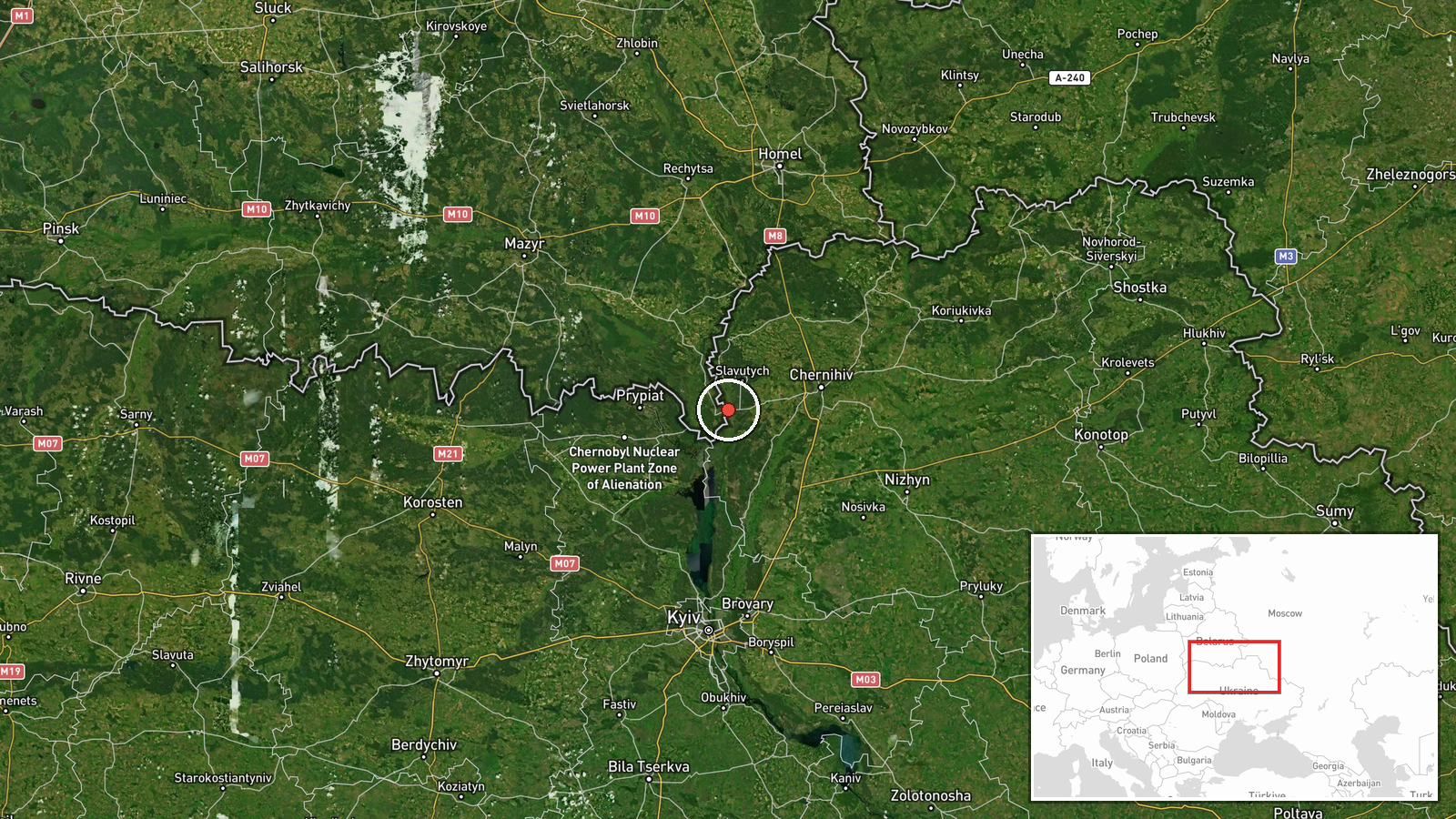
Ukrainian air monitoring reportedly detected four Russian reactive Shahed-variant kamikaze drones passing near Slavutych in Chernihiv Oblast on a trajectory toward Kyiv Oblast early on September 1st. Shahed drones are jet-powered unmanned aerial vehicles typically used in strike campaigns. The detection was reported via Telegram by war monitoring channels tracking Russian aerial operations. The drones' intended target was not specified in available reports.
Context and assessment
This detection occurs as part of an intensifying Russian aerial campaign against the Kyiv region. Earlier that same morning, Ukrainian air defenses confirmed a major multi-wave Russian missile attack on Kyiv and Kyiv Oblast that killed at least 11 people and wounded 17. Related drone transit detections were reported along the Kyiv-Chernihiv border region minutes before this Slavutych sighting, suggesting coordinated or sequential waves of aerial strikes. Slavutych's position north of Kyiv makes it a logical transit corridor for drones approaching the capital. The convergence of drone transits with ballistic missile strikes suggests Russia may be employing combined-arms aerial tactics to saturate Ukrainian air defenses.
Sources and confidence
Reported by Telegram channel @war_monitor. Single-source reporting limits confidence to 6.0 out of 10. Cross-confirmation from multiple independent Ukrainian air monitoring channels would substantially raise confidence. Visual verification, radar data, or official Ukrainian military statements would strengthen assessment. The report's consistency with contemporaneous related events—nearby drone transits and confirmed missile strikes—provides some corroborating context.
Location
Slavutych, a city in Chernihiv Oblast approximately 50 kilometers north of Kyiv, located on the Desna River. The settlement sits in a relatively flat region of northern Ukraine and serves as a key transit point for activity entering Kyiv Oblast from the north. Geographic precision is high as Slavutych is a named urban center.
Related events nearby
- Two Russian reactive (jet-powered) Shahed-variant kamikaze drones detected transiting along the Kyiv-Chernihiv2026-09-01 05:27 UTC · Drone Transit · Kyiv-Chernihiv Border Region, Ukraine
- One Russian reactive (jet-powered) Shahed-variant kamikaze drone detected in transit from Stoyanka/Chayki area2026-09-01 07:10 UTC · Drone Transit · Kotsyubynske, Kyiv Oblast, Ukraine
- Russian multi-wave ballistic and cruise missile attack on Kyiv and Kyiv Oblast on 01 September 2026. 11 killed2026-09-01 06:04 UTC · Ballistic Missile · Kyiv, Kyiv City, Ukraine
- Russian Zircon hypersonic ballistic missiles detected transiting from Pryatin toward Kyiv. Part of ongoing mul2026-08-31 23:34 UTC · Ballistic Missile · Kyiv, Kyiv City, Ukraine
- Ukrainian air-monitoring channel issues ballistic missile threat alert for Boryspil, Kyiv Oblast. Suspected ba2026-08-31 23:27 UTC · Siren · Boryspil, Kyiv Oblast, Ukraine
▶ View this event on the live map
Intel Mapper aggregates open-source reports from monitored Telegram and X channels, geolocates them, cross-checks duplicates across sources and assigns a confidence score. Entries are updated as new confirmations arrive. Read how we verify events.