Russian reactive drone tracked toward Kyiv from Moshchun in Kyiv Oblast
What happened
Ukrainian air monitoring reportedly detected a Russian Shahed-variant reactive unmanned aerial vehicle transiting Kyiv Oblast on the evening of 2 September, with its flight trajectory directed toward the Kyiv metropolitan area. The drone was tracked originating from Moshchun, a settlement northwest of the capital. The report was posted to the Telegram channel @war_monitor at 21:09 UTC. No information on interception, impact, or casualties was provided in the source data.
Context and assessment
This drone transit occurs amid heightened air activity over Kyiv Oblast and reflects Russia's sustained campaign of aerial strikes against Ukrainian territory, particularly targeting the capital region. The timing coincides with Ukraine's formal implementation of an air threat differentiation system for civilians and statements from Ukrainian leadership regarding aviation safety in Russian airspace. Moshchun lies in an area of contested control and periodic Russian operations. The detection and reporting of such transits by Ukrainian monitoring channels has become routine, indicating both persistent Russian drone operations and Ukrainian air defense coordination efforts to track and intercept incoming threats.
Sources and confidence
Single source: Telegram channel @war_monitor, a Ukrainian military monitoring account. No independent corroboration provided in available data. Confidence score of 6.0 reflects single-source reporting and lack of cross-confirmation. Confidence would increase with reports from official Ukrainian air force statements, multiple independent channels, or confirmed interception details.
Location
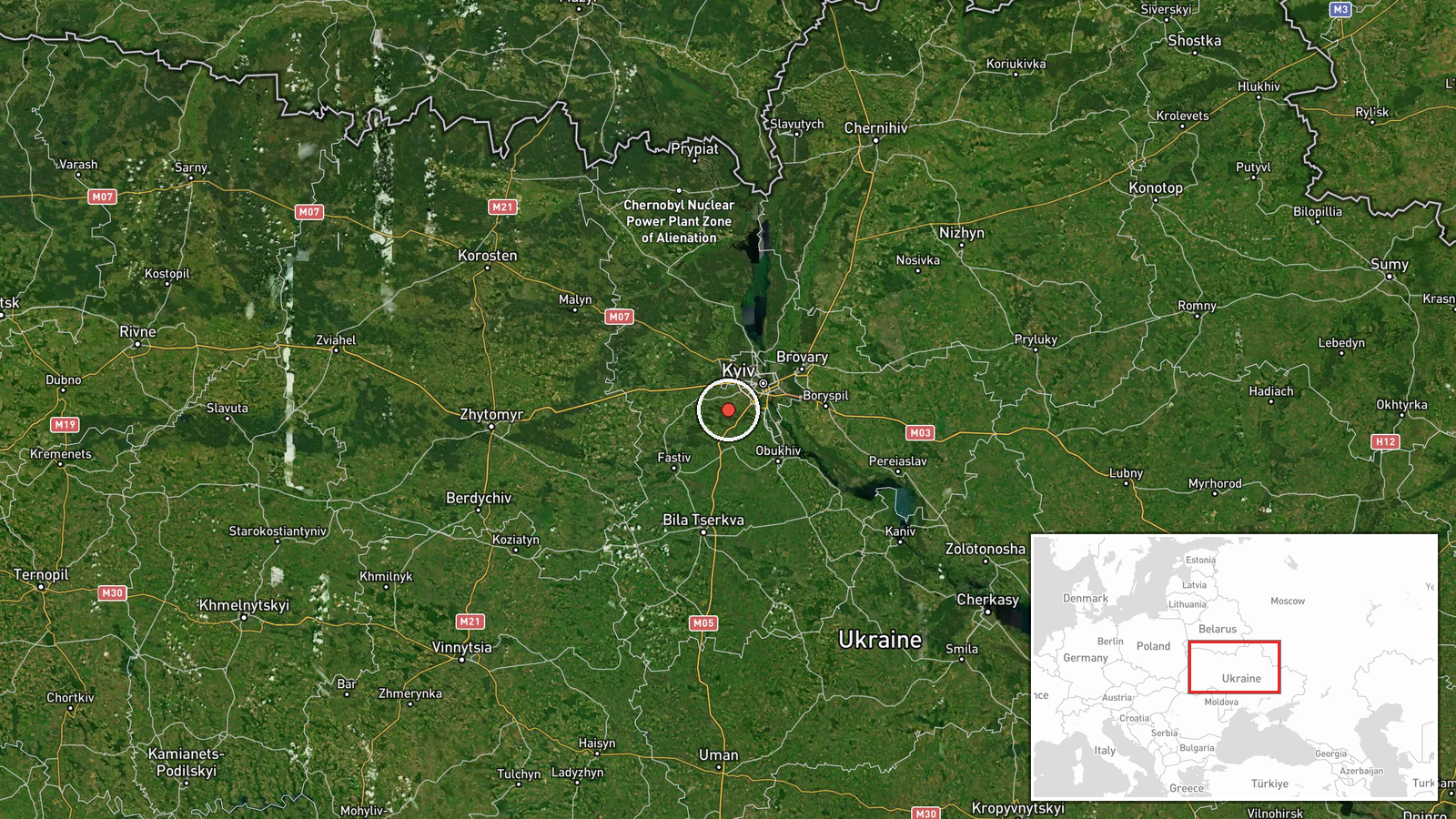
Boyarka, Kyiv Oblast, identified at settlement-level precision (50.34°N, 30.28°E). Located approximately 20 kilometers south-southwest of Kyiv city center, in the greater Kyiv metropolitan area. Moshchun, the reported origin point, lies roughly 30 kilometers northwest of central Kyiv, in an area subject to ongoing Russian reconnaissance and occasional strike operations.
Related events nearby
- Russian Shahed-variant reactive UAV tracked transiting over Hlevakha area, Kyiv Oblast. Ukrainian air monitori2026-09-02 21:30 UTC · Drone Transit · Hlevakha, Kyiv Oblast, Ukraine
- Ukrainian authorities formally implement air threat differentiation system for civilian population. Monitoring2026-09-02 14:51 UTC · Statement · Kyiv, Ukraine
- Ukrainian President Zelensky states that following his warnings, international airlines have begun halting fli2026-09-02 19:48 UTC · Statement · Kyiv, Ukraine
- Ukraine's Foreign Ministry warned international civil aviation authorities that Russian airspace is unsafe for2026-09-02 13:54 UTC · Statement · Kyiv, Ukraine
- Armed standoff erupted overnight between Ukrainian SBU and HUR personnel in a Kyiv residential street. Three H2026-09-02 10:02 UTC · Security · Kyiv, Ukraine
▶ View this event on the live map
Intel Mapper aggregates open-source reports from monitored Telegram and X channels, geolocates them, cross-checks duplicates across sources and assigns a confidence score. Entries are updated as new confirmations arrive. Read how we verify events.