Russian reactive drone detected transiting toward Kamyanske industrial zone
What happened
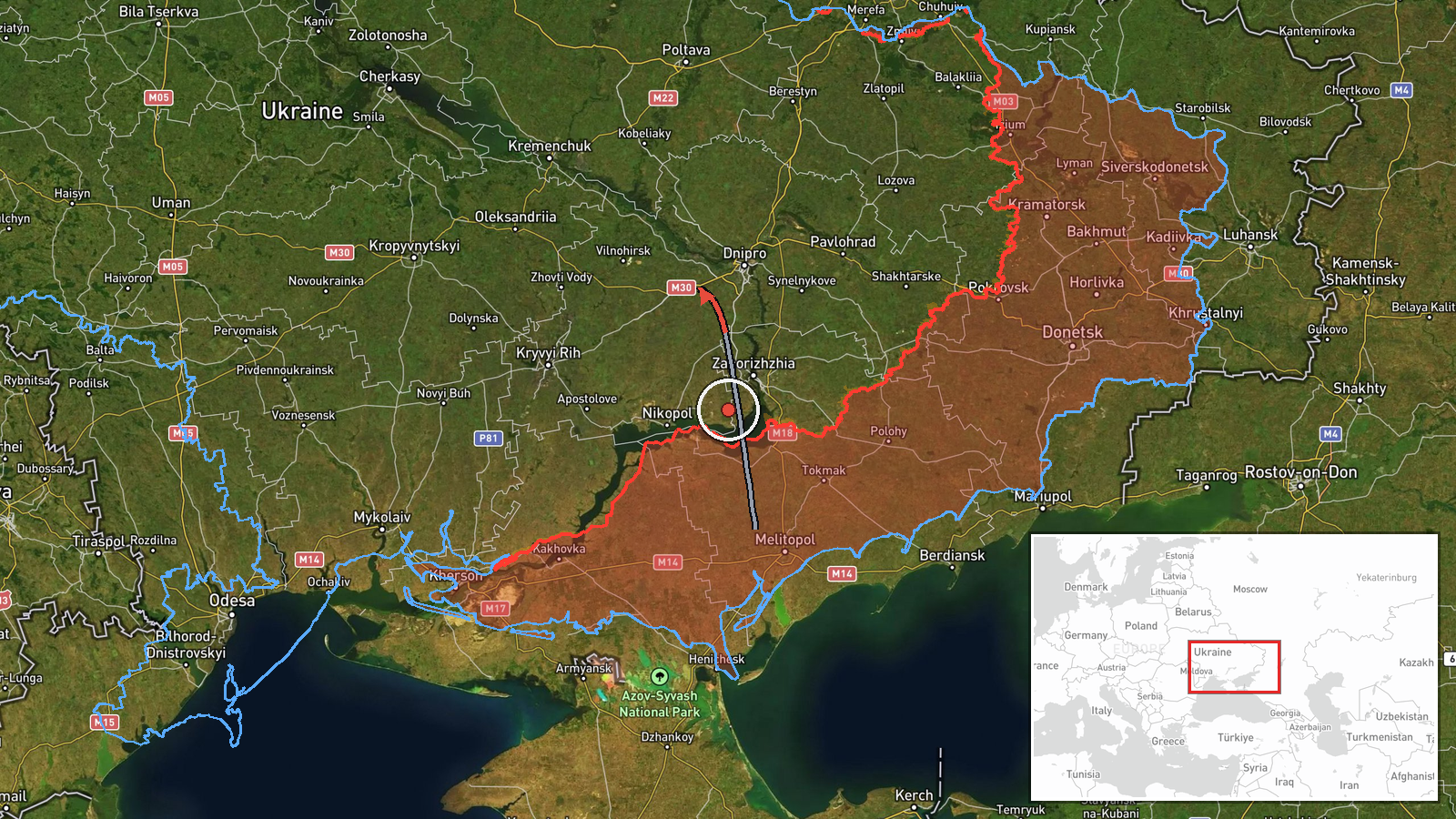
Ukrainian air defense monitoring reported detection of one Russian reactive (jet-powered) kamikaze drone in transit over Dnipropetrovsk Oblast on 5 September at 19:56 UTC. The drone's reported vector traced from Solone toward Kamyanske, a major industrial city on the Dnipro River. The report indicates air defense was tracking the aircraft; no immediate impact or interception status was noted in the monitoring channel's brief alert.
Context and assessment
Kamyanske is a key Ukrainian industrial center home to the Kametstal Metallurgy Plant, a strategic target repeatedly struck by Russian missiles in recent days. This drone transit follows a pattern of sustained Russian strikes on the city: ballistic missiles (KN-23 and Iskander-M) hit the plant on 5 September morning, with additional strikes reported 4–5 September. The reactive drone represents a secondary attack vector, potentially aimed at infrastructure damaged or exposed by prior strikes, or at air defense positions. Dnipropetrovsk Oblast has faced intensive Russian drone and missile activity over the past 48 hours as part of a broader nationwide campaign.
Sources and confidence
Report sourced from Telegram channel @war_monitor, a single Ukrainian monitoring channel. Confidence score of 6.0 reflects limited source corroboration—only one channel reported this specific transit detection. No cross-confirmation from other independent channels or official Ukrainian military accounts in available data. Confidence would rise with secondary reports from Kyiv-based defense channels or official statements; it would fall if contradicted by follow-up reporting.
Location
Kamyanske (Dnipropetrovsk Oblast, south-central Ukraine), an industrial city straddling the Dnipro River, approximately 80 km south of Dnipropetrovsk city. The drone's reported departure point, Solone, is a nearby settlement within the same oblast. Precision is settlement-level; exact interception or impact point not specified.
Related events nearby
- One Russian Banderol cruise missile detected transiting over Dnipro, Dnipropetrovsk Oblast. Ukrainian air defe2026-09-05 23:05 UTC · UAS Strike · Dnipropetrovsk Oblast, Ukraine (general)
- Russian kamikaze drones targeted a UAV manufacturing facility in Dnipro, Ukraine. Attack type consistent with 2026-09-05 20:04 UTC · UAS Strike · Dnipro, Dnipropetrovsk Oblast, Ukraine
- Ukrainian air defense monitoring reports reactive (jet-powered Shahed-variant) kamikaze drone transits across 2026-09-05 20:20 UTC · Drone Transit · Dnipropetrovsk Oblast, Ukraine
- Multiple Shahed-variant 'Banderoль' (reactive/jet-propelled) courier drones detected in transit over Dnipro an2026-09-06 12:35 UTC · Drone Transit · Dnipro, Dnipropetrovsk Oblast, Ukraine
▶ View this event on the live map
Intel Mapper aggregates open-source reports from monitored Telegram and X channels, geolocates them, cross-checks duplicates across sources and assigns a confidence score. Entries are updated as new confirmations arrive. Read how we verify events.