Russian Banderol cruise missile tracked transiting toward Pryluky in Chernihiv Oblast
What happened
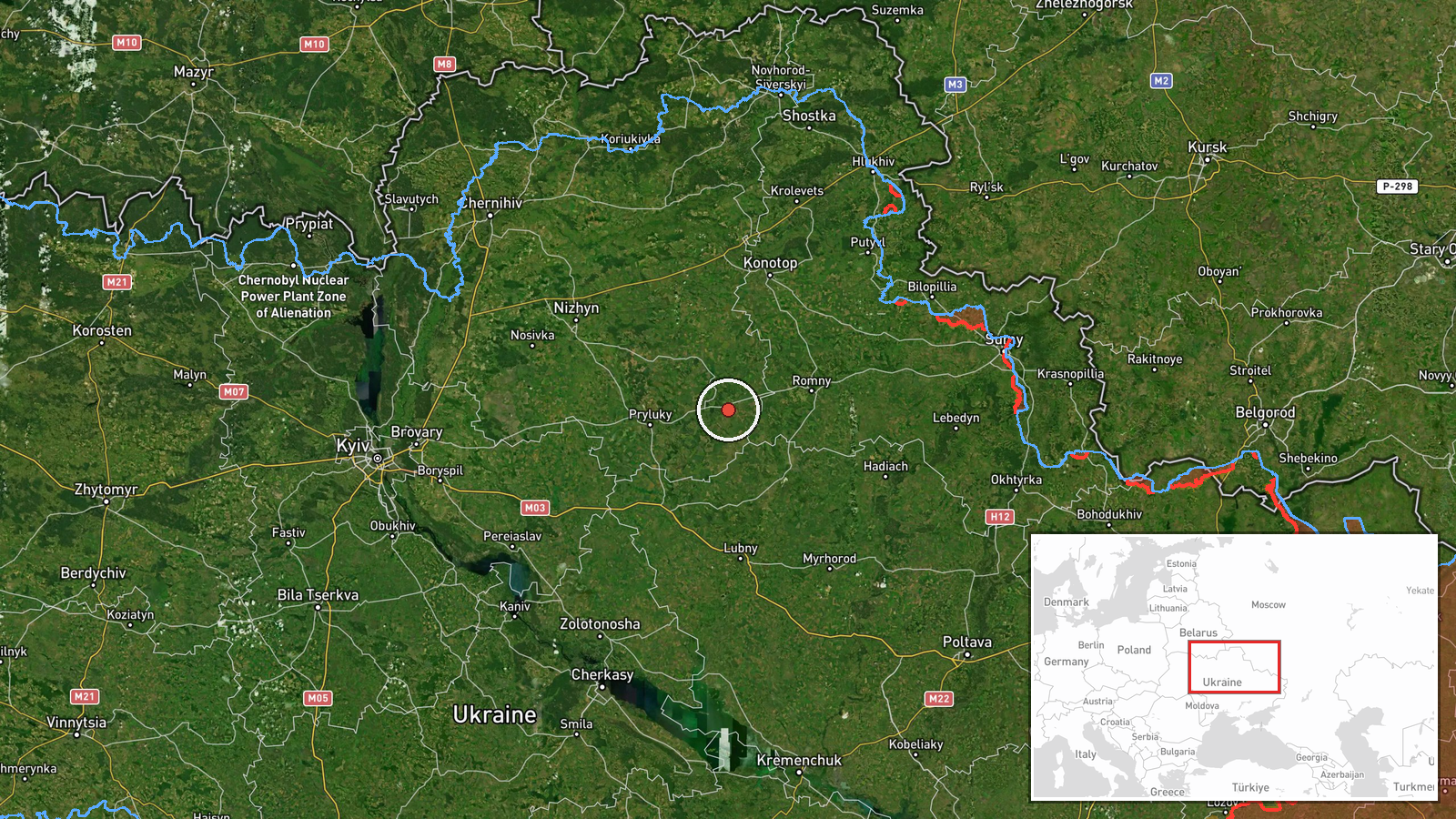
Ukrainian air defense reportedly detected one Russian Banderol cruise missile in transit from Sribne toward Pryluky in Chernihiv Oblast on September 5 at 20:47 UTC. The detection was logged by the Telegram channel @war_monitor. Banderol is a Russian air-launched cruise missile variant. No impact or air defense engagement was reported in the available data. The missile's trajectory and final disposition remain unconfirmed.
Context and assessment
Pryluky is a significant logistics hub in central Chernihiv Oblast, historically targeted for its rail and military infrastructure. This detection occurs within a broader pattern of Russian cruise and kamikaze drone strikes across central and northern Ukraine on September 5, including simultaneous Banderol detections in Sumy Oblast and multiple Shahed-variant drones over Poltava and Kyiv oblasts. The concentration of detected weapons systems transiting through the region suggests either a coordinated multi-vector strike attempt or routine reconnaissance activity. Chernihiv Oblast has faced persistent Russian aerial pressure since early 2022.
Sources and confidence
Single-source reporting from @war_monitor Telegram channel. No cross-confirmation from independent Ukrainian military sources or second channels visible in dataset. Confidence score of 6.0 reflects unverified single-channel detection; no stated air defense intercept. Confirmation would require either official SBU/military statement, second independent channel report, or impact assessment.
Location
Sribne is a small settlement in northern Chernihiv Oblast near the Belarus–Ukraine border, approximately 100 km northwest of Kyiv. Pryluky lies roughly 75 km south-southeast, a major rail junction and logistics center. The reported vector indicates a southbound transit corridor across central Chernihiv and possibly into Poltava Oblast.
Related events nearby
- One cruise missile (Banderoль/Banderol) transited through Romensky District, Sumy Oblast, with trajectory vect2026-09-05 19:17 UTC · UAS Strike · Romensky District, Sumy Oblast, Ukraine
- Ukrainian air defense monitoring reports one reactive (jet-powered Shahed-variant) kamikaze drone detected tra2026-09-05 20:04 UTC · Drone Transit · Lubny, Poltava Oblast, Ukraine
- Russian Banderol cruise missile detected transiting over Kyiv Oblast from Yagotyn toward Pereyaslav. Ukrainian2026-09-05 21:21 UTC · Drone Transit · Yagotyn, Kyiv Oblast, Ukraine
- One Russian reactive (jet-powered) Shahed-variant kamikaze drone detected in transit toward Pereyaslav, Kyiv O2026-09-05 04:43 UTC · Drone Transit · Pereyaslav, Kyiv Oblast, Ukraine
- Ukrainian air defense monitoring alert for reactive (jet-powered Shahed-variant) kamikaze drones transiting ov2026-09-05 21:21 UTC · Drone Transit · Kyiv Oblast, Ukraine
▶ View this event on the live map
Intel Mapper aggregates open-source reports from monitored Telegram and X channels, geolocates them, cross-checks duplicates across sources and assigns a confidence score. Entries are updated as new confirmations arrive. Read how we verify events.