Russian Shahed drones tracked transiting over Kyiv Oblast toward multiple targets
What happened
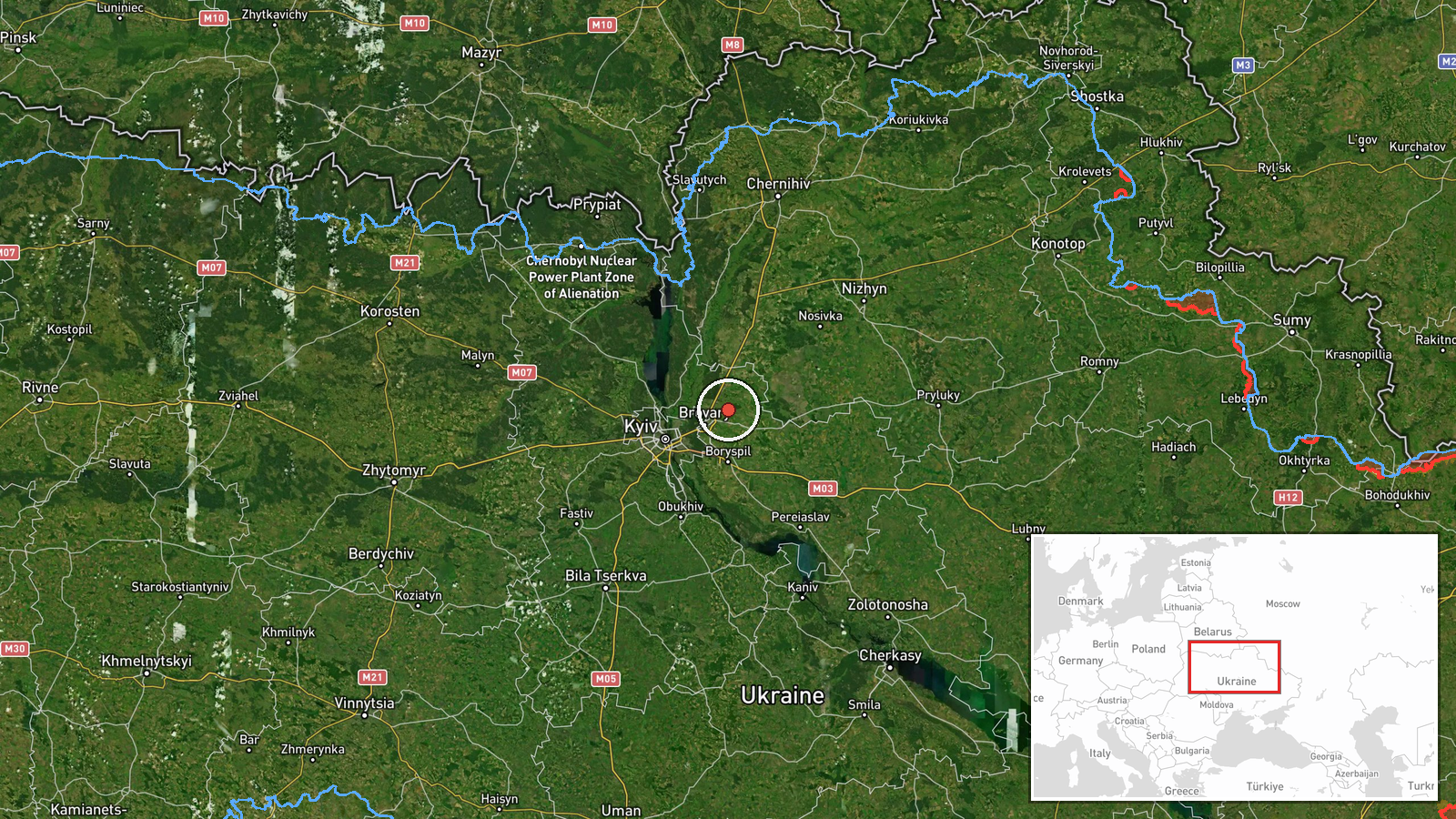
Ukrainian air monitoring systems detected Russian Shahed-136 kamikaze drones in transit over Kyiv Oblast on September 8 at approximately 16:34 UTC. One drone was tracked toward Krukivshchyna, a second positioned south of Vasylkiv, and three additional drones heading toward Velyka Dymerka. The report comes from Telegram monitoring channels tracking Ukrainian air-defense alerts and represents real-time tracking of inbound threats.
Context and assessment
This drone transit follows a pattern of sustained Russian aerial operations against Kyiv Oblast over the preceding 24 hours, including cruise missile groups detected early on September 8 and additional Shahed transits reported overnight on September 7. The multiple targeting vectors suggest a coordinated strike attempt aimed at infrastructure or civilian areas across the oblast's populated regions. Krukivshchyna and Velyka Dymerka lie in populated areas southwest of central Kyiv, while Vasylkiv is a key transport hub. The concentration of reported threats indicates Russia may be attempting saturation attacks to overwhelm Ukrainian air defenses, consistent with recent operational patterns observed across the conflict.
Sources and confidence
Single source from Telegram channel @war_monitor, which tracks Ukrainian civil air-defense alert systems in real time. No cross-confirmation from independent Ukrainian official statements available in provided data. Confidence score of 6.0 reflects the single-source nature of the report; confirmation would require corroboration from Ukrainian air force or SBU statements regarding interceptions or impacts.
Location
Kyiv Oblast, central Ukraine. Three separate transit corridors identified: Krukivshchyna in southwestern Kyiv Oblast; Vasylkiv, a major transport center on the Dnipro River south of Kyiv; and Velyka Dymerka northeast of central Kyiv. The oblast contains the capital and surrounding industrial and population centers, making it a persistent Russian targeting priority.
Related events nearby
- 22nd Mechanized Brigade (ZSU) deploys robotic and unmanned systems for high-risk operations including evacuati2026-09-09 15:35 UTC · Deployment · Kyiv Oblast, Ukraine
- One reactive (jet-powered) Shahed-136 kamikaze drone detected in transit toward Brovary, Kyiv Oblast. Air raid2026-09-09 09:30 UTC · Drone Transit · Brovary, Kyiv Oblast, Ukraine
- Russian Shahed-136 kamikaze drones detected transiting Kyiv airspace. Three separate vectors tracked: 2x towar2026-09-08 17:27 UTC · Drone Transit · Brovary, Kyiv Oblast, Ukraine
- Russian Geran-2 kamikaze drone struck a Ukrainian FP-2 UAV launch facility. The attack targeted Ukrainian dron2026-09-09 00:37 UTC · UAS Strike · FP-2 UAV Launch Site, Kyiv Oblast, Ukraine
- Two reactive (jet-powered) Shahed-136 kamikaze drones detected transiting from Bobrovsky direction toward Kyiv2026-09-09 09:23 UTC · Drone Transit · Lyubychiv, Kyiv Oblast, Ukraine
▶ View this event on the live map
Intel Mapper aggregates open-source reports from monitored Telegram and X channels, geolocates them, cross-checks duplicates across sources and assigns a confidence score. Entries are updated as new confirmations arrive. Read how we verify events.