Russian ballistic missile detected descending toward Bobrovytsia, Chernihiv Oblast
What happened
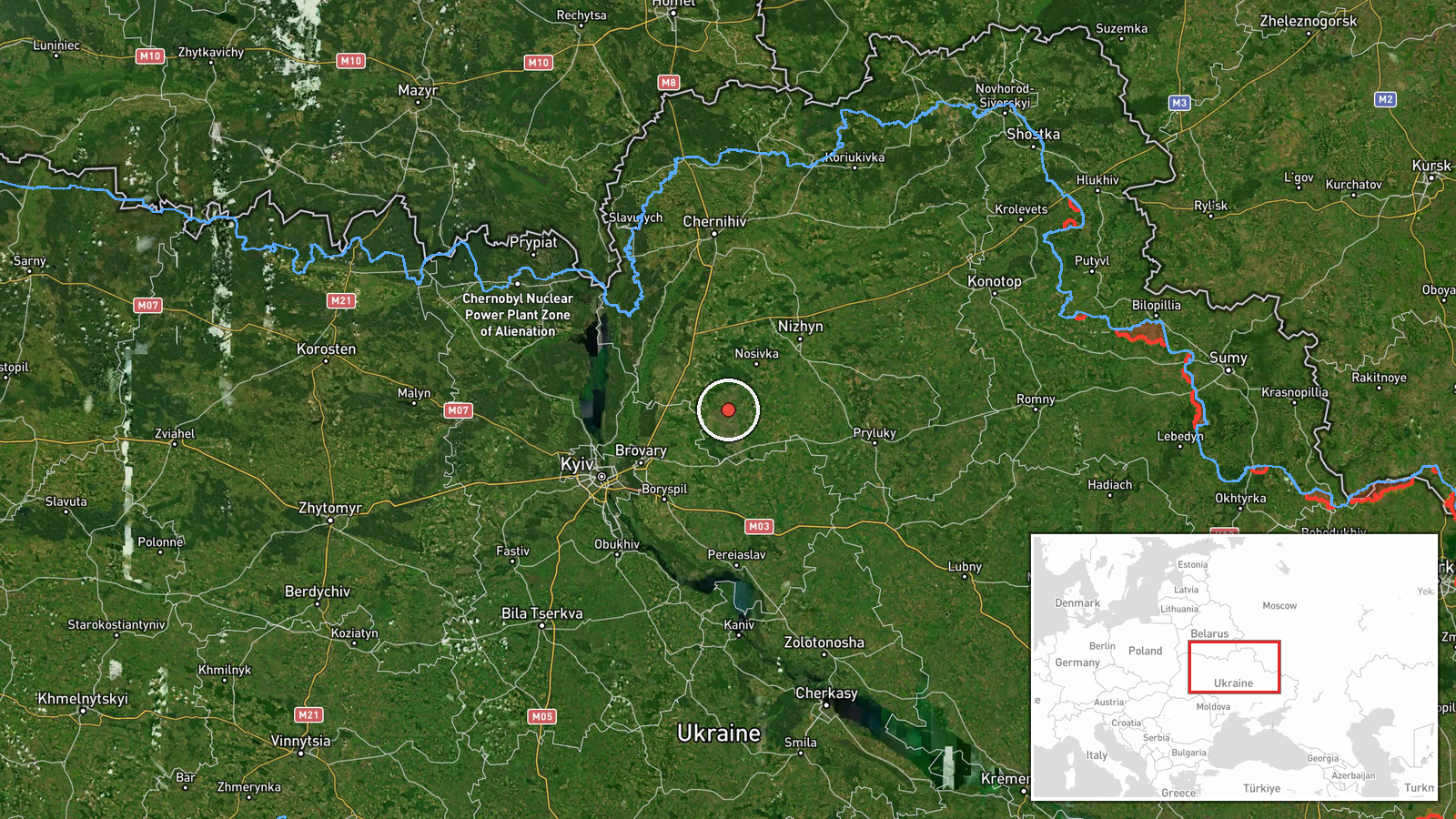
Ukrainian air defense monitoring systems reported detecting a Russian ballistic missile descending over Bobrovytsia, a settlement in Chernihiv Oblast located northeast of Kyiv, on 18 September at 16:34 UTC. The report was posted to Telegram by @war_monitor, a Ukrainian air defense tracking channel. No immediate impact assessment or interception claim was included in the initial alert.
Context and assessment
Bobrovytsia lies in the northeastern approaches to Kyiv, an area that has faced sustained Russian strike activity throughout the conflict. The detection comes amid an apparent coordinated Russian air campaign on 18 September involving multiple ballistic and cruise missile descents across Kyiv Oblast and Chernihiv Oblast. Related reports from the same timeframe document ballistic threats near Nizhyn and drone transits over the Kyiv Reservoir and Luk'yanivka, suggesting a multi-vector attack or reconnaissance pattern. Chernihiv Oblast remains a key operational axis, with Russian forces positioned to the east and north. The concentration of reported threats in a short window may indicate either a concentrated strike package or intensified monitoring activity.
Sources and confidence
Single source: Telegram channel @war_monitor, a Ukrainian air defense monitoring outlet. No cross-confirmation from independent channels or official Ukrainian defense statements visible in provided data. Confidence score of 6.0 reflects source singularity and lack of secondary verification. Confirmation from Ukraine's Air Force official channels or impact reports would strengthen confidence; conflicting reports from other monitors would lower it.
Location
Bobrovytsia is a settlement in Chernihiv Oblast, approximately 90 kilometers northeast of central Kyiv. The settlement is positioned in open terrain north of the Desna River watershed. Coordinates place it in the region between Nizhyn and Chernihiv city, an area of repeated Russian air activity.
Related events nearby
- One reactive-engine drone (Shahed variant) detected transiting over Luk'yanivka neighborhood, Kyiv. Air raid m2026-09-17 18:59 UTC · Drone Transit · Luk'yanivka, Kyiv, Ukraine
- Ukrainian air defense reports reconnaissance/monitoring activity over Kyiv Oblast. No impacts or casualties re2026-09-18 15:50 UTC · Drone Transit · Kyiv Oblast, Ukraine
- Ukrainian air defense monitoring confirms Russian drone/projectile transit profile matching earlier reports. V2026-09-18 16:35 UTC · Drone Transit · Nizhyn, Chernihiv Oblast, Ukraine
- Russian ballistic missile or long-range projectile detected descending toward Nizhyn. Ukrainian air defense mo2026-09-18 16:28 UTC · Drone Transit · Nizhyn, Chernihiv Oblast, Ukraine
- Russian reactive (jet-powered Shahed-136) drone detected transiting from Kipti toward Kyiv Oblast water reserv2026-09-18 14:06 UTC · Drone Transit · Kyiv Reservoir, Kyiv Oblast, Ukraine
▶ View this event on the live map
Intel Mapper aggregates open-source reports from monitored Telegram and X channels, geolocates them, cross-checks duplicates across sources and assigns a confidence score. Entries are updated as new confirmations arrive. Read how we verify events.