Three Russian attack drones detected transiting toward Chernihiv Oblast
What happened
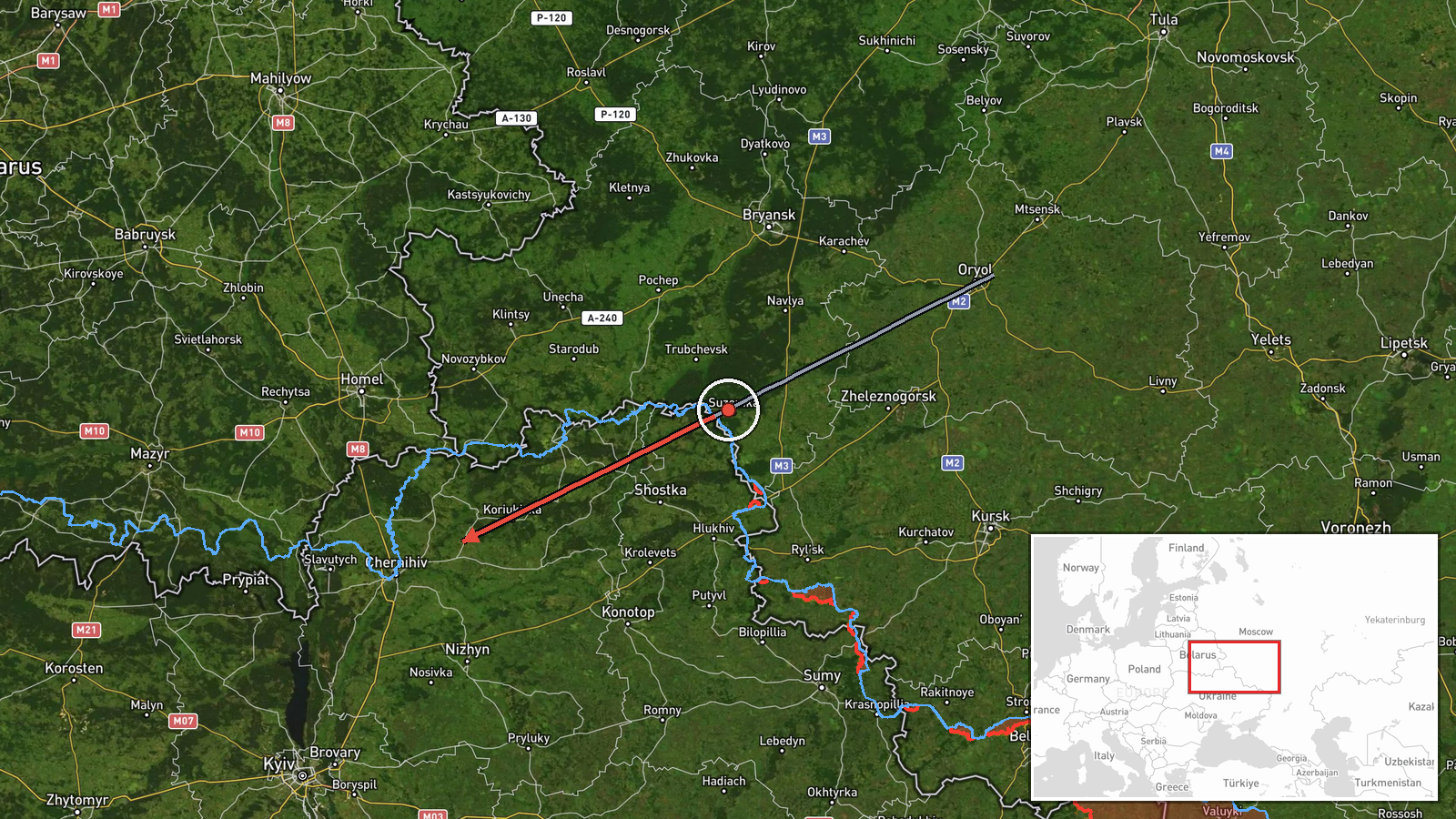
Ukrainian air defense monitoring detected three Russian Shahed-136 variant attack drones in flight from Oryol, Russia, through Bryansk Oblast toward Chernihiv Oblast on September 18 at approximately 18:54 UTC. The drones were reportedly tracked in transit; no impact or interception was reported at the time of the monitoring channel's statement.
Context and assessment
This detection occurs amid a sustained pattern of Russian drone operations targeting northern Ukraine. Earlier the same day, multiple projectiles and drones were detected along similar vectors through Chernihiv Oblast, including reports near Nizhyn and Bobrovytsia, as well as activity over Kyiv Reservoir and Kyiv Oblast. Chernihiv Oblast, located north of Kyiv near the Russian border, remains within range of Russian launch sites and has experienced repeated attack sequences. The concentration of multiple detection reports within hours suggests either a coordinated strike package or persistent reconnaissance and strike activity. The use of reactive Shahed-136 variants—jet-powered drones capable of sustained flight—indicates an operational tempo focused on targets requiring loitering or precision delivery.
Sources and confidence
Single source: Telegram channel @war_monitor. Cross-confirmation against same-day related events from the same monitoring source provides consistency but limits independent verification. Confidence score of 6.0 reflects single-source reporting. Would be raised by independent confirmation from Ukrainian military or second monitoring channel; would be lowered by contradictory reports or failed follow-up impact claims.
Location
Chernihiv Oblast, northern Ukraine, determined at regional precision level. The detection vector originates in Oryol, Russia, and transits through Bryansk Oblast before entering Ukrainian airspace. Chernihiv Oblast lies approximately 150 kilometers northeast of Kyiv near the Desna River valley and Russian border. The oblast is a primary transit corridor for Russian long-range strikes into central Ukraine.
Related events nearby
- Ukrainian air defense monitoring confirms Russian drone/projectile transit profile matching earlier reports. V2026-09-18 16:35 UTC · Drone Transit · Nizhyn, Chernihiv Oblast, Ukraine
- Russian ballistic missile or long-range projectile detected descending toward Nizhyn. Ukrainian air defense mo2026-09-18 16:28 UTC · Drone Transit · Nizhyn, Chernihiv Oblast, Ukraine
- Russian ballistic missile descent detected over Bobrovytsia, beyond Kyiv direction. Ukrainian air defense moni2026-09-18 16:34 UTC · Ballistic Missile · Bobrovytsia, Chernihiv Oblast, Ukraine
- Russian reactive (jet-powered Shahed-136) drone detected transiting from Kipti toward Kyiv Oblast water reserv2026-09-18 14:06 UTC · Drone Transit · Kyiv Reservoir, Kyiv Oblast, Ukraine
- Ukrainian air defense reports reconnaissance/monitoring activity over Kyiv Oblast. No impacts or casualties re2026-09-18 15:50 UTC · Drone Transit · Kyiv Oblast, Ukraine
▶ View this event on the live map
Intel Mapper aggregates open-source reports from monitored Telegram and X channels, geolocates them, cross-checks duplicates across sources and assigns a confidence score. Entries are updated as new confirmations arrive. Read how we verify events.