Six Russian Shahed drones tracked over Mykolaiv Oblast in overnight transit
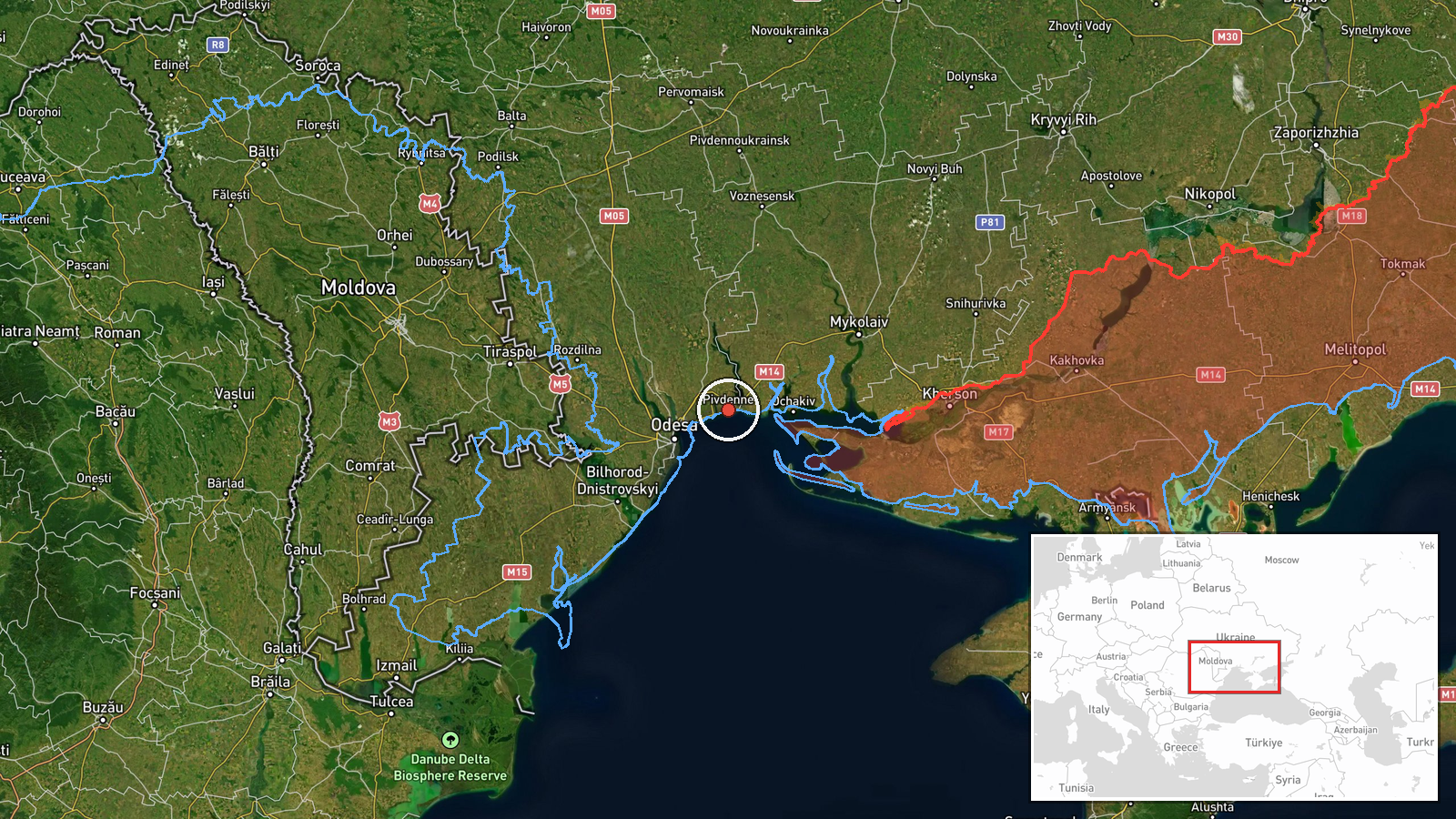
What happened
Ukrainian air defense monitoring reported the detection of six Russian Shahed-136 variant drones in transit over Pivdenne, Mykolaiv Oblast, on the night of 18 September 2026. The drones were identified as reactive jet-powered unmanned aircraft passing through the settlement area. The report came from a single Telegram channel monitoring air defense activity and does not indicate strikes or interceptions at this location.
Context and assessment
The transit occurred during an intensive Russian drone campaign across southern Ukraine on 18 September, with multiple Shahed variants detected moving toward coastal targets. Earlier that day, Russian forces struck Odesa port and the city's administrative district, while additional drone transits were logged over Mykolaiv Oblast and neighboring Odesa Oblast. Pivdenne lies approximately 120 kilometers west of Odesa along a likely flight corridor toward the coast. The concentration of drone activity suggests a coordinated overnight operation targeting Black Sea port facilities and critical infrastructure in Odesa and surrounding regions, consistent with Russia's recent emphasis on disrupting Ukrainian logistics and civilian administration.
Sources and confidence
Single source report from Telegram channel @war_monitor. Detection based on Ukrainian air defense monitoring rather than visual or photographic confirmation. Confidence level of 6.0 reflects single-source reporting without independent cross-confirmation. Confidence would increase with corroboration from additional channels or official Ukrainian military statements; would decrease if subsequent reporting contradicts the drone count or location.
Location
Pivdenne is a settlement in western Mykolaiv Oblast, positioned approximately 120 kilometers inland from the Black Sea coast and roughly 120 kilometers northwest of Odesa city. The location sits within a region regularly transited by Russian drones en route to coastal targets. Geographic precision is classified as settlement-level with high confidence based on named locality.
Related events nearby
- Russian forces attacked Ukrainian Black Sea port infrastructure, striking 5 dry cargo vessels. Attack targeted2026-09-18 14:55 UTC · Naval · Odesa Port, Odesa City, Odesa Oblast, Ukraine
- Four reactive-engine drones (Shahed variants) tracked in transit toward Odesa city. Ukrainian air raid monitor2026-09-18 00:37 UTC · Drone Transit · Odesa, Odesa Oblast, Ukraine
- Ukrainian air defense monitoring detected 2 Russian reactive (jet-powered Shahed-136) drones transiting toward2026-09-18 16:06 UTC · Drone Transit · Pidvydne, Odesa Oblast, Ukraine
- Russian reactive (jet-powered Shahed-136) drone struck an administrative building in central Odesa, causing fi2026-09-18 14:30 UTC · UAS Strike · Administrative building, Odesa, Ukraine
- Russian reactive/jet-powered Shahed-136 drone detected transiting westward toward Odesa from the west. Ukraini2026-09-18 13:34 UTC · Drone Transit · Mykolaiv Oblast, Ukraine
▶ View this event on the live map
Intel Mapper aggregates open-source reports from monitored Telegram and X channels, geolocates them, cross-checks duplicates across sources and assigns a confidence score. Entries are updated as new confirmations arrive. Read how we verify events.