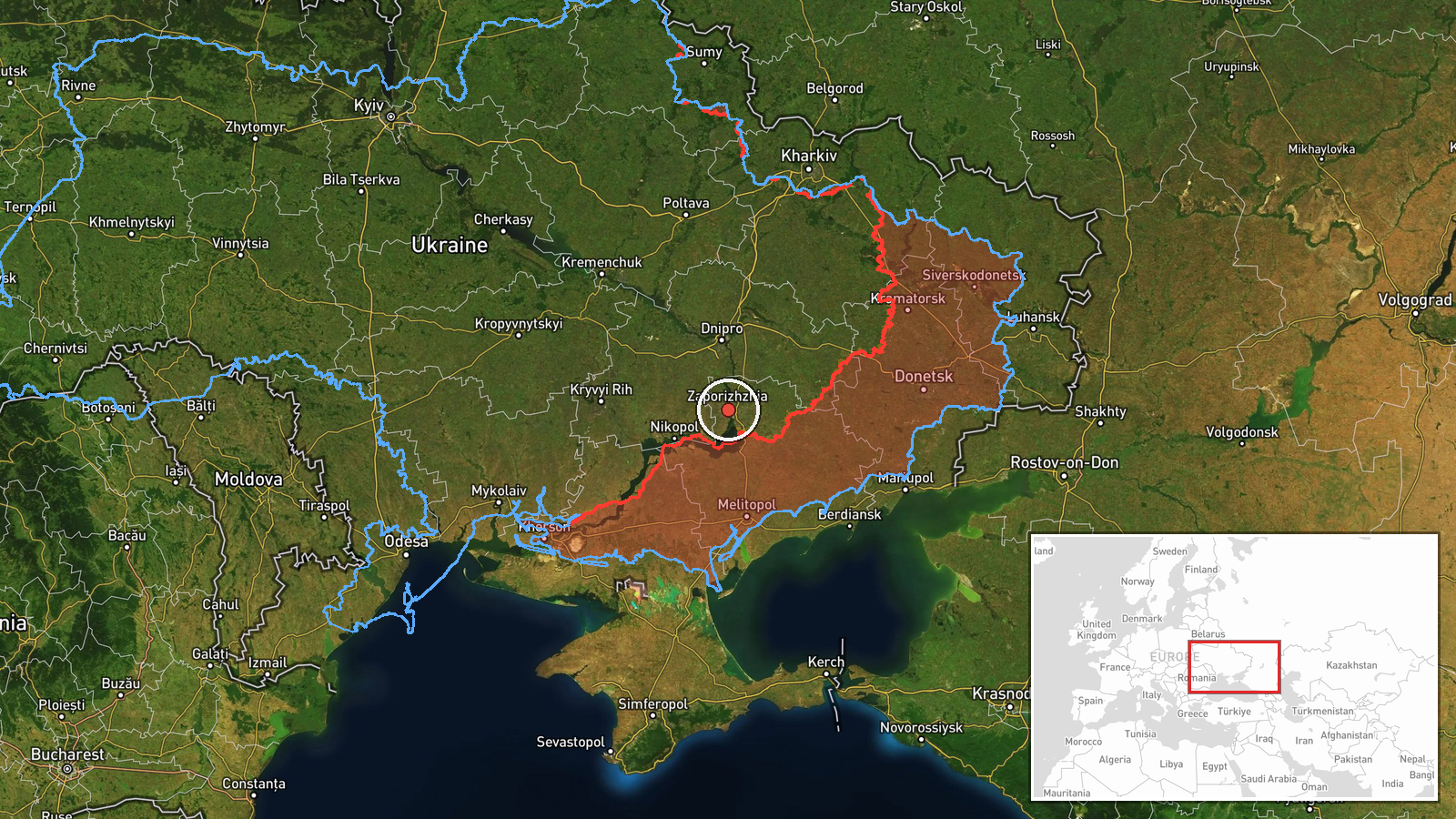
Russian ballistic missiles reported striking Zaporizhzhia Oblast
What happened
Russian forces reportedly conducted ballistic missile strikes against targets in Zaporizhzhia Oblast on September 19 at approximately 14:00 UTC, according to a Telegram channel monitoring military activity. The report provides no details on specific impact locations, facilities targeted, or resulting damage or casualties. The strikes occurred amid continued Russian air operations across eastern Ukraine, including drone transits and strikes in adjacent Dnipropetrovsk Oblast.
Context and assessment
Zaporizhzhia Oblast remains a zone of intense Russian air and drone activity. The reported ballistic strikes follow a pattern of sustained aerial operations in the region over the preceding 24 hours, including detected Shahed-class drone transits over Zaporizhzhia city on September 18 and a confirmed Shahed strike on Bozhdarivka on September 19. Ukrainian forces have simultaneously targeted Russian drone command posts near Novoprokopivka in the same oblast. The use of ballistic missiles alongside loitering munitions suggests Russia may be concentrating firepower against military infrastructure or logistics nodes in the oblast, though the specific targeting rationale remains unclear from available reporting.
Sources and confidence
Single Telegram source (@war_monitor) reported the strikes with no corroborating independent confirmation noted in available data. The low confidence score reflects sole-source reporting and absence of specific impact information or Ukrainian official verification. Confidence would increase with secondary confirmation from Ukrainian military sources, damage imagery, or additional independent observers.
Location
Zaporizhzhia Oblast, a sprawling region in southeastern Ukraine covering approximately 27,000 square kilometers. The reported strike location is given only at regional level with low geographic precision. The oblast borders Russian-held territory to the east and contains mixed civilian and military infrastructure, including the Zaporizhzhia Nuclear Power Station further south near the Dnipro River.
Related events nearby
- One Russian reactive (jet-powered Shahed-136) drone detected transiting over Zaporizhzhia city. Ukrainian air 2026-09-18 15:02 UTC · Drone Transit · Zaporizhzhia, Zaporizhzhia Oblast, Ukraine
- Russian jet-powered (reactive) Shahed-class kamikaze drone struck southern suburbs of Dnipro in Dnipropetrovsk2026-09-19 12:57 UTC · UAS Strike · Dnipro suburbs, Dnipropetrovsk Oblast, Ukraine
- One Russian Shahed-class jet-powered (reactive) UAV variant designated 'Siker' continued transiting through Ka2026-09-19 02:53 UTC · Drone Transit · Dnipro (Kamyanske sector), Dnipropetrovsk Oblast,
- Ukrainian forces struck multiple Russian military targets on 18-19 September: UAV command posts in Luhansk/Pok2026-09-19 11:16 UTC · Report · Novoprokopivka, Zaporizhzhia Oblast, Ukraine
- Ukrainian air defense monitoring detected 1 Russian reactive (jet-powered Shahed-136) drone transiting over Pa2026-09-18 18:04 UTC · Drone Transit · Pavlohrad, Dnipropetrovska Oblast, Ukraine
▶ View this event on the live map
Intel Mapper aggregates open-source reports from monitored Telegram and X channels, geolocates them, cross-checks duplicates across sources and assigns a confidence score. Entries are updated as new confirmations arrive. Read how we verify events.