Russian reconnaissance drones transit northern Chernihiv Oblast toward Kyiv
What happened
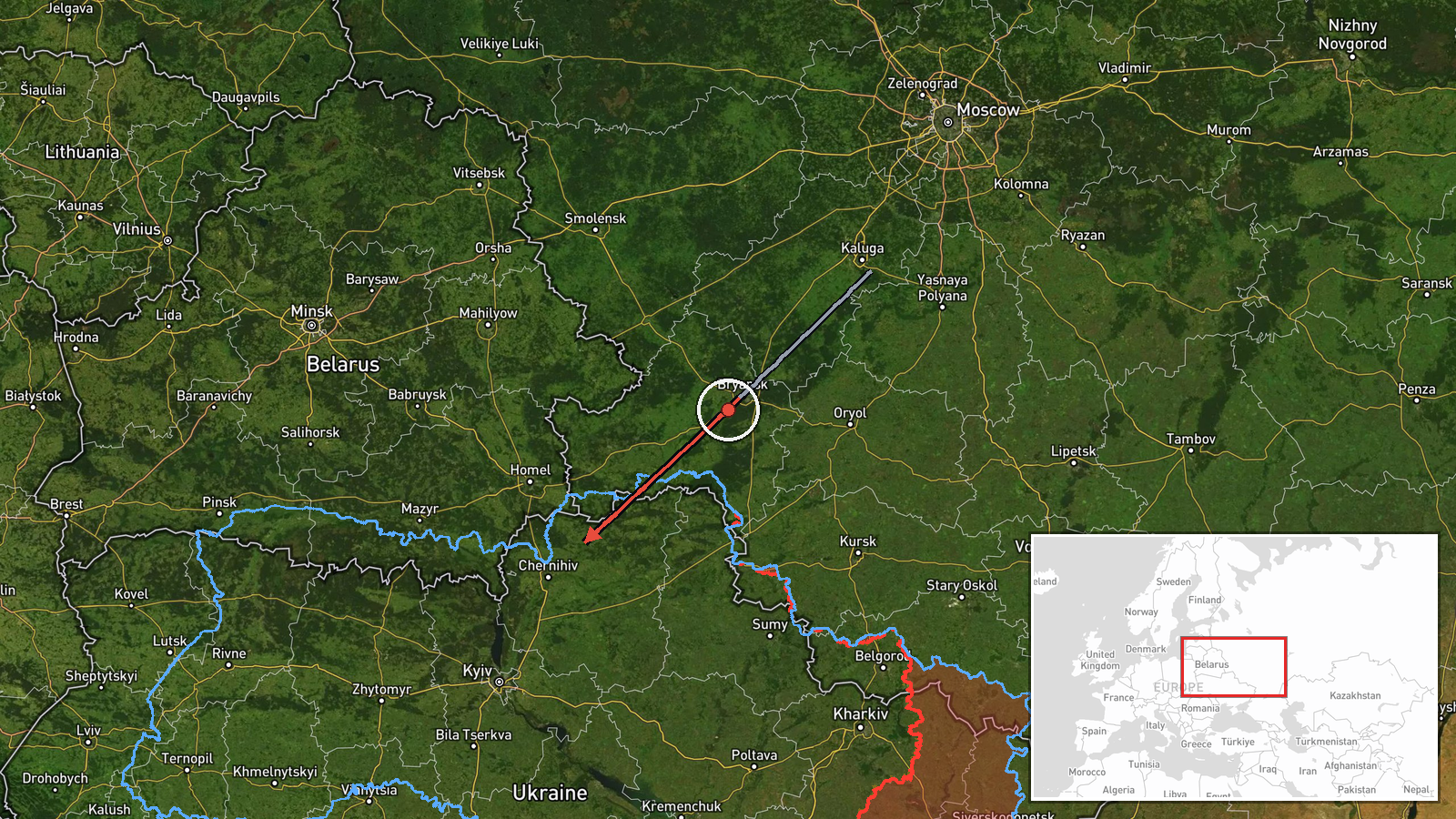
Russian unmanned aircraft reportedly transited multiple points across Chernihiv Oblast on 21 September at 17:10 UTC. The report indicates four conventional reconnaissance drones passed over Snovsk, three jet-propelled Shahed-class drones over Chernihiv city, and single drones each over Berezhna and Kipti before continuing toward Kyiv Oblast. The transit follows an established reconnaissance corridor from Bryansk Oblast in Russia.
Context and assessment
Chernihiv Oblast lies directly north of Kyiv and provides a traditional approach route for Russian air operations targeting the capital. The reported reconnaissance activity on 21 September aligns with a broader pattern of drone transits recorded throughout the day across multiple sectors—including simultaneous activity near Chornobyl and across wider Kyiv Oblast—suggesting coordinated surveillance ahead of possible strikes. The mix of conventional and jet-propelled drones indicates both reconnaissance and potential strike capability. Such corridor activity typically precedes larger drone waves, consistent with Ukrainian warnings of additional waves expected through the evening.
Sources and confidence
Single source: Telegram channel @war_monitor, posting in Ukrainian military vernacular. No corroborating reports identified in available data. Confidence rated 6.0/10 reflects single-source reporting and regional-level geographic precision. Confidence would increase with independent verification from Ukrainian air defence channels or official statements; would decrease if subsequent larger strikes fail to materialize or if reporting contradicts established drone patterns.
Location
Chernihiv Oblast, northern Ukraine, bordering Russia and Belarus. Reports reference specific settlements—Snovsk, Chernihiv city, Berezhna, and Kipti—spanning the oblast's western and central regions. The reported trajectory moves southwestward from the Russian border toward Kyiv Oblast, following the historically active northern air corridor used by Russian strike packages.
Related events nearby
- One Russian Shahed-type reactive (jet-powered) kamikaze drone detected in transit from Chornobyl area toward B2026-09-21 00:15 UTC · Drone Transit · Chornobyl, Kyiv Oblast, Ukraine
- Russian reconnaissance drones transiting toward Kyiv Oblast with emphasis on Kyiv, Zhytomyr, and Chernihiv. Ad2026-09-21 17:27 UTC · Drone Transit · Kyiv Oblast, Ukraine
- Multiple Russian Shahed-type reactive (jet-powered) kamikaze drones detected in transit across Kyiv Oblast: 1×2026-09-21 00:46 UTC · Drone Transit · Kyiv Oblast, Ukraine
- Zelensky demands Russia cease targeting Ukraine's energy infrastructure and food exports, pledging reciprocal 2026-09-21 14:01 UTC · Statement · Kyiv, Ukraine
- Ukraine and NATO conducted joint tactical seminars at JATEC in Lublin, Poland, with Ukrainian combat veterans 2026-09-21 11:54 UTC · Diplomacy · Kyiv, Ukraine
▶ View this event on the live map
Intel Mapper aggregates open-source reports from monitored Telegram and X channels, geolocates them, cross-checks duplicates across sources and assigns a confidence score. Entries are updated as new confirmations arrive. Read how we verify events.