Russian Shahed drone loiters near Kropyvnytskyi for extended period
What happened
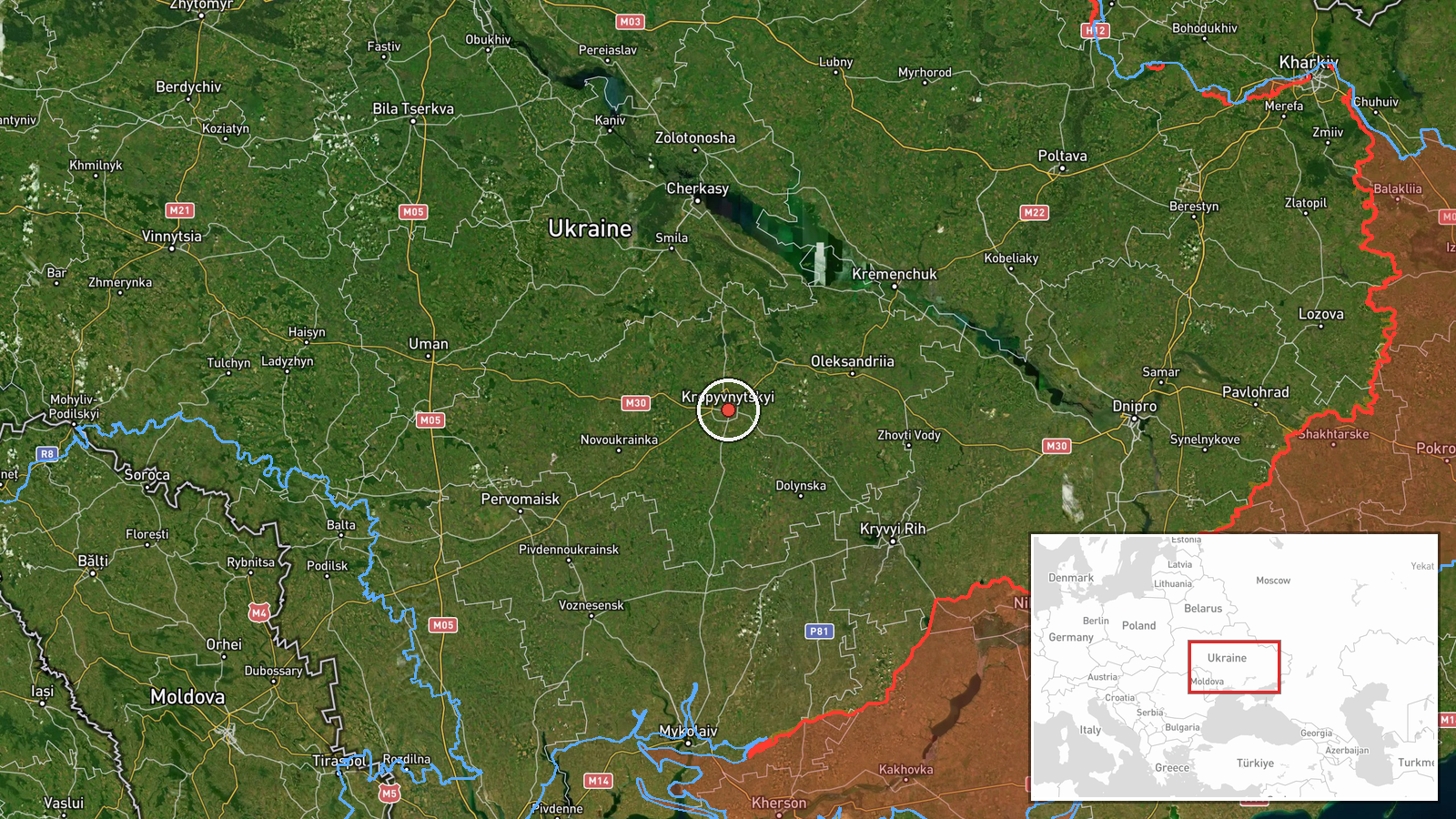
Ukrainian air monitoring detected a single Russian jet-powered Shahed-variant unmanned aerial vehicle transiting in the vicinity of Kropyvnytskyi, Kirovohrad Oblast on 27 September at approximately 20:40 UTC. According to the monitoring channel, the drone remained in the area for an extended duration. The aircraft was reported as still in flight at the time of the alert.
Context and assessment
Kropyvnytskyi, a major logistics and industrial hub in central Ukraine roughly 320 kilometres from the front line, has been a recurring focus of Russian drone operations. This sighting occurred on a day when Ukrainian air defences detected over 2,200 Russian attack drones nationwide as part of a sustained week-long campaign, alongside hundreds of aerial bombs and ballistic missiles. The prolonged loiter pattern of a reactive Shahed variant near the city may indicate reconnaissance, targeting refinement, or preparation for follow-on strikes. Similar drone transit activity was reported simultaneously in nearby Cherkasy Oblast, suggesting a coordinated operational tempo across central Ukraine.
Sources and confidence
Reported by Telegram channel @war_monitor, a Ukrainian air monitoring source, with no cross-confirmation from independent channels at time of reporting. Confidence score of 6.0 reflects single-source verification and the inherent challenge of confirming drone positions in real time. Confirmation by Ukrainian official air defence statements or secondary channels would raise confidence; absence of broader reporting after 24 hours may suggest the drone transited without strike.
Location
Kropyvnytskyi is a major city in Kirovohrad Oblast in central Ukraine, approximately 320 kilometres southwest of Kyiv. The location was identified to regional precision. The city sits astride key transportation corridors and hosts significant military and civilian infrastructure, making it a strategic target. Nearby Senkivka and Semenivka in neighbouring regions experienced similar drone activity on the same date.
Related events nearby
- Ukrainian air monitoring reports two Russian reactive (jet-powered) Shahed-variant UAVs detected transiting pa2026-09-27 13:19 UTC · Drone Transit · Katyuzhanky, Cherkasy Oblast, Ukraine
- Russia conducted a massive week-long assault on Ukraine: 2,200+ attack drones, ~1,650 aerial bombs, and 38 mis2026-09-27 08:25 UTC · Report · Ukraine (National)
▶ View this event on the live map
Intel Mapper aggregates open-source reports from monitored Telegram and X channels, geolocates them, cross-checks duplicates across sources and assigns a confidence score. Entries are updated as new confirmations arrive. Read how we verify events.