Three Russian jet-powered Shahed drones transit over Kyiv Reservoir area
What happened
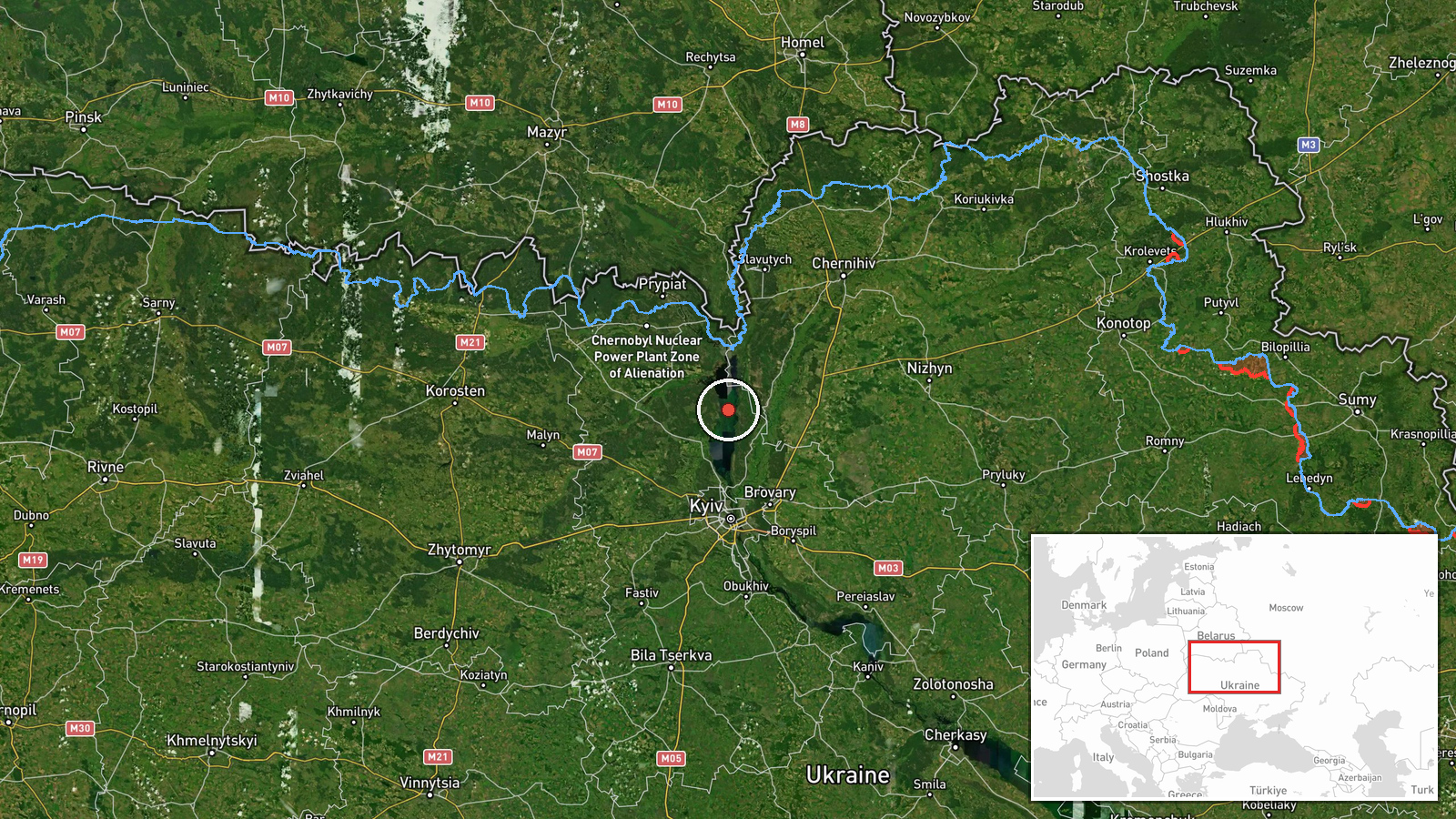
Ukrainian air monitoring detected three Russian jet-powered Shahed-variant reactive unmanned aerial vehicles in transit over the Kyiv Reservoir area in Kyiv Oblast on 28 September at approximately 07:00 UTC. The aircraft passed over the reservoir near the Desna River confluence. No impact or strike was reported. The detection was recorded by Ukrainian air defense monitoring systems and reported via the Telegram channel @war_monitor.
Context and assessment
The Kyiv Reservoir remains a strategic waterway and potential navigation corridor for Russian drone operations targeting the capital region. This transit follows a sustained pattern of Russian reactive Shahed operations across Kyiv Oblast documented over 27–28 September, including concurrent drone movements near Chornobyl, Vorzel, Borodyanky, and broader approaches to the oblast. The sequence suggests either coordinated massed operations or multiple independent strike attempts probing Ukrainian air defenses. Reactive Shahed variants, equipped with jet engines rather than piston motors, typically indicate higher-speed, longer-range mission profiles and may signal Russian attempts to penetrate or overwhelm layered air defense coverage around Kyiv.
Sources and confidence
Single source: Telegram channel @war_monitor, which monitors Ukrainian official air defense reports. No cross-confirmation from independent Ukrainian military channels or other open sources at time of report. Confidence score of 6.0 reflects reliable source but limited corroboration. Score would increase with secondary confirmation from SBU or Air Force channels; would decrease if transit claim is contradicted by Ukrainian official statements.
Location
Kyiv Reservoir, located north of Kyiv city proper in Kyiv Oblast, near the Desna River confluence. The reservoir is a major water supply and strategic geographic feature. Precision is regional; exact drone altitude and specific transit corridor not specified in report. The location sits approximately 30 km northwest of central Kyiv.
Related events nearby
- Ukrainian air monitoring reports one Russian reactive (jet-powered) Shahed-variant UAV detected transiting ove2026-09-27 12:57 UTC · Drone Transit · Chornobyl Exclusion Zone, Kyiv Oblast, Ukraine
- Russian reactive/jet-powered Shahed-variant UAV launched from Vorzel toward Kyiv at 6 km altitude. Single dron2026-09-27 12:51 UTC · UAS Strike · Vorzel, Kyiv Oblast, Ukraine
- Ukrainian air monitoring detected two Russian jet-powered Shahed-variant UAVs in transit toward Kyiv Oblast. P2026-09-27 16:22 UTC · Drone Transit · Kyiv Oblast, Ukraine
- Ukrainian air monitoring confirms two Russian jet-powered Shahed-variant UAVs detected transiting from Chernih2026-09-27 15:05 UTC · Drone Transit · Kyiv Oblast, Ukraine
- Russian jet-powered Shahed or Gerbera UAV struck a McDonald's logistics warehouse in Brovary after transiting 2026-09-28 07:40 UTC · UAS Strike · McDonald's Logistics Warehouse, Brovary, Kyiv Obla
▶ View this event on the live map
Intel Mapper aggregates open-source reports from monitored Telegram and X channels, geolocates them, cross-checks duplicates across sources and assigns a confidence score. Entries are updated as new confirmations arrive. Read how we verify events.