Two Russian Shahed drones detected transiting toward Dnipro region
What happened
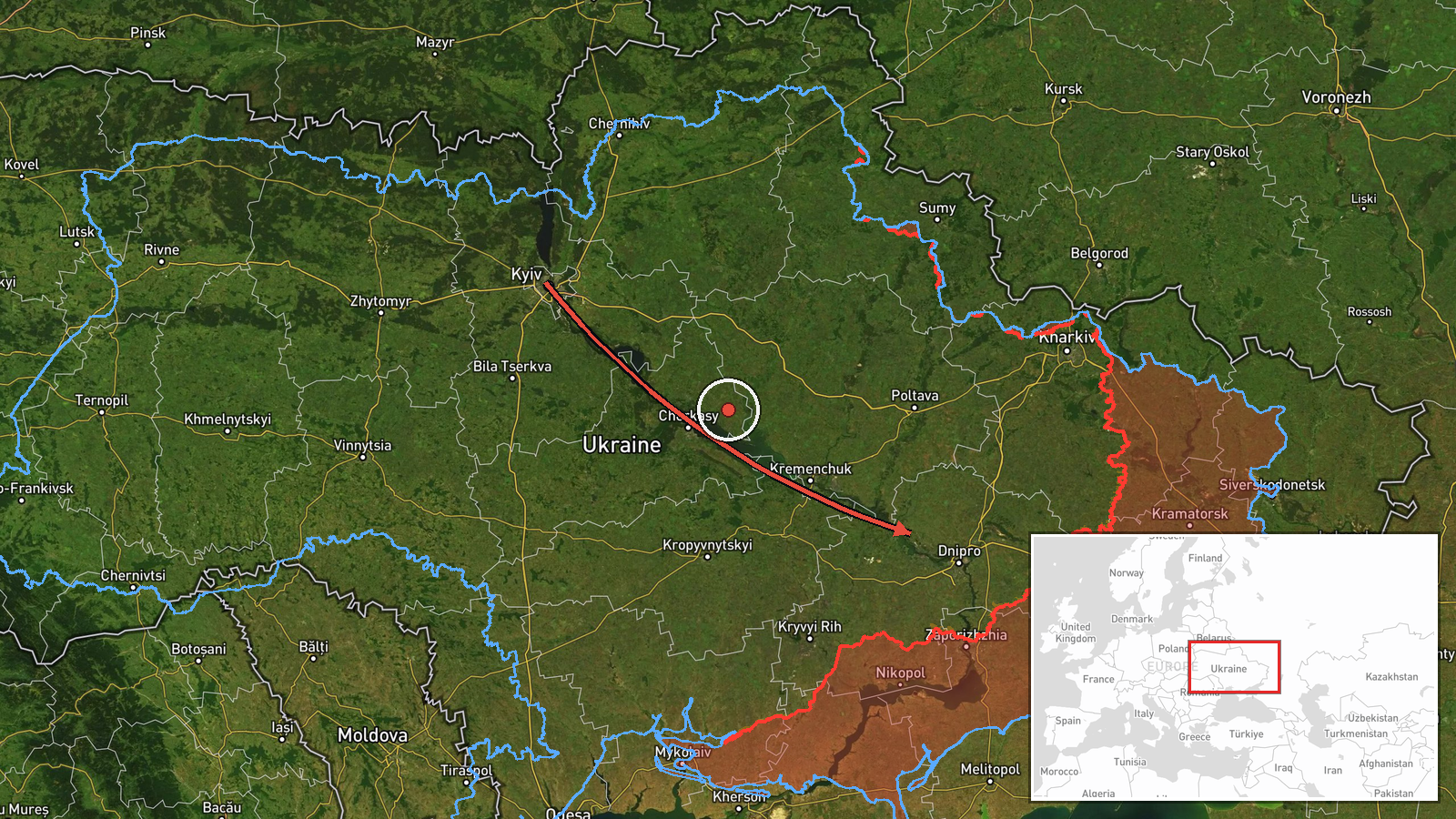
Ukrainian air monitoring detected two Russian Shahed-136 attack drones in transit over Berestin in Kyiv Oblast, heading toward Dniprovskyi District in Dnipropetrovsk Oblast on September 29 at approximately 08:50 UTC. The report comes from the Telegram channel @war_monitor and describes the drones as 'reactive' kamikaze-type unmanned systems. No attack impact was reported in this detection.
Context and assessment
Dniprovskyi District encompasses the city of Dnipro, Ukraine's fourth-largest city and a major industrial and administrative hub in southeastern Ukraine. This drone detection follows a confirmed Shahed strike on Dnipro the previous day that hit an office building and killed three people. Russian drone attacks on Dnipro have been a recurring pattern throughout the conflict, targeting civilian and infrastructure targets. The southerly approach route from Berestin suggests continuation of northern transit corridors used for these strikes. Such detections indicate ongoing Russian efforts to sustain pressure on major regional centers despite Ukrainian air defenses.
Sources and confidence
Single source: @war_monitor Telegram channel. No cross-confirmation from other Ukrainian air monitoring channels or official military sources reported. Confidence score of 6.0 reflects the specificity of the detection (coordinates, drone type, direction) and alignment with known attack patterns on the region, balanced against single-source reporting. Confirmation of impact or interception would increase confidence; clarification of detection method would strengthen assessment.
Location
Berestin is a settlement in northern Kyiv Oblast near the Kyiv-Chernihiv border region, approximately 90 kilometers north-northwest of central Dnipro. Dniprovskyi District lies in Dnipropetrovsk Oblast in southeastern Ukraine. The transit route spans roughly 150 kilometers from origin to target area, following typical northern approach vectors used in previous strikes on the city.
Related events nearby
- Russian Shahed-136 (reactive/jet-powered UAV) struck Dnipro from the south. Confirms earlier attack on office 2026-09-28 10:17 UTC · UAS Strike · Dnipro, Dnipropetrovsk Oblast, Ukraine
▶ View this event on the live map
Intel Mapper aggregates open-source reports from monitored Telegram and X channels, geolocates them, cross-checks duplicates across sources and assigns a confidence score. Entries are updated as new confirmations arrive. Read how we verify events.