Russian Shahed-136 drone detected transiting toward Pokrovsk in eastern Donetsk
What happened
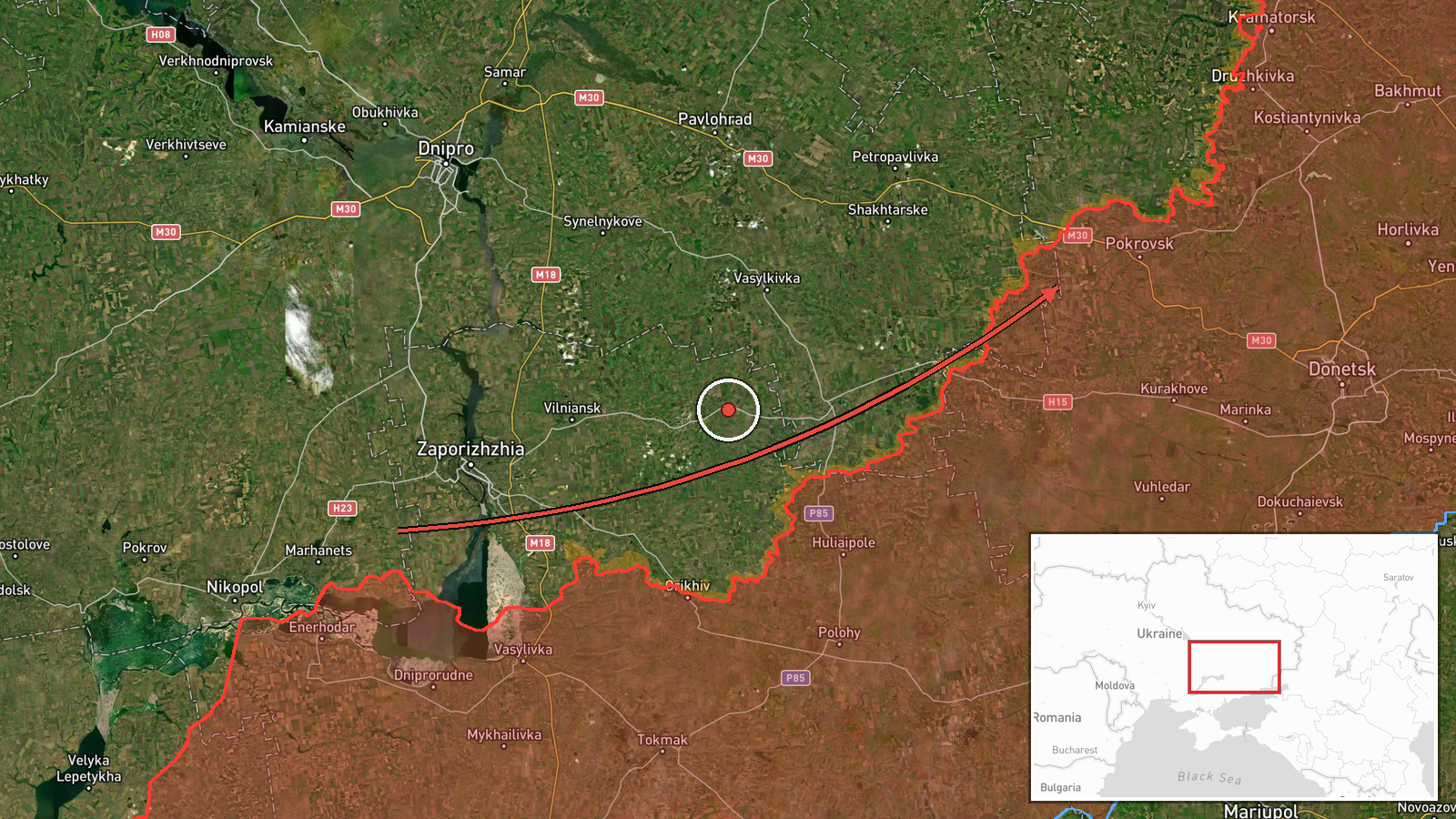
Ukrainian air monitoring detected one Russian Shahed-136 loitering munition in flight toward Pokrovsk, Donetsk Oblast, on 29 September at 09:08 UTC. The drone reportedly originated from Mashivka in Dnipropetrovsk Oblast. The report was posted to the Telegram channel @war_monitor, which tracks Ukrainian air defense alerts and drone activity across eastern Ukraine.
Context and assessment
Pokrovsk is a major logistics hub and administrative centre in government-controlled Donetsk, lying roughly 70 km behind active combat lines. Russian long-range drone campaigns have intensified across eastern Ukraine, with the General Staff reporting over 9,800 FPV and kamikaze drone engagements on 28 September alone. Individual Shahed detections in transit suggest ongoing Russian efforts to strike rear-area infrastructure, supply lines, or civilian targets. This report appears consistent with the sustained volume of Russian unmanned aircraft sorties documented across multiple fronts.
Sources and confidence
Single source: Telegram channel @war_monitor, a widely-monitored open-source tracker of Ukrainian air alerts. No independent cross-confirmation from official Ukrainian military channels visible in available data. Confidence score of 6.0 reflects plausible detection reporting but limited corroboration. Score would increase with confirmation from General Staff or air force statements; would lower if subsequent Ukrainian air defense claims contradicted the reported trajectory.
Location
Pokrovsk (48.28°N, 37.18°E), a city of approximately 60,000 in western Donetsk Oblast under Ukrainian control. Located on the Krasna River in steppe terrain, roughly 70 km northwest of Russian-held territory. Serves as a regional administrative and transport node; proximity to rail and road networks makes it a recurring target of long-range Russian strikes.
Related events nearby
- General Staff Ukraine reports Day 1679 of full-scale war. Yesterday: 213 combat engagements, 86 airstrikes, 9,2026-09-29 05:05 UTC · Report · Ukraine (Multiple Fronts)
- Ukrainian forces employed a Soviet-era APC rigged with an IED as a ramming charge against Russian fortificatio2026-09-28 12:22 UTC · Combat · Lyman, Donetsk Oblast, Ukraine
- Ukrainian Armed Forces destroyed Russian enemy supply depot at Komysh-Zoria, Zaporizhzhia Oblast on 28–29 Sept2026-09-29 07:45 UTC · UAS Strike · Komysh-Zoria, Zaporizhzhia Oblast, Ukraine
- Ukrainian forces regained ground (~43 km²) in the Katerynivka sector per DeepState frontline update. No settle2026-09-28 12:20 UTC · Combat · Katerynivka sector, Ukraine
- Hrekivka reported liberated by Ukrainian forces (per DeepStateMAP frontline update).2026-09-28 12:20 UTC · Capture · Hrekivka
▶ View this event on the live map
Intel Mapper aggregates open-source reports from monitored Telegram and X channels, geolocates them, cross-checks duplicates across sources and assigns a confidence score. Entries are updated as new confirmations arrive. Read how we verify events.