Russian Kalibr cruise missiles reported heading toward Dnipro
What happened
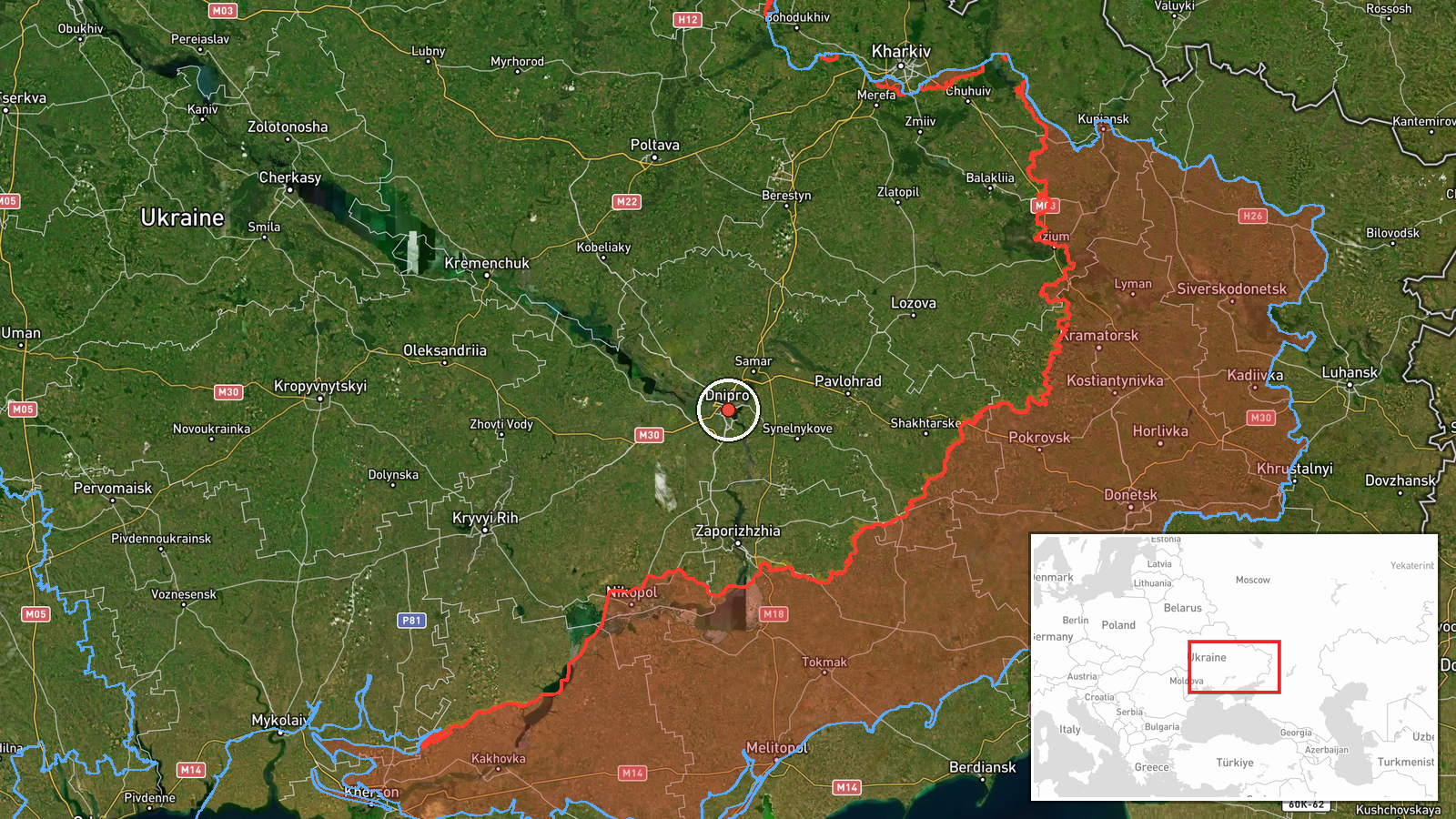
Ukrainian air monitoring reported two groups of Russian Kalibr cruise missiles heading toward Dnipro on the morning of October 7, 2026 at 01:44 UTC. The report was posted via Telegram by the war monitoring channel. A follow-up detection at 01:50 UTC confirmed at least one Kalibr missile over the city itself. The reports indicate an ongoing air attack on Ukraine's central industrial hub.
Context and assessment
Dnipro, located in southeastern Ukraine along the Dnieper River, remains a strategic target due to its role as a major industrial and administrative center. The city has faced repeated Russian air strikes throughout the conflict. This attack represents part of an intensive overnight assault detected by Ukrainian monitoring systems, which also recorded ballistic missile launches and drone activity targeting the same area within minutes—beginning around 00:20 UTC. The pattern suggests a coordinated multi-weapon strike campaign, typical of Russian efforts to overwhelm air defenses and damage military-industrial infrastructure.
Sources and confidence
Ukrainian air monitoring channel @war_monitor on Telegram provided the initial report. The detection was corroborated by a follow-up report six minutes later confirming missile presence over Dnipro. Confidence remains moderate due to single-source reporting; however, the alerts align with contemporaneous ballistic missile and drone detections in the same location, suggesting a coordinated operation rather than isolated data.
Location
Dnipro city center, located at approximately 48.46°N, 35.05°E in southeastern Ukraine's Dnipropetrovsk Oblast. The settlement sits along the Dnieper River, a major geographic feature. Precision is assessed as high based on settlement-level geolocation, though the exact target within the city cannot be determined from air monitoring data alone.
Related events nearby
- Ukrainian air monitoring: 1 Russian Kalibr cruise missile over Dnipro.2026-10-07 01:50 UTC · Cruise Missile · Dnipro, Ukraine
- Ukrainian air monitoring confirms ongoing Russian ballistic missile threat over Dnipro. Multiple ballistic mis2026-10-07 00:27 UTC · Ballistic Missile · Dnipro, Dnipropetrovsk Oblast, Ukraine
- Ukrainian air monitoring: 1 Russian ballistic missile over Dnipro.2026-10-07 00:27 UTC · Ballistic Missile · Dnipro, Ukraine
- Ukrainian air monitoring detected Russian Shahed-type drone exiting toward Dnipro region from Voronezh directi2026-10-07 00:26 UTC · Drone Transit · Dnipro, Dnipropetrovsk Oblast, Ukraine
- Ukrainian air monitoring: 1 Russian ballistic missile over Dnipro.2026-10-07 00:20 UTC · Ballistic Missile · Dnipro, Ukraine
▶ View this event on the live map
Intel Mapper aggregates open-source reports from monitored Telegram and X channels, geolocates them, cross-checks duplicates across sources and assigns a confidence score. Entries are updated as new confirmations arrive. Read how we verify events.