Ukrainian air monitors report 2 Russian cruise missiles transiting Nizhyn area
What happened
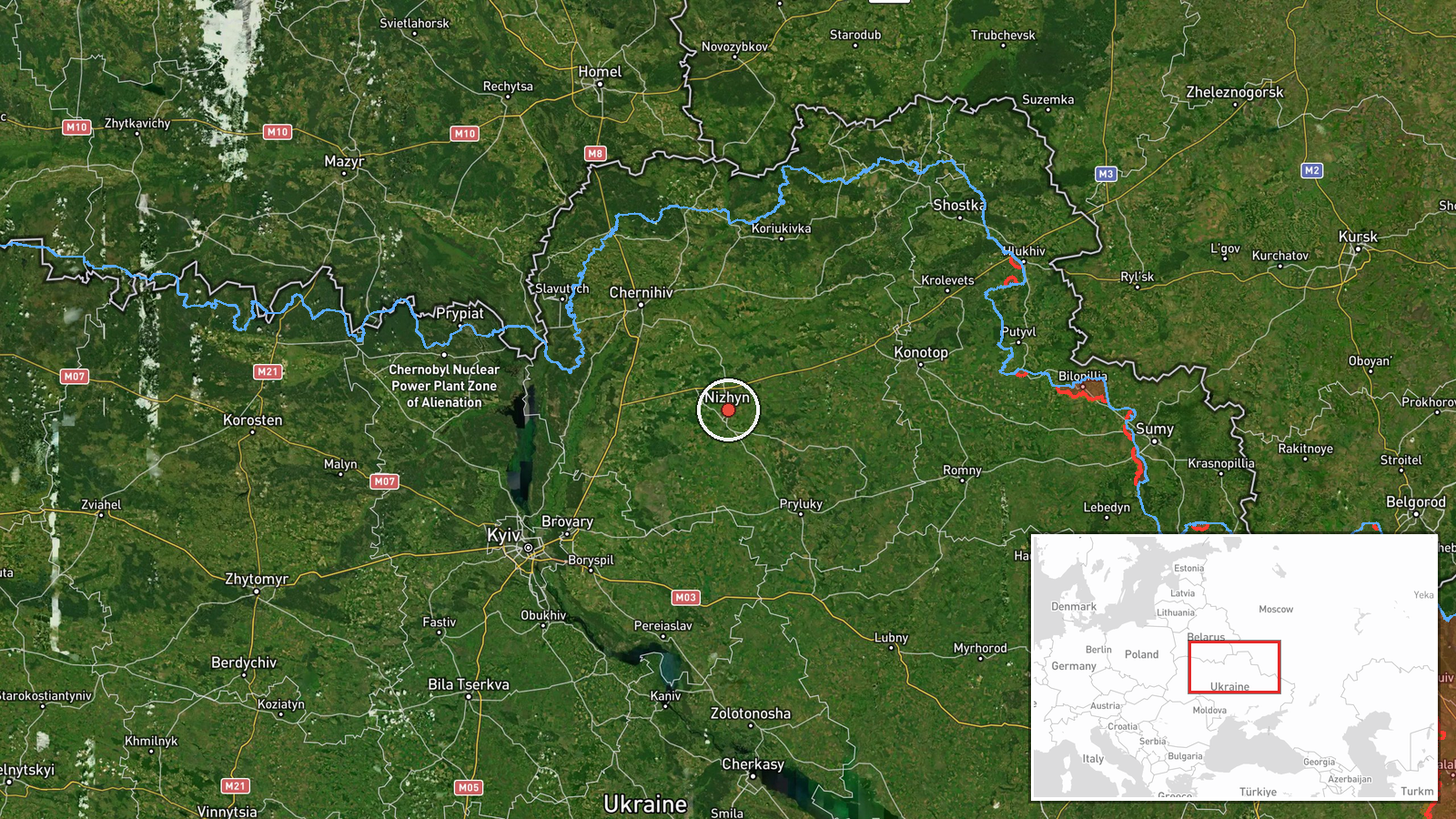
Ukrainian air monitoring channels reported the passage of two Zircon or Oniks cruise missiles over Nizhyn, a city in northern Chernihiv Oblast, on 10 October at approximately 10:59 UTC. The report was posted to Telegram by @war_monitor. The missiles' intended target and whether they were intercepted were not specified in the available monitoring data. The missiles transited an area roughly 100 kilometres north-northeast of Kyiv.
Context and assessment
Nizhyn lies in a corridor frequently used by Russian air-launched weapons targeting infrastructure in the Kyiv region. This reported cruise missile transit occurred on the same morning that Ukrainian authorities halted all metro, trolleybus and tram services due to loss of power supply, suggesting a coordinated Russian air campaign against Ukrainian energy infrastructure. The incident followed a 10 October ballistic missile sighting over Kyiv and fits an apparent pattern of sustained Russian strikes on critical infrastructure in the capital region. Such cruise missile transits through northern approaches typically precede impacts on civilian and military targets across central Ukraine.
Sources and confidence
Reported solely by Telegram channel @war_monitor on 10 October. No cross-confirmation from other independent monitoring channels or Ukrainian official sources was available at the time of reporting. The single-source status and lack of corroboration reduces confidence. Confirmation from Ukrainian air defence or official statements would strengthen assessment; reports of actual impacts or intercepts would clarify the missiles' operational outcome.
Location
Nizhyn is a city of approximately 100,000 inhabitants in Chernihiv Oblast, located in northern Ukraine roughly 100 kilometres north-northeast of Kyiv. The settlement sits on the Desna River in relatively flat terrain typical of northern Ukrainian geography. The coordinates indicate the central settlement area rather than a specific military facility.
Related events nearby
- Ukrainian air monitoring: 1 Russian Shahed-type drone over Dymer.2026-10-09 12:28 UTC · Drone Transit · Dymer, Ukraine
- Ukrainian air defense successfully repelled ballistic missile threat over Kyiv. Ongoing air raid alert and int2026-10-10 11:37 UTC · Air Defense · Kyiv, Ukraine
- Ukrainian air monitoring: 1 Russian ballistic missile over Kyiv.2026-10-10 11:09 UTC · Ballistic Missile · Kyiv, Ukraine
- Ukrainian air monitoring: 1 Russian ballistic missile over Kyiv.2026-10-10 11:00 UTC · Ballistic Missile · Kyiv, Ukraine
- All electric public transport in Kyiv (metro, trolleybuses, trams) halted due to loss of external power supply2026-10-10 10:39 UTC · Report · Kyiv, Ukraine
▶ View this event on the live map

Intel Mapper aggregates open-source reports from monitored Telegram and X channels, geolocates them, cross-checks duplicates across sources and assigns a confidence score. Entries are updated as new confirmations arrive. Read how we verify events.