Ukrainian drone attack reported on Moscow and southern Russia with hundreds of aircraft
What happened
A social media report claims Ukrainian forces launched a large-scale unmanned aerial vehicle attack on Moscow and southern Russia on September 2, 2026, using hundreds of drones. The operation was described as ongoing at the time of reporting, with scale and damage assessment pending. The report originated from X (@WarMonitor3) and provides no specific details on targets struck, damage sustained, or operational outcome.
Context and assessment
The reported attack on Moscow follows a pattern of Ukrainian long-range drone operations throughout 2026, though this represents a notably larger reported scale. The timing coincides with heightened air defense activity in the Moscow region, where Russia was reportedly installing additional anti-drone protective structures around critical infrastructure including fuel storage facilities earlier on September 2. Turkish airline flight cancellations to Moscow on the same day, citing airspace concerns and security situations, may reflect operational impacts or precautionary measures. The attack would represent a continuation of Ukraine's strategy to strike Russian logistics and infrastructure targets at depth, though verification of scale and specific effects remains incomplete.
Sources and confidence
Single source report from X account @WarMonitor3. No cross-confirmation from other open-source channels, Russian official statements, or independent verification at time of reporting. Confidence score of 6.0 reflects the operational claim occurring but lacks corroboration on scale and damage. Confidence would rise with official Russian acknowledgment, satellite imagery, or reporting from multiple independent sources; it would lower if Moscow denies engagement or reports minimal impact.
Location
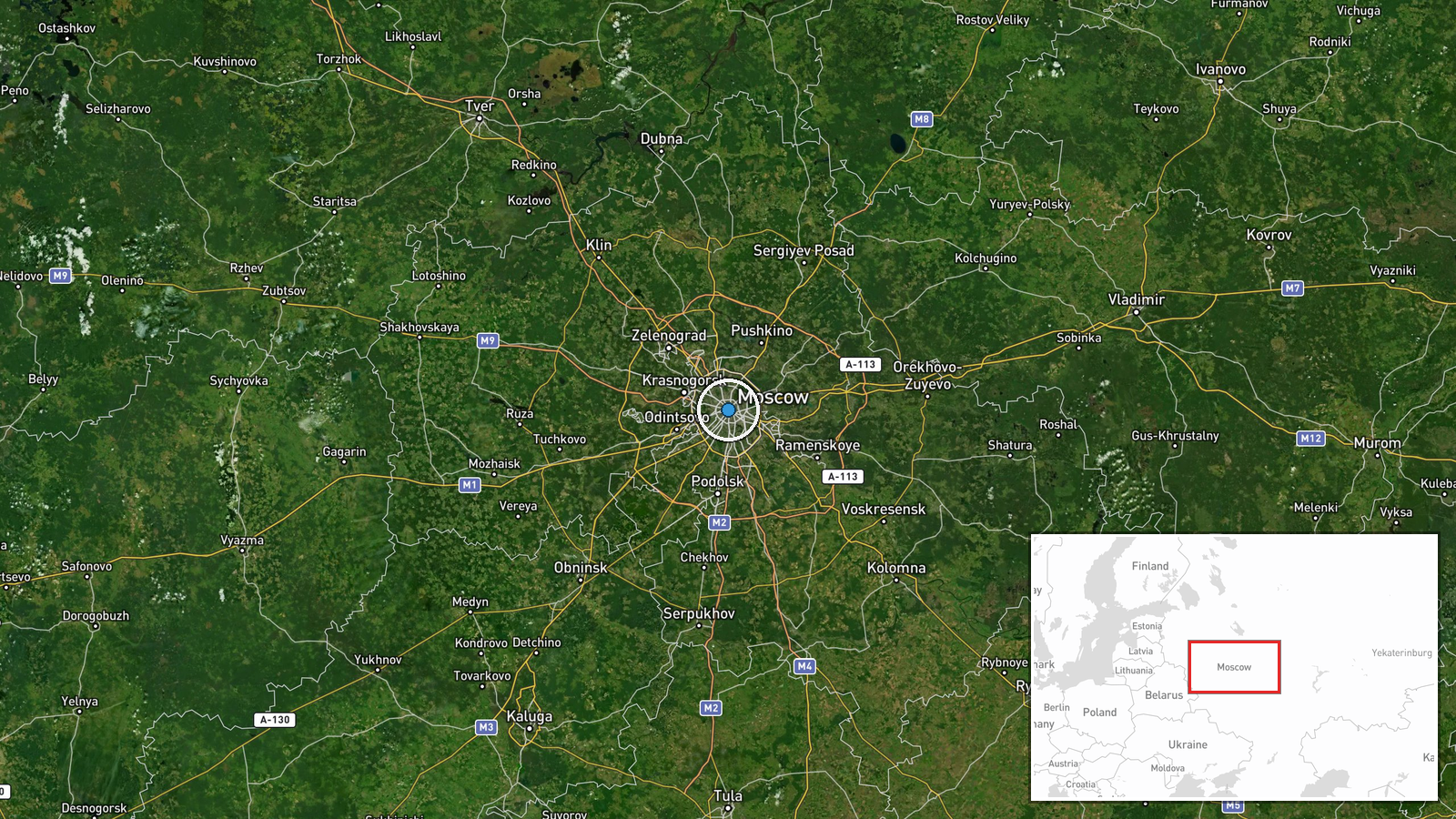
Moscow city center coordinates (55.7558°N, 37.6173°E) with region-level precision. Moscow is Russia's capital and largest metropolitan area, located approximately 400 kilometers west of the Ukrainian border. The report also references southern Russia without geographic specificity, indicating a multi-region operation. Geographic precision reflects uncertainty in exact target locations.
Related events nearby
- Russia continues installation of anti-drone protective structures around critical infrastructure in Moscow reg2026-09-02 16:09 UTC · Deployment · Moscow, Russia
- Turkish Pegasus Airlines cancelled 12 Moscow round-trip flights citing technical and operational reasons. Some2026-09-02 15:05 UTC · Statement · Moscow, Russia
- Russia summoned Germany's acting chargé d'affaires to the Foreign Ministry over alleged anti-Russian actions a2026-09-02 12:12 UTC · Diplomacy · Moscow, Russia
- Turkey has begun cancelling flights to Russia, with 80+ flights cancelled or delayed from various countries to2026-09-02 09:44 UTC · Statement · Moscow, Russia
- Turkish carrier Pegasus cancelled 12 flights to/from Moscow Vnukovo, citing 'airspace situation.' Multiple fli2026-09-02 09:34 UTC · Statement · Moscow, Russia
▶ View this event on the live map
Intel Mapper aggregates open-source reports from monitored Telegram and X channels, geolocates them, cross-checks duplicates across sources and assigns a confidence score. Entries are updated as new confirmations arrive. Read how we verify events.