Israel conducts airstrikes on southern Lebanon
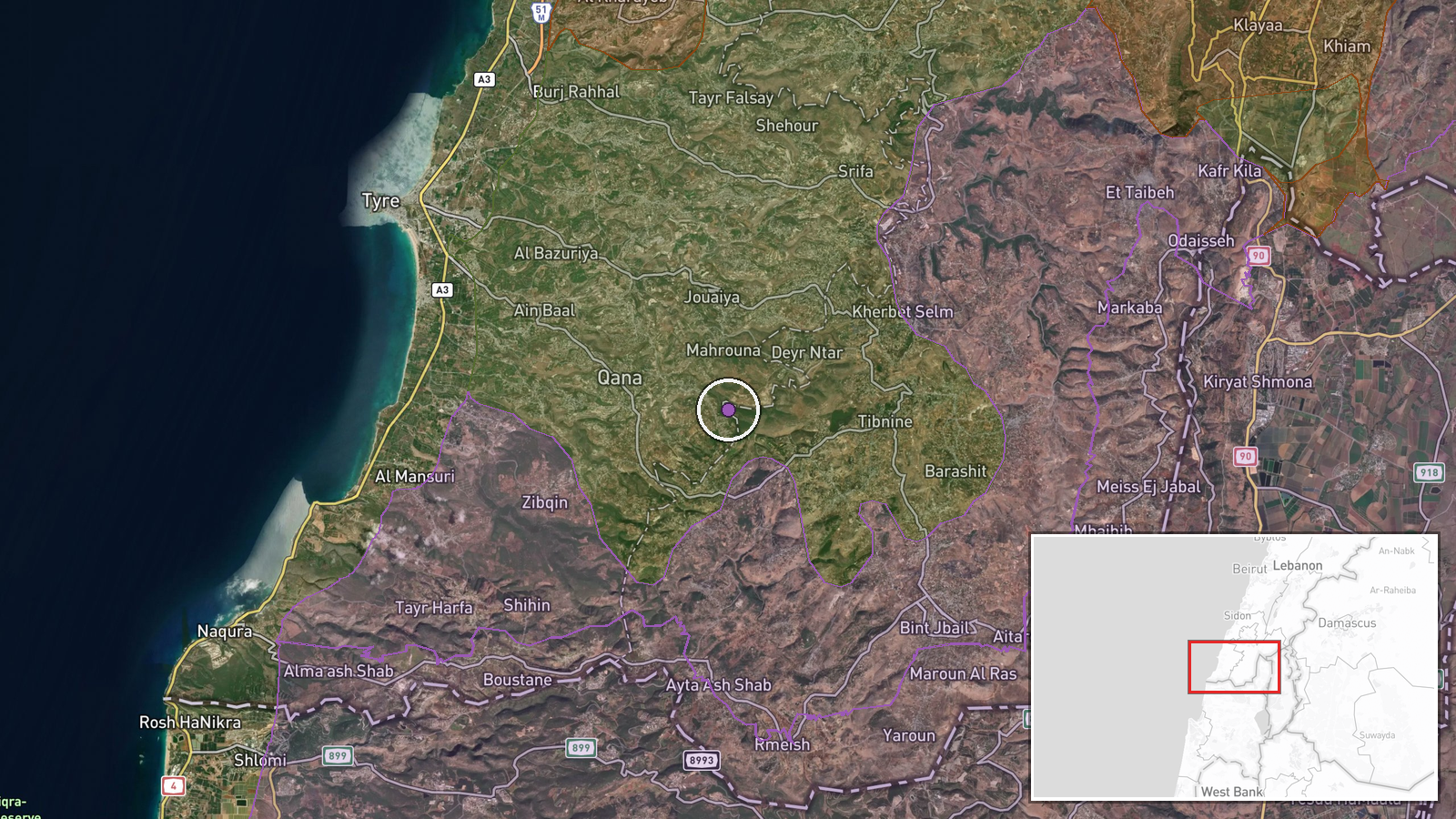
What happened
Israel conducted airstrikes against targets in southern Lebanon on September 20, 2026, according to reporting from the X account @ConflictTR. The report provides no details on specific targets, casualties, or damage assessment. The strikes occurred in the early hours UTC, continuing a pattern of air operations in the region over the preceding 24 hours.
Context and assessment
The airstrike follows multiple security incidents involving Israeli forces in southern Lebanon's security zone on September 19, including two separate IED explosions that lightly wounded Israeli soldiers and at least four prior airstrikes on the town of Nabatieh al-Fawqa. These operations reflect sustained Israeli military activity in the Lebanese border region, where Hezbollah maintains a significant presence. The repeated cycle of explosive devices targeting Israeli vehicles and subsequent air responses suggests an ongoing tactical pattern rather than a single isolated incident, indicating continued cross-border tension despite the absence of major escalation signals.
Sources and confidence
Reported by X account @ConflictTR. Single-source reporting with no cross-confirmation from Israeli military statements, Lebanese sources, or other conflict monitoring channels. Confidence score of 6.0 reflects the account's established track record in conflict reporting but acknowledges limited independent verification. Additional confirmation from IDF statements or regional media would increase confidence; clarification of specific targets or any impacts would strengthen the report.
Location
Southern Lebanon, approximately 33.20°N, 35.34°E. Precision coded as exact but reflects general regional designation rather than a specific named settlement or facility. The coordinates place the report in southern Lebanon's security zone, an area of recurring Israeli military activity near the border with northern Israel, where Hezbollah operates infrastructure and personnel.
Related events nearby
- Two Israeli soldiers lightly wounded when IDF engineering vehicle struck Hezbollah explosive charge in souther2026-09-19 18:23 UTC · Combat · Southern Lebanon Security Zone
- Israeli aircraft conducted four airstrikes on the town of Nabatieh al-Fawqa in southern Lebanon.2026-09-19 11:16 UTC · Airstrike · Nabatieh al-Fawqa, South Governorate, Lebanon
- IDF reports two soldiers sustained minor injuries from an IED explosion in the southern Lebanese security zone2026-09-19 12:05 UTC · Security · Marjayoun, South Lebanon
- IDF patrol detained a shepherd in Houran Basin, western Daraa countryside, during incursion. Detainee was rele2026-09-19 06:54 UTC · Security · Houran Basin, Daraa Governorate, Syria
- HTS Interior Security arrested Walid al-Fallah, a leading figure in a cell responsible for the killing of 3 HT2026-09-19 05:50 UTC · Security · Sanamein, Daraa Governorate, Syria
▶ View this event on the live map
Intel Mapper aggregates open-source reports from monitored Telegram and X channels, geolocates them, cross-checks duplicates across sources and assigns a confidence score. Entries are updated as new confirmations arrive. Read how we verify events.