Large-scale Ukrainian drone attack reported targeting Moscow
What happened
A significant Ukrainian unmanned aerial systems attack toward Moscow was reported on the evening of October 3, 2026, according to X account @WarMonitor3. The report provided minimal detail on the scope, timing, or results of the operation. No confirmation of interceptions, impacts, or casualties has been independently verified. Russian air defense response status remains unclear from available reporting.
Context and assessment
Moscow has faced repeated Ukrainian drone operations over the past two years as Kyiv has developed longer-range unmanned capabilities. The capital's air defense system, while extensive, has occasionally shown gaps during coordinated multi-vector attacks. This incident occurs amid an escalatory phase: Russian officials issued fresh warnings to foreign nationals in Ukraine on October 3, and the Russian Defense Ministry recently demonstrated upgraded Geran kamikaze drones to President Putin, suggesting Moscow may be preparing justifications for intensified strikes. The timing and claimed scale could reflect Ukrainian attempts to degrade Russian strike infrastructure ahead of anticipated Russian operations.
Sources and confidence
Single-source reporting from X account @WarMonitor3 with no cross-confirmation from Ukrainian officials, Russian sources, or other open-source monitors. Confidence score of 6.0 reflects the unverified nature of the claim and absence of supporting detail. Confirmation would require statements from Ukrainian military command or visual evidence from Moscow-based observers. Russian official acknowledgment would raise confidence; complete silence from multiple independent sources would lower it.
Location
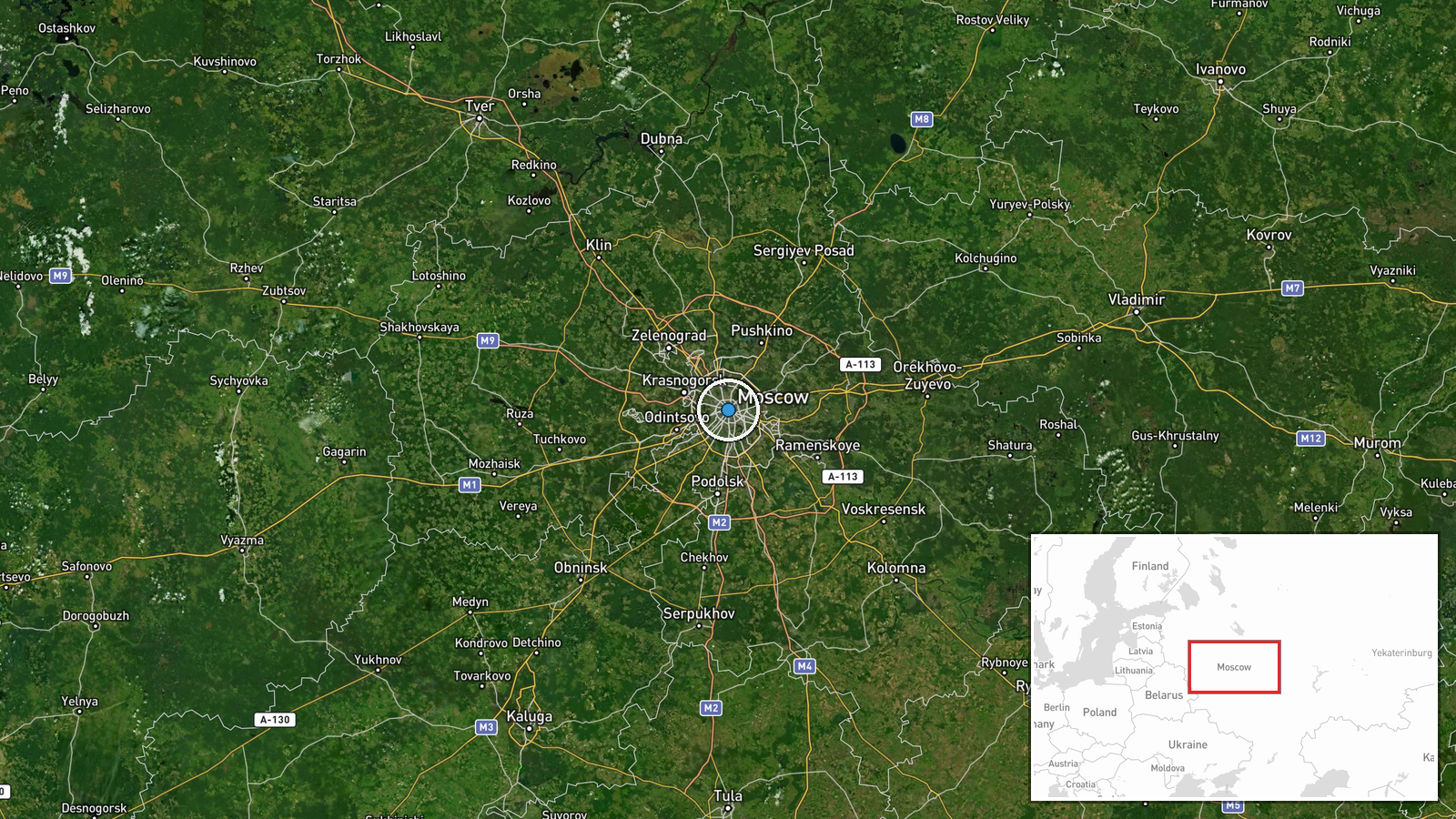
Moscow, Russia's capital city, located at 55.7558°N, 37.6173°E in western Russia. Precision is at settlement level; the report does not specify which districts, facilities, or suburbs were targeted. Moscow contains significant military, political, and industrial infrastructure across its metropolitan area, making it a recurring target for Ukrainian long-range operations.
Related events nearby
- Deputy head of Russia's Security Council Dmitry Medvedev reaffirms Russia-Iran strategic partnership, stating 2026-10-03 20:04 UTC · Statement · Moscow, Russia
- Russia urges foreign nationals and embassies to leave Ukraine; pledges to continue large-scale strike campaign2026-10-03 14:47 UTC · Statement · Moscow, Russia
- Russian Foreign Ministry warns foreign diplomats and citizens remaining in Kyiv that they face potential fatal2026-10-03 11:12 UTC · Statement · Moscow, Russia
- Russian Defense Ministry presented new Geran-4 and Geran-5 kamikaze drones to President Putin. Upgraded jet-en2026-10-02 20:52 UTC · Military Exercise · Moscow, Russia
▶ View this event on the live map
Intel Mapper aggregates open-source reports from monitored Telegram and X channels, geolocates them, cross-checks duplicates across sources and assigns a confidence score. Entries are updated as new confirmations arrive. Read how we verify events.