Russian ballistic missiles strike Kyiv's Trypillia substation amid bomber surge
What happened
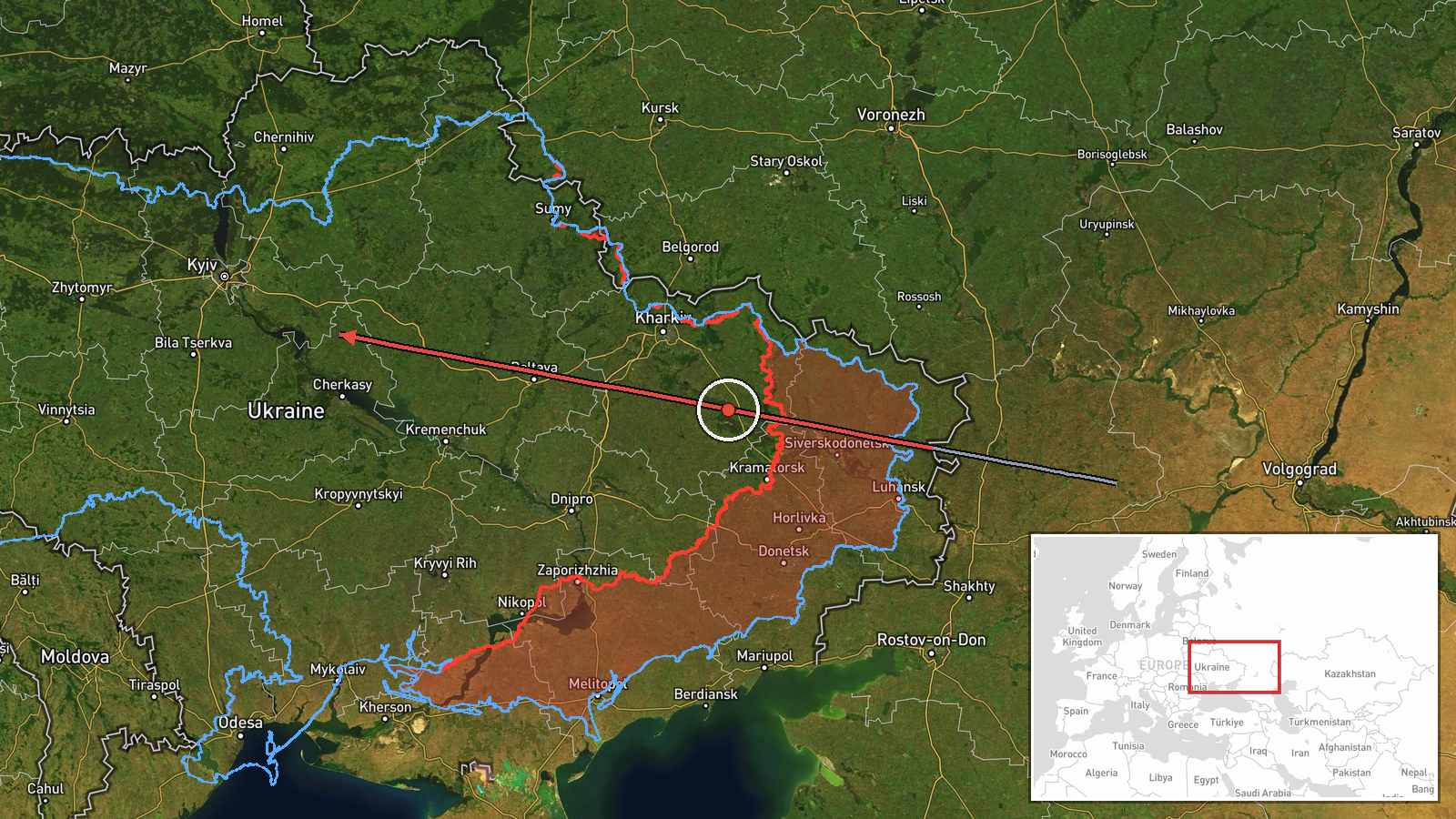
Russian forces launched at least six ballistic missiles at Kyiv on October 7 at 00:44 UTC, with initial reports indicating direct hits on the Trypillia electrical substation on the city's southern edge. Concurrently, Ukrainian air monitoring detected 13 Russian strategic bombers—a mix of Tu-95MS and Tu-160 aircraft—airborne and reportedly carrying Kh-101 cruise missiles for follow-up strikes. The attack followed a sequence of incoming cruise missiles detected over Kyiv Oblast within the preceding minutes.
Context and assessment
The Trypillia substation is a critical node in Kyiv's power infrastructure, located south of the capital. Targeting electrical facilities has been central to Russian strategy throughout the conflict, aimed at degrading Ukraine's winter resilience and civilian morale. The coordinated timing of ballistic and cruise missile strikes, combined with the deployment of 13 strategic bombers, suggests a sustained, multi-vector assault designed to overwhelm air defenses. Related events from the same period document Zircon and Oniks missiles transiting toward Kyiv and Obukhiv, indicating a concentrated operation. Ukraine's recent installation of protective netting on key bridges signals anticipation of such campaigns.
Sources and confidence
Single source: X account @Osint613 (BeamTracker). Confidence of 6.0 reflects single-channel reporting of the ballistic strike claim, though related Ukrainian air monitoring posts corroborate concurrent cruise missile activity in the same timeframe. Cross-confirmation of the substation impact and bomber deployment would strengthen confidence; independent verification of direct hits remains limited.
Location
Trypillia substation, situated at approximately 50.12°N, 30.78°E on Kyiv's southern periphery in Kyiv Oblast. The facility is a major electrical transmission point serving the capital and surrounding region. Nearby settlements include Obukhiv to the southeast. Precision: settlement-level.
Related events nearby
- Ukrainian air monitoring: 6 Russian Zircon/Oniks missiles over Obukhiv.2026-10-07 00:26 UTC · Cruise Missile · Obukhiv, Ukraine
- Ukrainian air monitoring: 4 Russian Zircon/Oniks missiles passing Pereiaslav, heading toward Obukhiv.2026-10-07 00:21 UTC · Cruise Missile · Obukhiv, Ukraine
- Ukraine installed protective netting on the Northern Bridge in Kyiv to defend against potential Russian drone 2026-10-06 11:09 UTC · Deployment · Kyiv, Ukraine
- Ukrainian air monitoring reports isolated Russian Shahed-type (reactive/jet-powered) drones transiting over Ky2026-10-07 02:37 UTC · Drone Transit · Kyiv, Ukraine
- Ukrainian air monitoring: 4 Russian Zircon/Oniks missiles passing Lubny, heading toward Kyiv Oblast.2026-10-07 00:20 UTC · Cruise Missile · Kyiv Oblast, Ukraine
▶ View this event on the live map
Intel Mapper aggregates open-source reports from monitored Telegram and X channels, geolocates them, cross-checks duplicates across sources and assigns a confidence score. Entries are updated as new confirmations arrive. Read how we verify events.