Houthi ballistic missile strike reported on Riyadh, Saudi Arabia
What happened
Houthi forces reportedly launched a ballistic missile attack on Riyadh, the capital of Saudi Arabia, on 8 October at approximately 14:01 UTC. The strike targeted the city itself, though specific facilities or damage assessments remain unconfirmed at the time of reporting. The attack was announced via social media, with details on impact pending official confirmation from Saudi authorities.
Context and assessment
The strike follows a pattern of Houthi missile attacks on Saudi infrastructure, including a reported dual strike on Riyadh and Abha airports the previous day. The timing coincides with intensive diplomatic activity in Riyadh, including discussions of military cooperation against Houthi threats and deployment agreements involving Turkey, Pakistan, and U.S. backing through the Mecca Alliance framework. Recent reports also indicate smoke from a stationary aircraft at Riyadh airport, suggesting possible impact from earlier strikes. Escalating Houthi capabilities and willingness to target the Saudi capital may reflect broader tensions in Yemen's conflict and signal attempts to disrupt coalition operations or political activities in the kingdom.
Sources and confidence
Reported by X account @ConflictTR. Single-source reporting limits confidence; no corroborating statements from Saudi official sources or regional media outlets at time of posting. Confidence score of 6.0 reflects unconfirmed status. Verification would improve if Saudi authorities issue statements, visual evidence emerges, or multiple independent channels confirm the incident.
Location
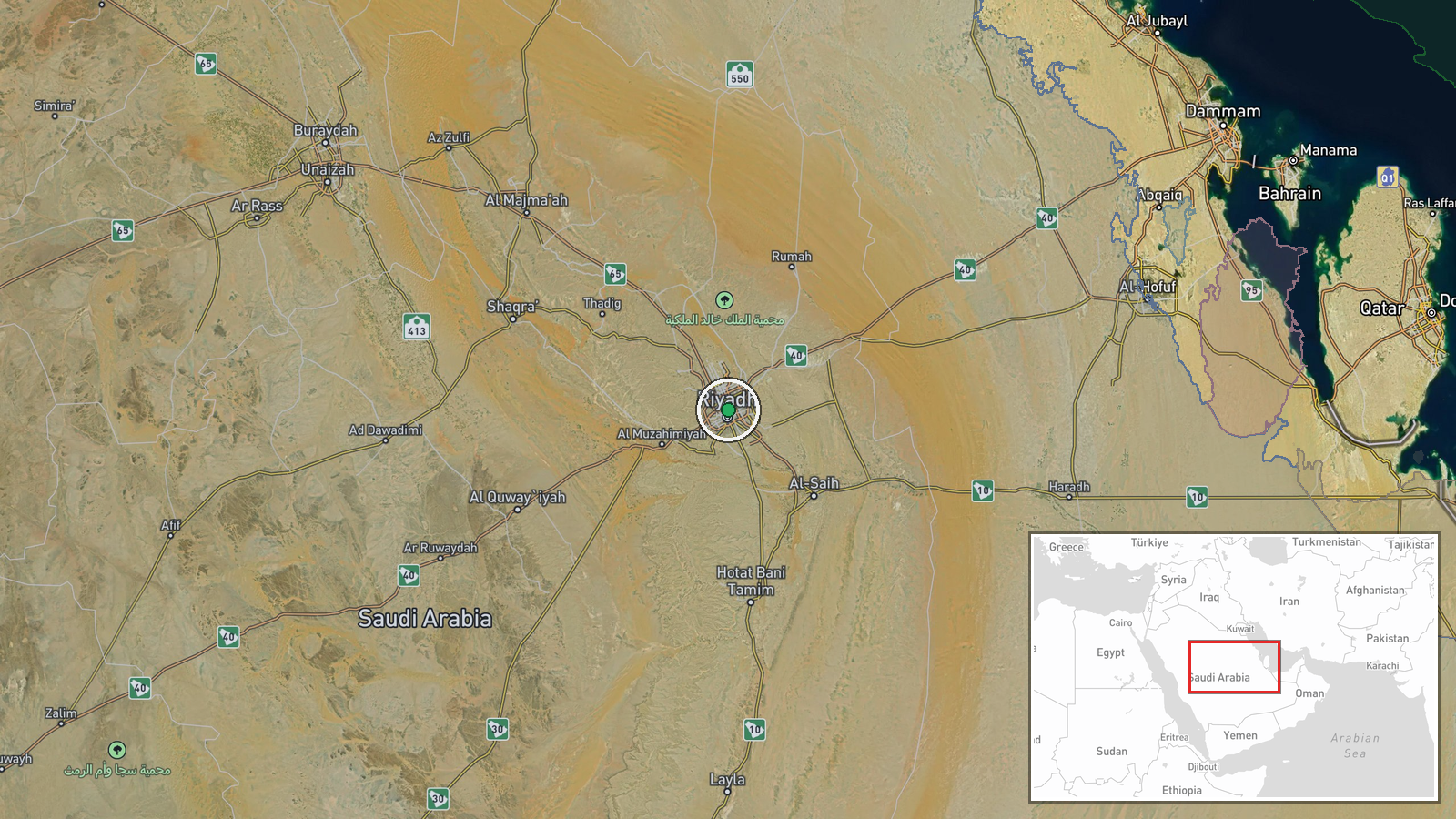
Riyadh, Saudi Arabia's capital city located in the central Nejd plateau at approximately 24.69°N, 46.72°E. The settlement designation indicates the attack targeted the city proper rather than a specific military or civilian facility. Riyadh hosts government institutions, airports, and major infrastructure, making it a strategically significant target in the ongoing regional conflict.
Related events nearby
- Lufthansa and Air India suspended flights to Riyadh following Houthi missile attacks. Lufthansa flights halted2026-10-08 15:55 UTC · Airspace Closure · Riyadh, Saudi Arabia
- Syrian Presidential Media Advisor Ahmad Muwaffaq Zeidan officially denies reports of troop deployment to Yemen2026-10-07 19:48 UTC · Diplomacy · Riyadh, Saudi Arabia
- Turkey and Pakistan agreed to deploy military forces to Saudi Arabia as part of the Mecca Alliance. U.S. Presi2026-10-07 18:49 UTC · Diplomacy · Riyadh, Saudi Arabia
- Syrian government and Saudi Arabia discussing potential military cooperation against Houthi threats in Yemen. 2026-10-07 18:48 UTC · Diplomacy · Riyadh, Saudi Arabia
- Houthi forces conducted missile attacks on Riyadh and Abha airports in Saudi Arabia. Attack type and casualtie2026-10-07 18:12 UTC · Ballistic Missile · Riyadh International Airport, Riyadh, Saudi Arabia
▶ View this event on the live map

Intel Mapper aggregates open-source reports from monitored Telegram and X channels, geolocates them, cross-checks duplicates across sources and assigns a confidence score. Entries are updated as new confirmations arrive. Read how we verify events.