Putin reportedly orders capture of Zaporizhzhia city and Dnipro crossing
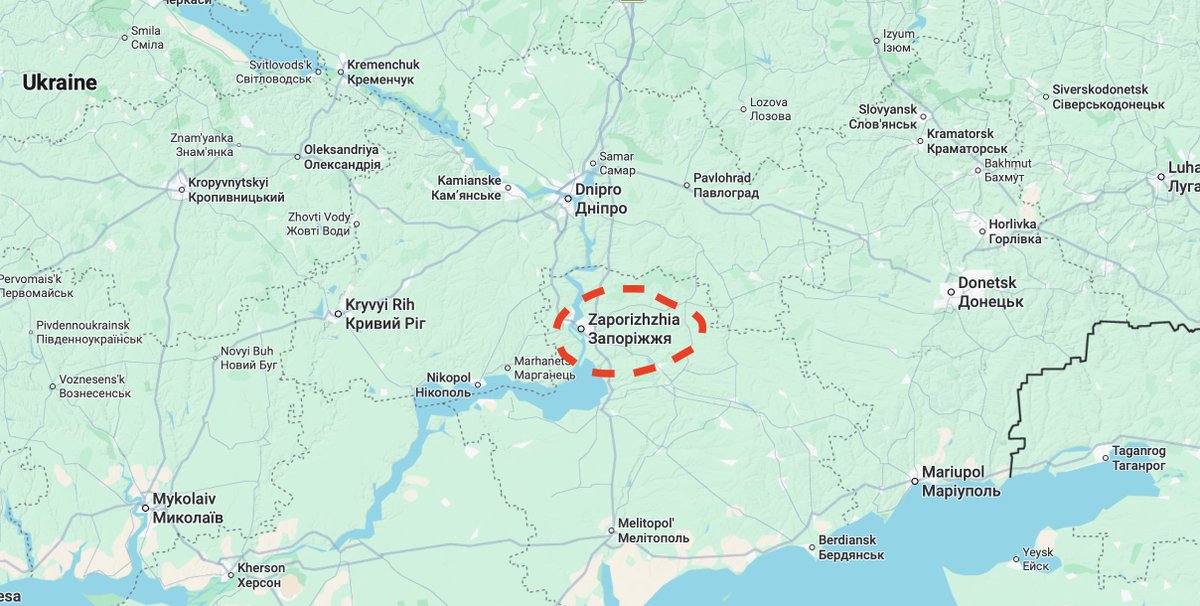
What happened
According to a social media report, Russian President Vladimir Putin has ordered his military to capture the city of Zaporizhzhia and advance to the left bank of the Dnipro River. The reported order came despite acknowledged difficulties on the eastern frontline, where Russian forces are described as bogged down. The statement disclosed this strategic objective publicly, citing the source as an X account.
Context and assessment
Zaporizhzhia city sits west of the Dnipro River, which has served as a de facto operational boundary in southern Ukraine since 2022. Control of the left bank would represent significant territorial gains in the Zaporizhzhia region. The reported order surfaced amid a period of active Russian diplomatic signaling—Putin coordinated messaging with Iran and communicated with Trump about ceasefire conditions. A Ukrainian drone strike on Moscow and disruptions to Russian aircraft movements on 9 October preceded the statement, suggesting the order may reflect pressure to demonstrate military momentum or offset recent tactical setbacks. The timing suggests this may be a Kremlin messaging effort rather than an imminent operational shift.
Sources and confidence
Single-source report from X account @WarMonitor3, dated 10 October 2026. No independent cross-confirmation from other OSINT channels or official Russian statements noted. Confidence score of 6.0 reflects reliance on one social media source. Confirmation from Kremlin officials, military statements, or multiple independent OSINT channels would substantially raise confidence. Verification of operational changes on the ground would provide further corroboration.
Location
The report originated in Moscow, where Putin is based. The stated objectives—Zaporizhzhia city and the Dnipro's left bank—are located in southeastern Ukraine, approximately 500 km south-southeast of Moscow. Zaporizhzhia city is the regional administrative center, positioned on the right bank of the Dnipro River in Zaporizhzhia Oblast.
Related events nearby
- Kremlin states Putin coordinated with Iran on a potential solution and conveyed Tehran's views to Trump regard2026-10-10 09:31 UTC · Diplomacy · Moscow, Russia
- Kremlin reports Putin told Trump that Ukrainian Armed Forces attacks on election day necessitate Moscow recons2026-10-09 21:33 UTC · Statement · Moscow, Russia
- Ukrainian forces conducted a large-scale drone strike on Moscow. Explosions reported in the Russian capital; d2026-10-09 13:37 UTC · UAS Strike · Moscow, Russia
- Kremlin spokesman announces that Putin and Trump will hold a telephone conversation in the near future, signal2026-10-09 12:54 UTC · Diplomacy · Moscow, Russia
- Ukrainian drone raid on Moscow forces Putin's aircraft to circle unable to land. Three Russian government airc2026-10-09 14:49 UTC · UAS Strike · Sheremetyevo International Airport, Moscow, Russia
▶ View this event on the live map

Intel Mapper aggregates open-source reports from monitored Telegram and X channels, geolocates them, cross-checks duplicates across sources and assigns a confidence score. Entries are updated as new confirmations arrive. Read how we verify events.