Saudi Arabia warns of critically depleted Patriot air-defense interceptor stocks
What happened
Saudi officials disclosed to the Wall Street Journal that the kingdom is operating with dangerously low stocks of Patriot air-defense interceptors amid an ongoing campaign of missile and drone attacks. The officials characterized the supply constraints as a threat to Saudi Arabia's air defense capability. The disclosure was made on October 12, 2026, in Riyadh. The timing coincides with intensified Houthi aerial operations against the kingdom reported over the preceding hours.
Context and assessment
The warning reflects the cumulative strain of sustained Houthi attacks on Saudi air defenses. Related statements from October 12 document an incoming drone and cruise missile threat, activation of a civilian drone-spotting application, and calls by the Energy Minister for a "measured and serious response" to strikes on critical infrastructure including airports. The depletion of interceptor stocks suggests that the frequency and volume of Houthi attacks have exceeded the rate at which Saudi Arabia can replenish munitions through existing supply channels. This constraint potentially narrows Saudi options for air defense and may signal underlying vulnerabilities in either production capacity or supply chain logistics from the United States.
Sources and confidence
Reported by X user @Osint613, citing Wall Street Journal reporting of Saudi official statements. Single-source attribution reduces confidence. Cross-confirmation from U.S. government or Saudi official channels would strengthen assessment. No contradicting reports noted. Confidence score of 6.5 reflects authoritative source material but limited independent verification of the specific claim.
Location
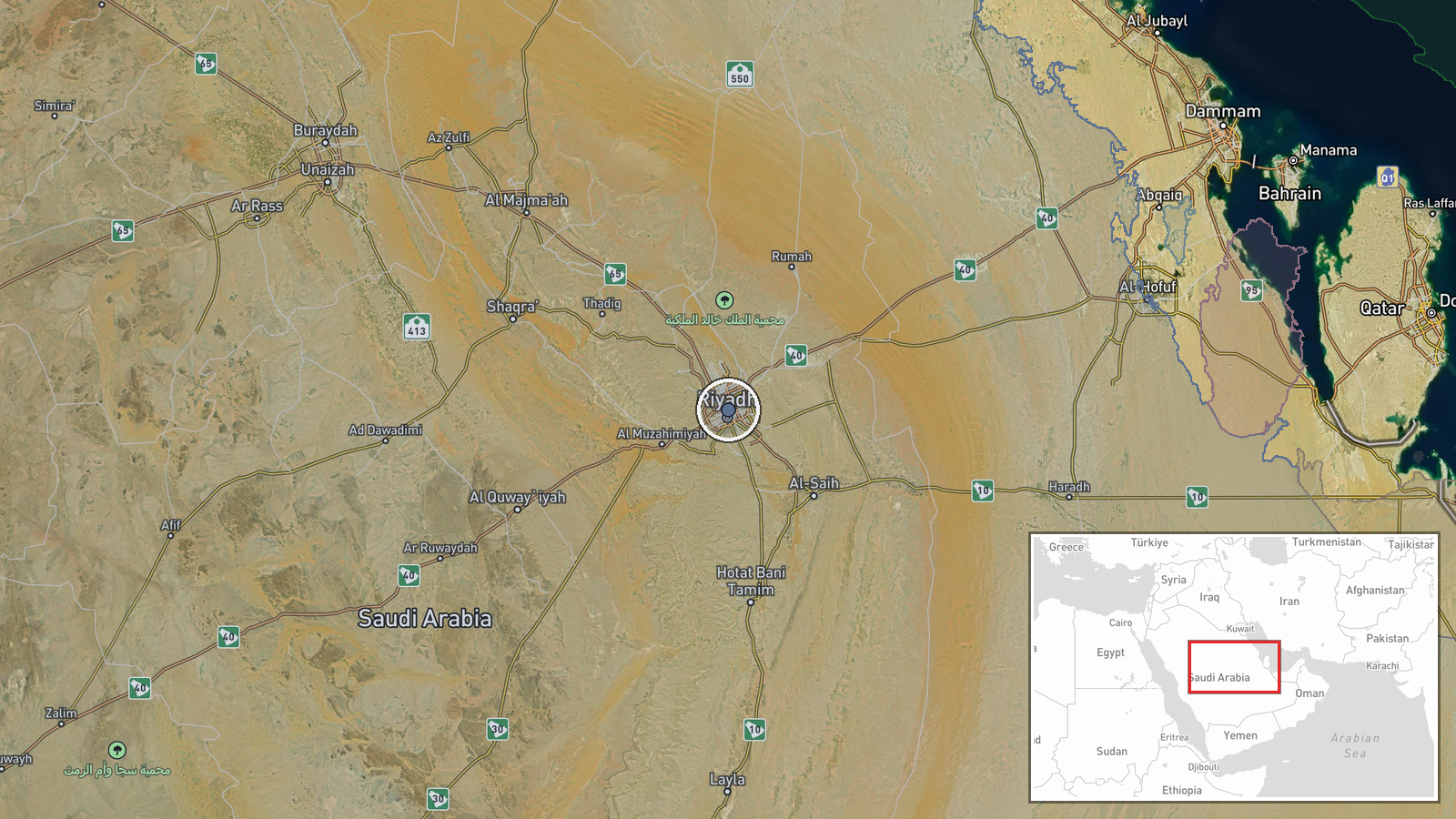
Riyadh, Saudi Arabia, the capital and seat of government. The settlement-level precision reflects the reporting location rather than a specific military facility. Riyadh hosts major royal palaces, government ministries, and air defense command centers protecting the political and economic heart of the kingdom.
Related events nearby
- Saudi-led coalition reports incoming threat from drones and cruise missiles targeting the Kingdom. No impacts 2026-10-12 09:24 UTC · Statement · Riyadh, Saudi Arabia
- Saudi Arabia launched a public smartphone application enabling citizens to report drone sightings for early de2026-10-12 07:17 UTC · Statement · Riyadh, Saudi Arabia
- Saudi Energy Minister calls for measured and serious response to recent Houthi missile attacks on critical inf2026-10-12 07:09 UTC · Statement · Riyadh, Saudi Arabia
- Saudi Crown Prince Mohammed bin Salman reportedly moving between heavily guarded bunker-equipped palaces amid 2026-10-12 05:23 UTC · Statement · Riyadh, Saudi Arabia
- Saudi Foreign Minister Faisal bin Ferhan met with Iranian counterpart Abbas Araghchi for diplomatic talks, con2026-10-11 21:46 UTC · Diplomacy · Riyadh, Saudi Arabia
▶ View this event on the live map

Intel Mapper aggregates open-source reports from monitored Telegram and X channels, geolocates them, cross-checks duplicates across sources and assigns a confidence score. Entries are updated as new confirmations arrive. Read how we verify events.