Russian Il-20 surveillance aircraft flew off Kyoto over the Sea of Japan; Japan scrambled jets
What happened
Japan's Joint Staff Office reported, through its official account on X, that one Russian Il-20 information-gathering aircraft flew in from the continent on Saturday, 17 October 2026, from the morning into the afternoon. According to the post, the aircraft crossed the Sea of Japan as far as waters off Kyoto Prefecture, then changed course and flew back toward the continent. In response, Air Self-Defense Force fighters from the Northern Air Defense Force and other units were scrambled. The original Japanese wording confirms the flight and the scramble but gives no further detail on the aircraft's track, altitude or the exact timing of the turn. The record is dated 19 October 2026 at 06:00 UTC, two days after the reported flight, which reflects when the report was logged rather than when the flight took place.
Context and assessment
The Il-20 is a turboprop derived from the Il-18 airliner and is widely used by Russia for electronic and signals reconnaissance, so its presence signals intelligence collection rather than a strike role. Russian reconnaissance flights around the Japanese archipelago are a recurring feature of the regional security picture, and Japan's scrambles in response are routine, though each one is reported as a discrete event. This incident fits that pattern, and it also appears alongside a separate entry the same day describing a sizeable People's Liberation Army activity cluster around Taiwan, with aircraft and vessels entering the Taiwan Strait area. The two events are in different locations and involve different actors, so they should not be read as a coordinated operation on the available evidence. Taken together, they point to a crowded regional tempo of military monitoring in the East Asian seas. Operationally, a flight that approaches the Kyoto coast and then turns back may be intended to observe Japanese air defense reactions, collect electronic signals from coastal and maritime sensors, or simply maintain a presence in international airspace. Such missions are generally assessed as signalling and intelligence activity rather than an indicator of imminent hostilities, but the limited public detail means this interpretation is provisional.
Sources and confidence
The entry rests on a single channel, the official Japanese Joint Staff Office account on X, which is an authoritative government source for Japanese air defense activity. No independent outlet or second government account is linked in the data, so cross-confirmation is absent. The confidence score of 6.1 out of 10 reflects that single-source status, the lack of track or altitude detail, and the mismatch between the stated location and the coordinates. Confidence would rise with a Joint Staff press release or map, reporting from a regional outlet, or confirmation from Japanese media citing official data. It would fall if the official post were amended or if the scramble could not be matched to the stated flight path.
Location
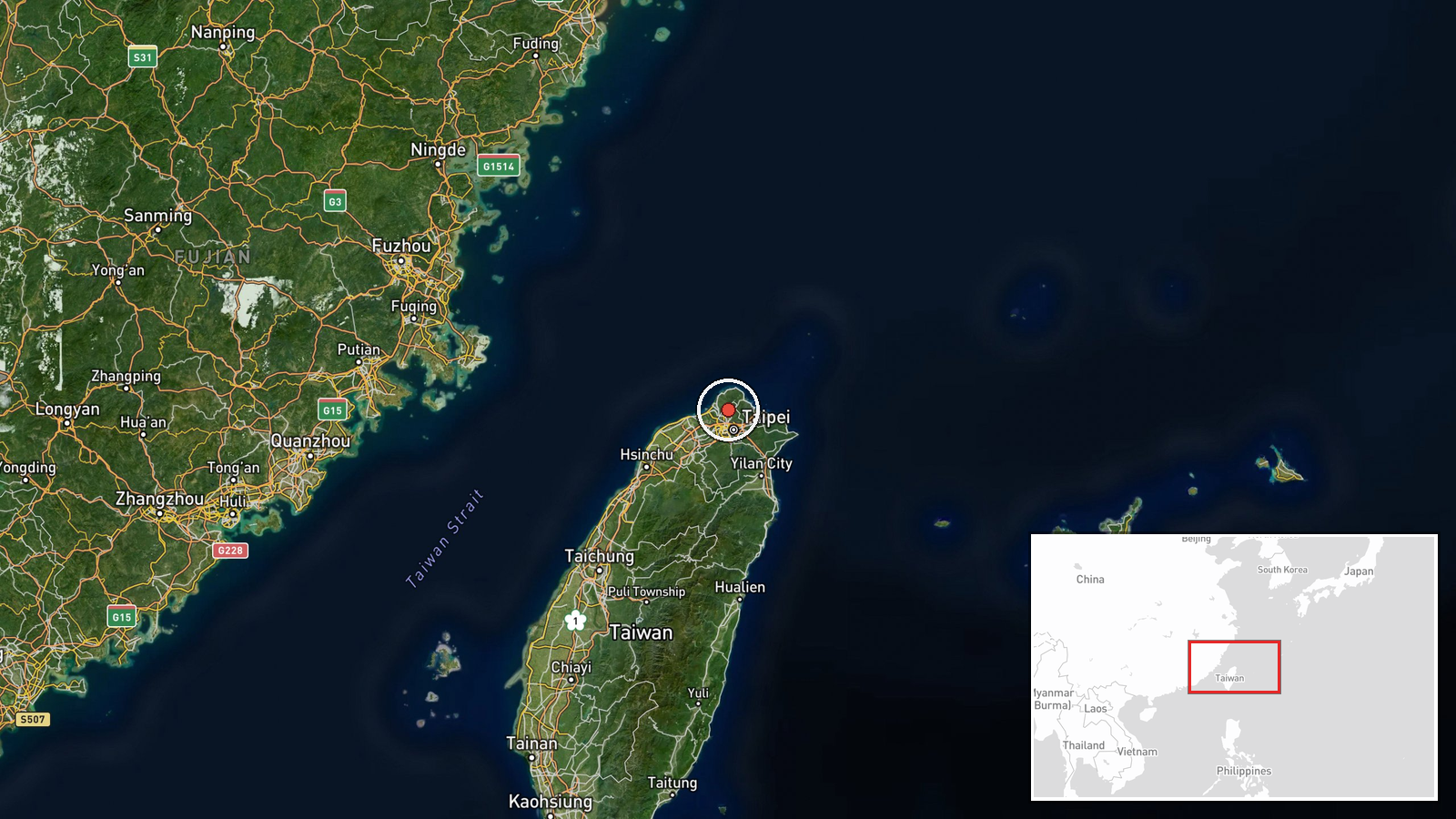
The location is recorded as the Sea of Japan off Kyoto Prefecture, which is an approximate, region-level description taken from the report text rather than a settlement or facility. The supplied coordinates, however, fall near northern Taiwan, far from the Kyoto coast, so the map pin is misplaced and should not be relied on. The Kyoto coast faces the Sea of Japan along the Tango Peninsula, with the Maizuru port area and mountainous shoreline nearby.
Related events nearby
- PLA detected 5 aircraft sorties, 6 PLAN vessels and 9 official ships around Taiwan; 3 sorties crossed the medi2026-10-19 01:00 UTC · Combat Aircraft · Taiwan Strait, Taiwan
▶ View this event on the live map

Intel Mapper aggregates open-source reports from monitored Telegram and X channels, geolocates them, cross-checks duplicates across sources and assigns a confidence score. Entries are updated as new confirmations arrive. Read how we verify events.