Israeli election rhetoric, Hormuz mine strike and Saudi border attacks; St Petersburg drone raids and Kyiv missile strikes
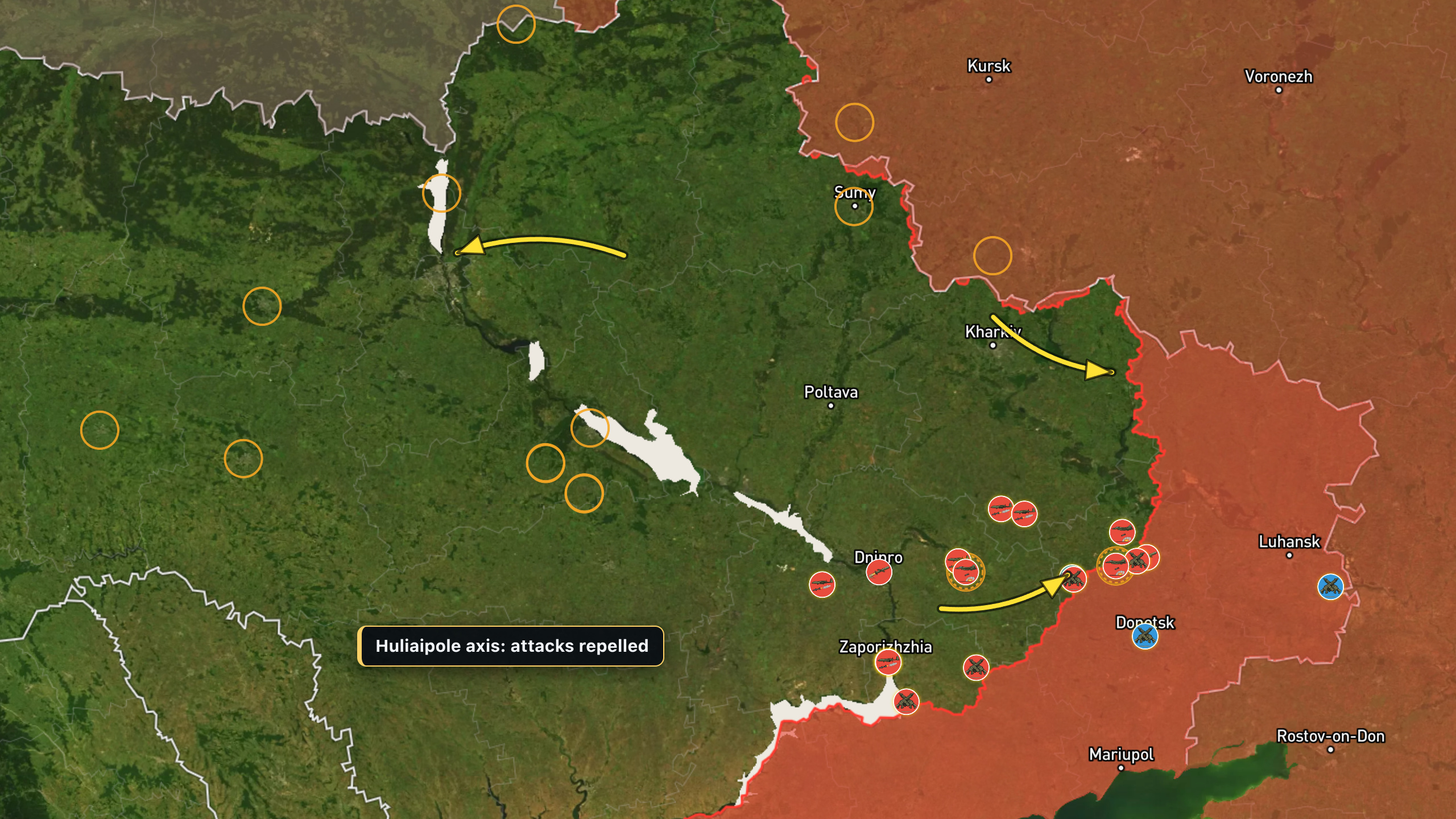
Key developments
- Trump endorsed Netanyahu before Israel's 27 October election while warning Washington may confront Iran.
- An oil tanker reportedly struck a naval mine on the southern Strait of Hormuz route.
- A projectile hit Najran, Saudi Arabia, injuring six; Houthi attribution is presumed, not confirmed.
- Egypt's National Defense Council approved support for Saudi Arabia, with a parliamentary deployment session expected.
- Russian ballistic missiles reportedly struck two Kyiv thermal power plants, TPP-5 and TPP-6.
- Ukrainian drones reportedly hit multiple St Petersburg energy and digital targets, including the VK data centre.
- Zelensky says US Patriot deliveries have fallen to about 12 interceptors per month.
Middle East 30 tracked events
Political rhetoric dominated the Middle East theatre on 18 October. In Washington, Trump publicly endorsed Benjamin Netanyahu ahead of Israel's 27 October election and warned that the United States would have to confront Iran if Israel chose another leader. Netanyahu, through Likud, responded that he and Trump alone would destroy Iran's nuclear programme, and thanked Trump for his support. Tehran answered in kind. Foreign Minister Abbas Araghchi said Iran emerged stronger from the last confrontation, described unfinished business, and accused Netanyahu of dragging Washington into another war. Iranian lawmakers reportedly judged that new Supreme Leader Mojtaba Khamenei might abandon his father's no-nuclear-weapons declaration, a claim that remains unverified and should be treated as a signal of elite debate rather than policy.
Kinetic activity was concentrated in the maritime and Yemen-Saudi border sectors. The IRGC announced that an oil tanker struck a naval mine on the southern Strait of Hormuz route, causing an engine-room explosion and fire. CENTCOM claimed that about 97 percent of thousands of Hormuz transits since the blockade were not struck by Iranian projectiles, a figure that frames the operation as largely effective but does not address mines. A hostile projectile struck Najran, Saudi Arabia, injuring six citizens and damaging homes and vehicles, according to Saudi Civil Defense; attribution to the Houthis is presumed but not officially confirmed. Air raid sirens sounded in Abha without reported impact. Houthi claims of 110 Saudi strikes across Yemen in 24 hours, and Yemeni government claims of 370 Houthi fighters neutralised under Operation Yemen Dawn, are unverified and cannot be independently measured. Four IEDs struck a Yemeni National Army convoy in Arma District, Shabwah, burning one vehicle.
The day's significance lies largely in the widening defensive architecture around Saudi Arabia and Israel's border posture. Egypt's National Defense Council, chaired by Sisi, approved all necessary forms of support for Saudi Arabia, and parliament is reportedly due to hold an emergency session on deployment. A Saudi-UAE defence-level meeting in Abu Dhabi was reported by a single source with few details. A Lebanese military delegation is scheduled to travel to Tampa on the 20th for US-backed talks with Israel, where the framework reportedly links Hezbollah disarmament to Israeli withdrawal from Lebanese territory. Netanyahu said Israel is establishing buffer zones and security barriers on its borders with Lebanon, Syria, Jordan, Egypt and Gaza, and that he hopes to avoid a direct clash with Türkiye. Intense overflights and ground incursions were reported in southern Syria near Majdal Shams, while Suwayda's governor said Damascus is ready for dialogue. Iran's parliament confirmed Mehrdad Akhlaghi Ketabchi as Defence Minister, and Speaker Ghalibaf announced a Persian Gulf Data Authority with threats against Gulf firms supporting AI companies tied to military operations.
- Trump publicly endorses Netanyahu before Israel's October 27 election and warns the US would have to confront
- IRGC announces an oil tanker struck a naval mine while transiting the southern Strait of Hormuz route, causing
- Netanyahu says he hopes Israel will not enter a direct clash with Türkiye and that he is working to prevent on
- Araghchi warns the US and Israel that Iran emerged stronger from the last confrontation, says Iran has unfinis
- Saudi Arabia and UAE hold a significant defense-level meeting amid regional conflict; details limited to the s
- Ghalibaf announces a 'Persian Gulf Data Authority' and warns Gulf governments, funds and firms against support
Ukraine 30 tracked events
Ukrainian long-range drone activity against Russian energy and digital infrastructure was the dominant event. Overnight drone attacks on Saint Petersburg were reported by several Telegram channels, with fires at the Ruchyi oil depot and an Ozon warehouse on Sofiyskaya Street. One report, reportedly based on a multi-source tally, described hits on an oil terminal, a power substation and the Western High-Speed Diameter bridge, though these details rest on fewer confirmations. VK confirmed an attack on its data centre, a major server facility for Russia's largest social network, and Ukraine has been named as responsible in that case. Russian regional authorities also issued threat warnings for Moscow and Samara and deeper rear areas. Netanyahu separately claimed a bombing hit a Yandex centre in Russia and that Russian online activity fell by 60 percent; this claim is unverified and no location or perpetrator has been confirmed.
Russian missile and drone pressure on Kyiv continued in parallel. Ukrainian air monitoring tracked multiple ballistic missiles over Kyiv and Bryansk, and reported that ballistic missiles directly struck TPP-5 in Vydubychi and TPP-6 in Troieshchyna, with further strikes on southern Kyiv. Up to 16 ballistic missiles were estimated to be available for the attack, which would indicate a deliberate effort against power generation capacity. A sustained sequence of Banderol mini cruise missile tracks moved across northern and central Ukraine, passing the Kyiv Reservoir, Brovary, Vyshhorod, Pryluky, Romny, Myrhorod, Okhtyrka and Kalynivka toward Cherkasy, Khmelnytskyi and Zolotonosha districts. On the front, a Russian military official claimed forces were 5 km from Zaporizhzhia, a claim sources dispute, stating Ukraine still fully controls Malokaterynivka.
The political dimension centred on air defence supply and the terms of any settlement. Zelensky said the US now supplies about 12 Patriot interceptors per month, roughly a quarter of Biden-era volumes, and that Ukraine has paid for them while only part of the supply is authorised. He asked SpaceX and Trump to open Starlink coverage over Russia so Ukraine could target ballistic missile launchers, saying access was always closed and is now limited. Bessent rejected any administration order restricting Starlink and called the charge reckless. Trump said he is negotiating a Russia-Ukraine settlement and will not drive Moscow from the table, while accusing Zelensky of striking Russian diesel refineries and saying Russia is giving Iran little help. Zelensky argued that Putin feels emboldened by sanctions relief, the diesel arrangement and Starlink restrictions, and feared partners might accept a war-ending deal at Ukraine's expense; these are political claims rather than verified facts.
- Telegram reports an overnight drone attack on Saint Petersburg hit an Ozon warehouse on Sofiyskaya Street; att
- Trump says he is negotiating Russia-Ukraine peace and will not drive Russia from the table. He accuses Zelensk
- Ukrainian drones launched a massive overnight attack on St. Petersburg, reportedly hitting an oil terminal, a
- Ballistic missiles directly struck TPP-5 in Vydubychi and TPP-6 in Troyeschyna, with further strikes on southe
- Zelensky says the US now supplies about 12 Patriot interceptors per month, roughly a quarter of Biden-era volu
- Netanyahu claims a bombing hit a Yandex center in Russia and that 60% of online activity from Russian actors v
What to watch
In the next 24 to 48 hours, watch whether Egypt's parliament convenes the emergency session on deployment to Saudi Arabia, and whether any formal Egyptian or Saudi announcement follows. Monitor Najran and Abha for further projectile activity and for Saudi Civil Defense updates that could confirm or refute the Houthi attribution. In the Gulf, follow UKMTO and CENTCOM statements on mine clearance and any further tanker incidents on the southern Hormuz route. Track Iranian responses to Trump's and Netanyahu's statements, particularly any move on nuclear posture. In Ukraine, the key indicators are further ballistic salvos against Kyiv energy sites, Russian responses to St Petersburg strikes, and any official Starlink or Patriot delivery announcements from Washington.