Oil tanker hit by naval mines in Strait of Hormuz, fire reported
What happened
An oil tanker transiting the Strait of Hormuz struck two naval mines on August 31, reportedly resulting in onboard fire and the vessel becoming disabled. The incident occurred in the Iran-Oman waters of the strategic waterway. The report was posted to X by conflict monitoring account @ConflictTR, citing a Turkish news source (SONDAKİKA). No immediate confirmation from additional independent sources has been recorded.
Context and assessment
The Strait of Hormuz, through which roughly one-third of seaborne oil passes globally, has become an active flashpoint in the past 48 hours. This mining incident follows ballistic missile strikes by Iran against tankers and U.S. naval assets in the same waters on August 30, which were framed as retaliation for American airstrikes targeting IRGC positions on Larak Island. The reported mine-laying suggests Houthi maritime operations are expanding beyond drone and missile attacks to include sea denial tactics. Such mine campaigns typically aim to raise transit insurance costs, disrupt shipping flows, and signal escalating control of the waterway during periods of regional tension.
Sources and confidence
Single-source report via X account @ConflictTR citing Turkish news outlet SONDAKİKA. No cross-confirmation from U.S. maritime authorities, shipping industry monitors, or other established conflict reporting channels has yet been documented. Confidence score of 6.0 reflects preliminary sourcing; confirmation from shipping registries, insurers, or naval observers would substantially strengthen reliability. Absence of visual evidence or secondary corroboration limits current assessment.
Location
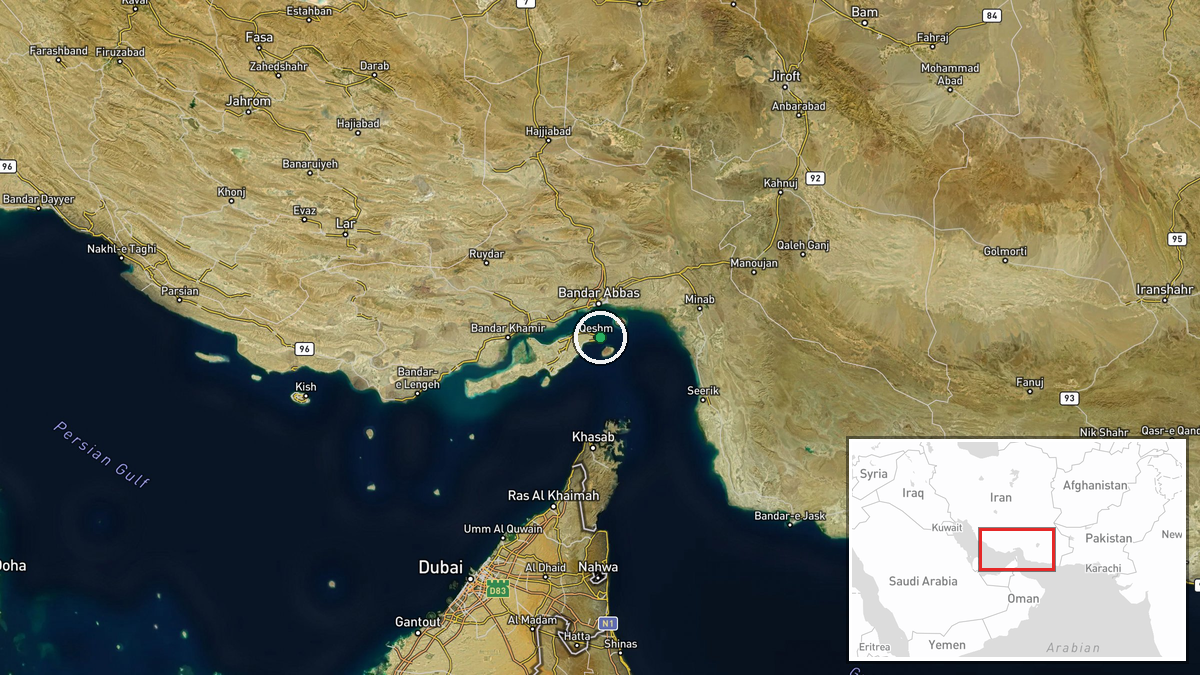
Strait of Hormuz in Iran-Oman waters, positioned at approximately 26.95°N, 56.3°E. Geolocation confidence rated high but geographic precision is regional rather than pinpoint due to broad waterway designation. The strait connects the Persian Gulf to the Gulf of Oman and Arabian Sea, lying between Iranian and Omani territorial waters roughly 12–20 nautical miles wide at critical transit points.
Related events nearby
- Iran's Revolutionary Guards claimed to have shot down a U.S. MQ-9 Reaper drone valued at approximately $30 mil2026-08-31 05:29 UTC · Drone Shootdown · Strait of Hormuz, Iran-Oman Waters
- Iran fires ballistic missiles toward U.S. naval assets in the Strait of Hormuz as retaliation for recent Ameri2026-08-30 21:30 UTC · Ballistic Missile · Strait of Hormuz, Iran-Oman Waters
- Iran fires ballistic missiles in response to U.S. airstrikes on Larak Island IRGC positions. Retaliation follo2026-08-30 21:28 UTC · Ballistic Missile · Strait of Hormuz, Iran-Oman Waters
- Heavy U.S. air activity reported over Iraq and the Strait of Hormuz tonight, following recent U.S. airstrikes 2026-08-30 21:07 UTC · Deployment · Strait of Hormuz, Iran-Oman Waters
- Iran struck a crude oil tanker transiting the Strait of Hormuz, approximately 12 NM north of Khasab, Oman. No 2026-08-30 16:39 UTC · Ballistic Missile · Strait of Hormuz, 12 NM north of Khasab, Oman
▶ View this event on the live map
Intel Mapper aggregates open-source reports from monitored Telegram and X channels, geolocates them, cross-checks duplicates across sources and assigns a confidence score. Entries are updated as new confirmations arrive. Read how we verify events.