Reported infiltration via pipes near Kostiantynivka leads to capture of Russian soldiers
What happened
A post on X by the account @ConflictTR, dated 21 October 2026 at 09:04 UTC, reports that Ukraine's 2nd Corps Khartiia, described as part of the National Guard, infiltrated Russian positions through underground pipes and captured several Russian soldiers. The original Turkish-language post frames the claim as evidence that fighting in the war has moved underground as well, but it gives no further detail on the pipe network, the number of prisoners, the timing of the operation, or any independent confirmation. The reported location is a front-line area near Kostiantynivka in Donetsk Oblast, placed at an estimated point rather than a verified position. The event summary marks the claim as a single-source report that remains unverified. Neither the Ukrainian nor the Russian military is cited on the matter in the material available to the desk.
Context and assessment
Kostiantynivka sits on the approaches to Druzhkivka and Kramatorsk, the urban cluster that has been a principal objective of Russian forces in Donetsk Oblast for much of the war, which explains the steady flow of reporting from the town and its surroundings. Built-up areas with extensive utility, drainage and industrial networks have long been understood to offer concealed movement routes, and pipe or tunnel-based infiltration is a tactic that analysts have discussed in urban fighting in several conflicts. The related events give the wider picture. On 20 October, Ukrainian forces reportedly repelled six Russian assault attempts in the Sloviansk direction near Ozerne, Kryva Luka, Orikhuvatka and Yurkivka. A Ukrainian General Staff update described 37 Russian attacks on the Kostiantynivka axis, with pressure toward Novoselivka, Mykolaipillia, Novopavlivka and Dobropillia. The General Staff's 24-hour tally, a figure that originates with Kyiv, lists 229 clashes and 5,881 kamikaze drones. Against that backdrop, a claimed infiltration by a small group would fit a pattern of attempts to find flanks around heavily contested urban terrain. Operationally, if accurate, the claim would point to small, covert ground teams exploiting infrastructure rather than a broad breakthrough. These inferences are provisional, since the reporting is thin.
Sources and confidence
The report originates from a single channel, the X account @ConflictTR, which posted a Turkish-language text with a link. No second outlet, wire service, or official Ukrainian or Russian statement in the data confirms the capture or the pipe route. The event carries a confidence score of 5.7 and a source count of one, reflecting that single-channel status and the lack of corroboration. The score would rise if independent outlets published footage, geolocated images of the pipe entry or exit, or confirmed the identity of the prisoners. It would fall if the account's record on similar claims proves unreliable or if the event is later recast as a misreading of a different operation.
Location
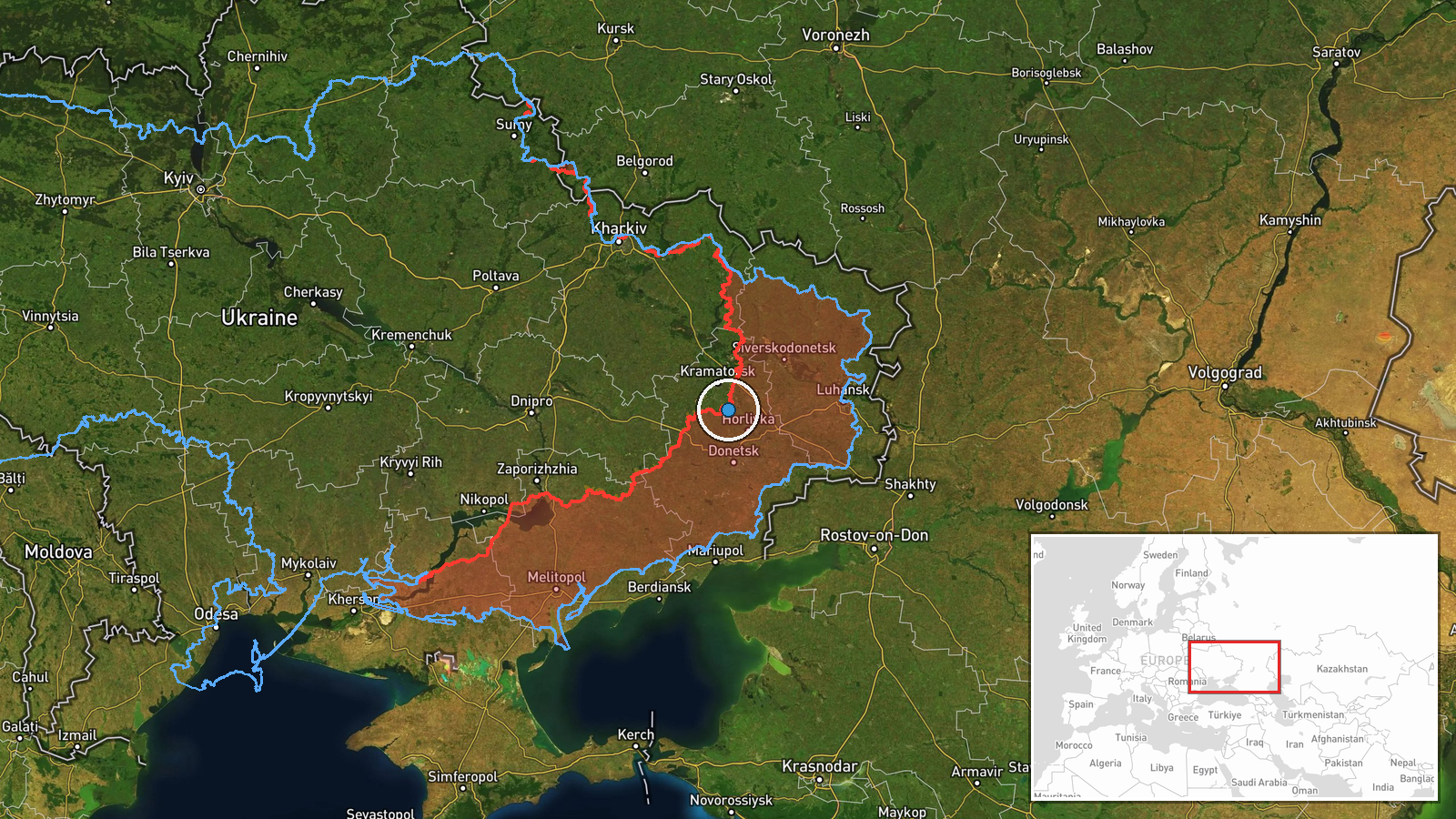
The location is marked as region precision with low location confidence. The coordinates, 48.4972 north and 37.7247 east, reflect an estimated point near Kostiantynivka on the front line, not a surveyed position for any pipe or underground structure. The town lies in northern Donetsk Oblast, an area of rolling steppe, river valleys and reservoirs, with a built-up urban core containing industrial and utility infrastructure. Treat the pin as a general area rather than a precise site.
Related events nearby
- Ukrainian army published footage of a 49-year-old soldier who lost both legs in combat being evacuated by dron2026-10-21 06:10 UTC · Report · Eastern Ukraine front, Donetsk Oblast, Ukraine
- Ukrainian forces repelled six Russian assault attempts in the Sloviansk direction near Ozerne, Kryva Luka, Ori2026-10-20 19:04 UTC · Combat · Ozerne, Donetsk Oblast, Ukraine
- Ukrainian General Staff reports 37 Russian attacks on the Kostiantynivka axis, with offensive pressure toward 2026-10-21 05:05 UTC · Combat · Dobropillia, Donetsk, Ukraine
- Ukraine General Staff 24h tally to 22:00 20.10.2026: 229 clashes, 64 airstrikes, 223 glide bombs, 5,881 kamika2026-10-20 19:02 UTC · Report · Donetsk Oblast, Ukraine
- Ukrainian air monitoring: 1 Russian jet-powered Shahed (Geran-3) drone heading toward Lozova.2026-10-21 04:27 UTC · Drone Transit · Lozova, Ukraine
▶ View this event on the live map

Intel Mapper aggregates open-source reports from monitored Telegram and X channels, geolocates them, cross-checks duplicates across sources and assigns a confidence score. Entries are updated as new confirmations arrive. Read how we verify events.