Lebanon arrests Syrian-Lebanese cell plotting attacks on Syrian coast, coordinator based in Moscow
What happened
Lebanese authorities arrested five members of a network—three Syrians and two Lebanese nationals—reportedly planning attacks against Syrian government forces on the coast. According to a judicial official cited by France Press Agency, the cell's coordinator is a former Assad-era intelligence colonel now residing in Moscow. Security forces seized grenades, sniper rifles, and explosives from the group. Members reportedly received military training from Hezbollah fighters in Lebanon.
Context and assessment
The arrest reflects ongoing instability in the Syria-Lebanon border region and suggests external coordination against Assad's government persists despite regime consolidation. The involvement of a former intelligence officer now in Moscow indicates possible Russian connections to anti-Assad organizing, though his exact role remains unclear. The seizure of military-grade weapons and Hezbollah training points to potential cross-border militant networks. This occurs amid broader regional tensions: an Israeli incursion in southern Syria on September 1, Israeli claims of operations in southern Lebanon, and U.S. warnings about regional escalation, suggesting multiple actors remain active in the area.
Sources and confidence
Single source: Telegram channel @AJSyriaNow reporting France Press Agency attribution to a Lebanese judicial official. No independent cross-confirmation noted. Confidence of 7.5 reflects single-source reporting of a significant security claim but lack of corroboration from Lebanese official statements or international agencies. Confirmation from Lebanese government or second independent source would strengthen confidence; contradictory reports from Syrian or Russian sources would lower it.
Location
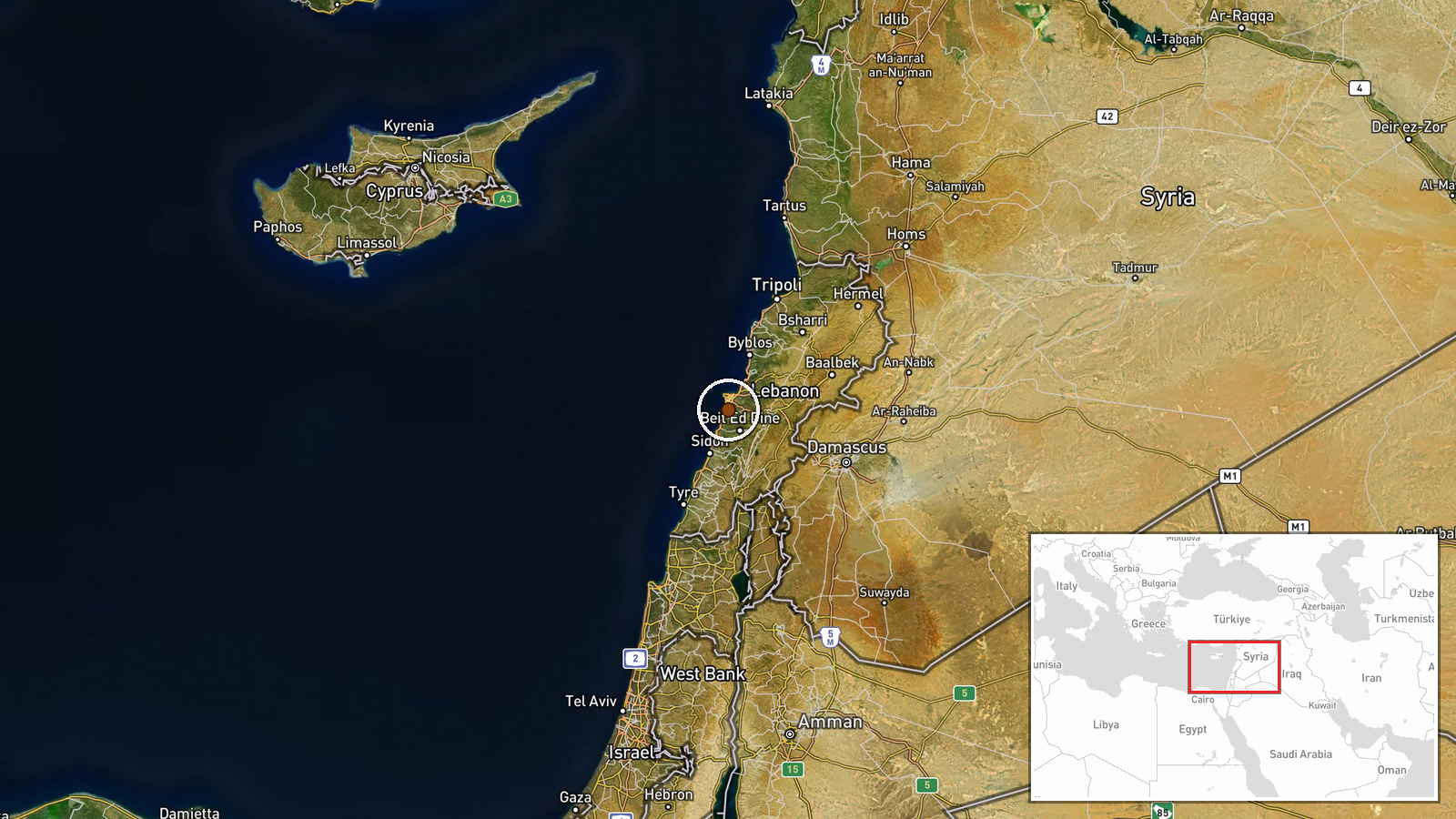
Beirut, Lebanon, determined by settlement-level precision. The capital sits on the Mediterranean coast roughly 80 kilometers north of the Syrian border. The Syrian coastal region targeted by the alleged plot lies south across the border, encompassing government-held areas in Tartus and Latakia governorates critical to regime military operations.
Related events nearby
- U.S. Embassy in Qatar advises American citizens to depart the Middle East region amid escalating regional tens2026-09-01 17:04 UTC · Statement · Doha, Qatar
- Israeli Defense Minister Katz claims Israeli forces destroyed areas in southern Lebanon and ruined dozens of v2026-09-02 08:51 UTC · Statement · Southern Lebanon
- Syrian authorities begin rehabilitation work on Mezzeh Airport next week, transitioning it from military to ci2026-09-02 10:40 UTC · Humanitarian Aid · Mezzeh Airport, Damascus, Syria
- Israeli official reports failed negotiations with Syrian government over security agreement. Syria's interest 2026-09-02 15:47 UTC · Statement · Damascus, Syria
- Syrian authorities announced discovery of 73 tonnes of hidden uranium in Syria, likely from Assad-era nuclear 2026-09-02 13:59 UTC · Security · Damascus, Syria
▶ View this event on the live map
Intel Mapper aggregates open-source reports from monitored Telegram and X channels, geolocates them, cross-checks duplicates across sources and assigns a confidence score. Entries are updated as new confirmations arrive. Read how we verify events.