Syrian Energy Minister says nation needs 24 million cubic meters of gas daily for power generation
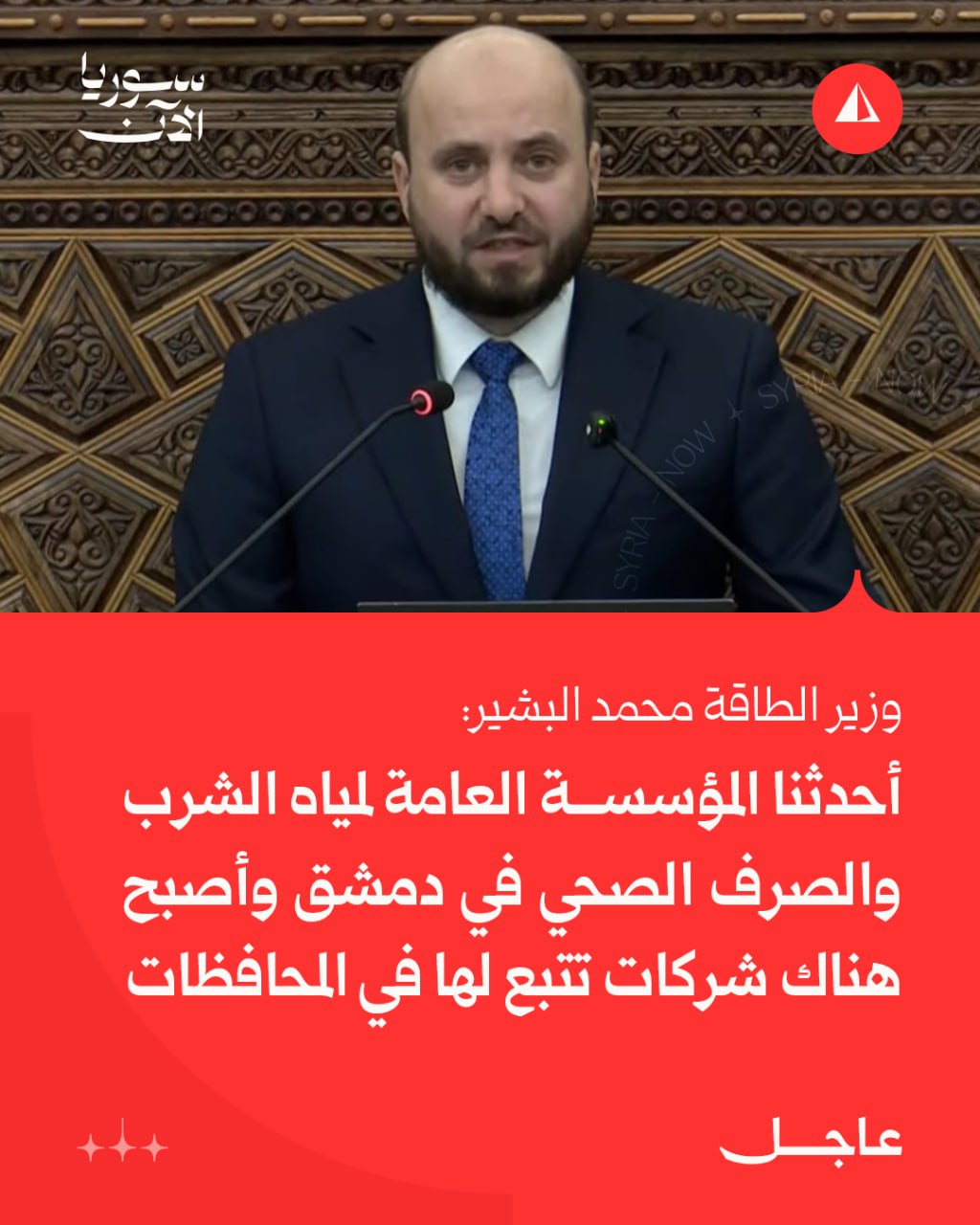
What happened
Syrian Energy Minister Muhammad al-Bashir addressed parliament on September 20 regarding the energy sector's reconstruction needs. According to the minister, Syria requires 24 million cubic meters of gas for power generation and currently operates petroleum refining capacity at approximately 150,000 barrels per day. The government is importing remaining fuel derivatives to meet demand. Al-Bashir also referenced infrastructure improvements to the General Authority for Drinking Water and Sewerage in Damascus, with affiliated companies now operating across provinces.
Context and assessment
Syria's energy sector has faced severe constraints since years of conflict degraded production infrastructure and supply chains. The stated gas requirement of 24 million cubic meters daily indicates substantial ongoing fuel shortages, likely reflecting both reduced domestic production and the need to import derivatives. This parliamentary address signals the Syrian government's focus on reconstruction priorities as it consolidates control. The timing coincides with broader stabilization efforts visible in related reports, including airline corridor operations and administrative functions like traffic enforcement in provincial areas. Energy dependency remains a critical vulnerability for the regime.
Sources and confidence
Reported via Telegram channel @AJSyriaNow. Single-source reporting limits independent verification; the confidence score of 7.5 reflects the official nature of the statement but absence of corroborating sources. Confirmation from independent energy sector analysts, OPEC data, or international observers would strengthen confidence. Detailed breakdown of current refining capacity or import sources would also improve reliability.
Location
Damascus, Syria, the capital and seat of government where parliament convenes. The statement references nationwide infrastructure projects across multiple governorates, indicating Syria-wide policy scope rather than localized activity.
Related events nearby
- Syrian Interior Security Forces arrested retired Brigadier General Ahmad Muhammad Ismail, a former senior comm2026-09-19 19:09 UTC · Security · Damascus, Syria
- Al Jazeera's Open Source Unit reports intensive movement of international airlines over Syria's new shortened 2026-09-19 11:15 UTC · Statement · Damascus, Syria
- IDF reports two soldiers sustained minor injuries from an IED explosion in the southern Lebanese security zone2026-09-19 12:05 UTC · Security · Marjayoun, South Lebanon
- Syrian traffic police in Nabek and Ybroud, Rif Dimashq, deployed drones to monitor and enforce traffic laws ag2026-09-20 07:20 UTC · Security · Nabek and Ybroud, Rif Dimashq Governorate, Syria
- Israeli military patrol of 8 armored vehicles with troops deployed from Tel Ahmar base toward villages of Kudn2026-09-20 10:43 UTC · Deployment · Tel Ahmar, Golan Heights, Syria
▶ View this event on the live map
Intel Mapper aggregates open-source reports from monitored Telegram and X channels, geolocates them, cross-checks duplicates across sources and assigns a confidence score. Entries are updated as new confirmations arrive. Read how we verify events.