Lebanese Army seizes 5 trucks with metals and contraband from Syria
What happened
The Lebanese Army reportedly intercepted a smuggling operation on Wednesday, 8 October, along the Syria-Lebanon border in the Bekaa Valley region. Five pickup trucks crossing from Syrian territory into Lebanon were seized, according to a statement from the Lebanese military. The vehicles were laden with approximately 5 tonnes of copper and tin, along with large quantities of contraband goods, including what the Arabic-language source identifies as tobacco products.
Context and assessment
The Bekaa Valley has long served as a corridor for cross-border trafficking between Syria and Lebanon, particularly since Syrian state capacity weakened over the past decade. This interdiction occurs amid broader regional instability, with recent statements from Damascus indicating Syria's efforts to establish new trade routes and normalize state functions. The seizure reflects ongoing Lebanese security operations to control illicit flows across porous borders, a persistent challenge compounded by the presence of armed groups and limited enforcement capacity in border regions. Such operations typically target both revenue smuggling and material flows that could support non-state actors.
Sources and confidence
Report sourced to Lebanese Army statement via Telegram channel @AJSyriaNow on 8 October. Single source channel limits independent cross-confirmation; confidence score of 7.5 reflects official military attribution but absence of corroborating reports from second source. Score would increase with confirmation from Lebanese media outlets or international observers; would decrease if contradicted by Syrian authorities.
Location
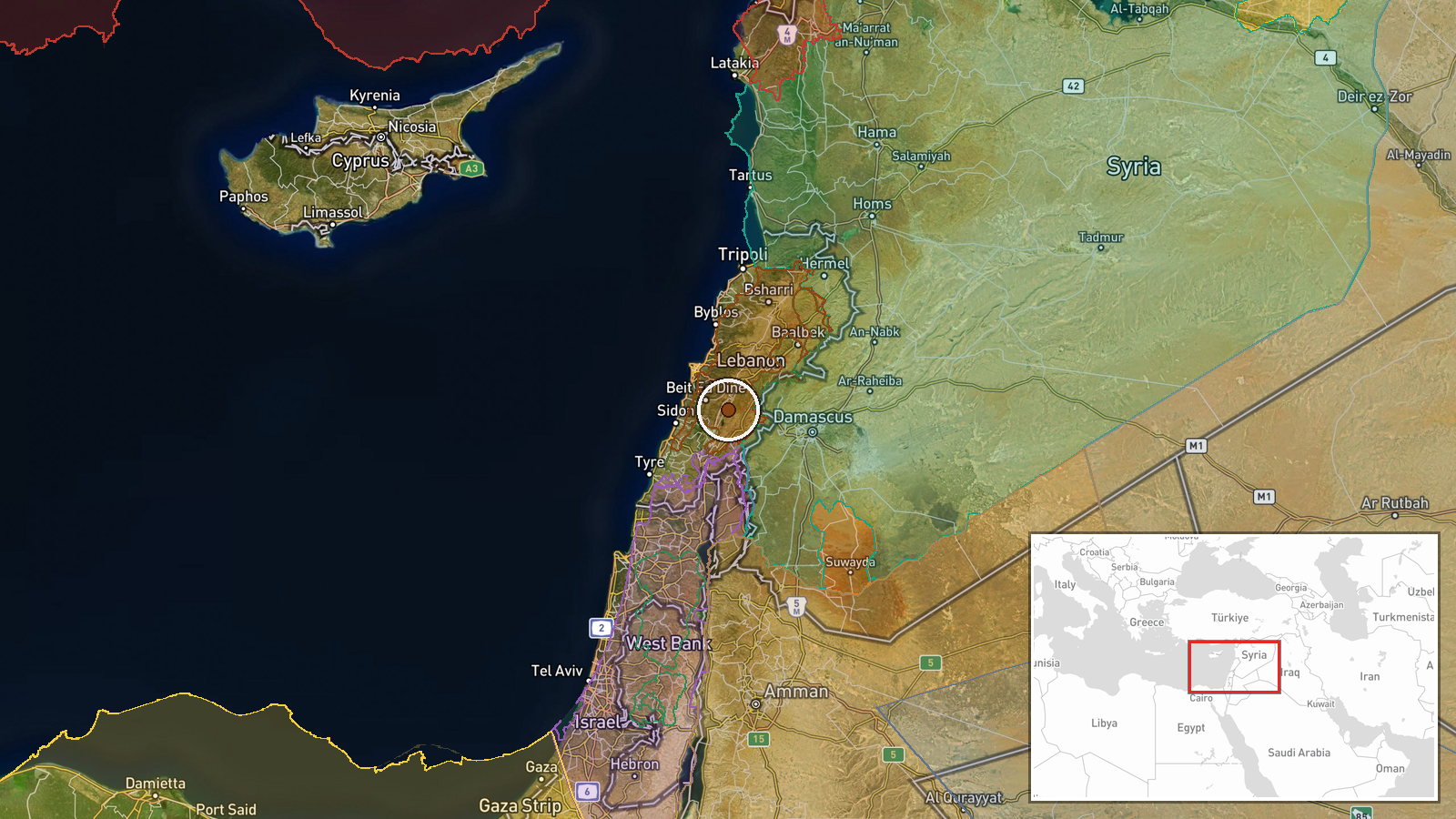
Intercept location determined at region-level precision along the Syria-Lebanon border within the Bekaa Valley, situated at approximately 33.64°N, 35.73°E. The Bekaa is a major north-south valley between the Lebanon and Anti-Lebanon mountain ranges, historically a primary smuggling corridor. Vehicles originated from Syrian territory.
Related events nearby
- BBC/NPR investigation reveals U.S. and Lebanese authorities allegedly protecting Bassam al-Hassan, former Syri2026-10-08 12:10 UTC · Report · Beirut, Lebanon
- Hezbollah announces receipt of $200 million from Iran for Lebanese war displacement relief. Organization plans2026-10-07 14:42 UTC · Statement · Beirut, Lebanon
- Syrian Foreign Ministry condemns recent Houthi attacks on Saudi Arabia's vital infrastructure and civilian fac2026-10-08 05:38 UTC · Statement · Damascus, Syria
- Syria plans to establish new oil export route bypassing Strait of Hormuz. Initiative aims to redirect Iraqi cr2026-10-07 15:27 UTC · Statement · Damascus, Syria
- Syrian government denies reports of military deployment to Yemen to fight Houthis. Presidential media advisor 2026-10-07 21:34 UTC · Statement · Damascus, Syria
▶ View this event on the live map
Intel Mapper aggregates open-source reports from monitored Telegram and X channels, geolocates them, cross-checks duplicates across sources and assigns a confidence score. Entries are updated as new confirmations arrive. Read how we verify events.