HTS Interior Ministry conducts drug enforcement sweep in Al-Raqqa neighborhoods
What happened
HTS's Interior Ministry launched a security operation in Al-Raqqa on the morning of October 8, targeting drug trafficking and narcotics use across three neighborhoods: Harat al-Badou, al-Mushleb, and al-Rumayla. The campaign resulted in the arrest of multiple individuals involved in drug-related activities. The operation was announced by HTS security forces via their official Telegram channel.
Context and assessment
The operation reflects HTS's ongoing consolidation of administrative control and law enforcement authority in northeastern Syria following its territorial gains. Al-Raqqa, a major urban center on the Euphrates, has historically struggled with crime and trafficking networks amid years of conflict and unstable governance. This enforcement action aligns with a broader pattern of security operations by HTS-affiliated forces across recently controlled areas, including concurrent arrests in Deir ez-Zor for theft and sabotage on October 7. Such campaigns typically serve dual purposes: establishing public order and demonstrating state capacity to residents. The timing coincides with significant administrative transitions in the region, as evidenced by symbolic flag changes in Al-Hasakah on the same date.
Sources and confidence
Reported by Telegram channel @AJSyriaNow, representing the HTS Interior Ministry's official communications. Single-source reporting limits independent corroboration. Confidence score of 7.5 reflects official HTS documentation of the operation but lack of independent verification of arrests or operation scope. Cross-confirmation from local observers or humanitarian monitors would strengthen confidence.
Location
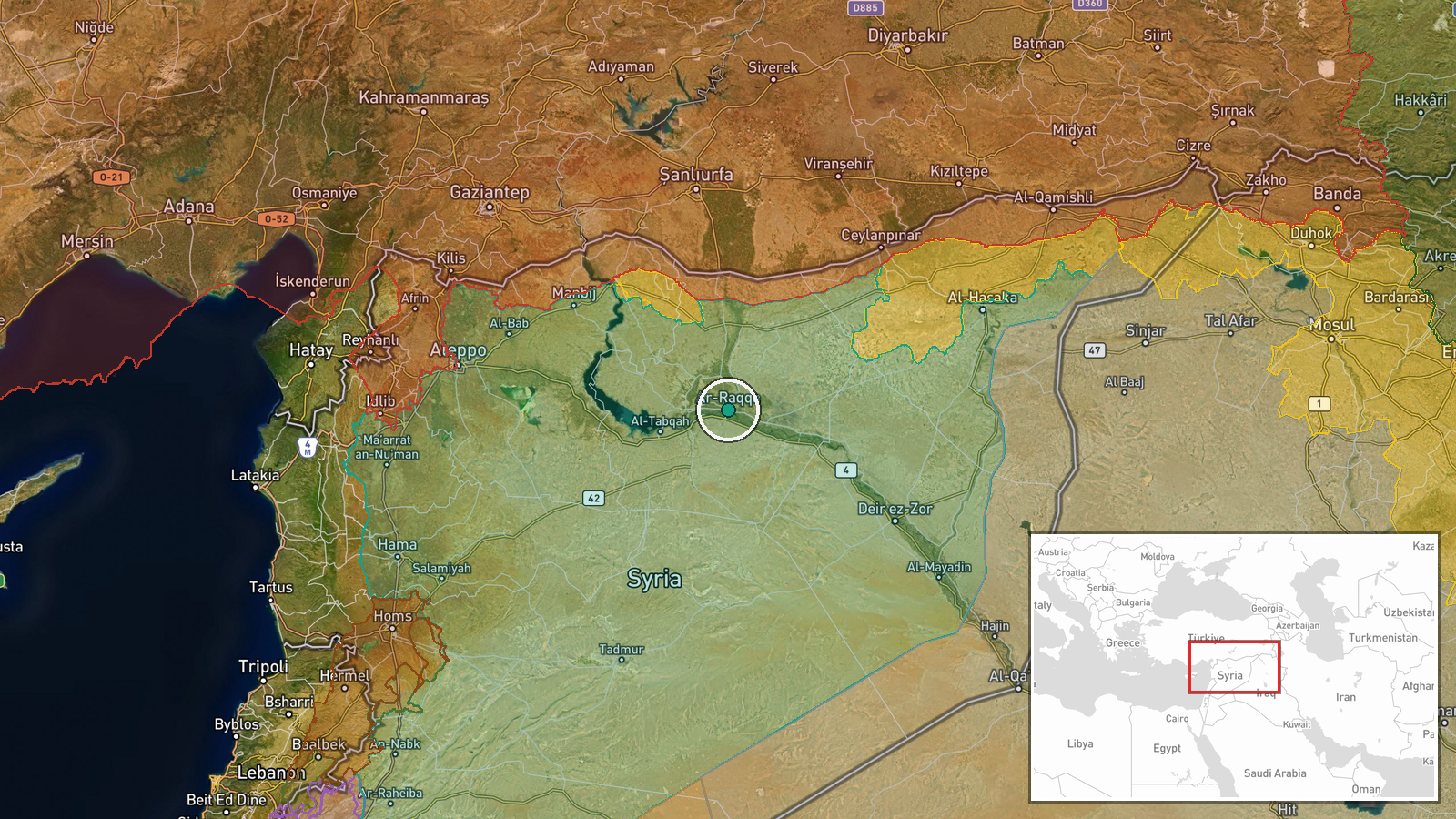
Al-Raqqa city, Al-Raqqa Governorate, northeastern Syria. Three specific neighborhoods targeted: Harat al-Badou, al-Mushleb, and al-Rumayla. Al-Raqqa sits on the Euphrates River approximately 160 kilometers east of Aleppo and serves as a major regional commercial hub with substantial residential quarters.
Related events nearby
- Syrian Interior Security forces arrested three individuals in Deir ez-Zor who were caught red-handed stealing 2026-10-07 18:22 UTC · Security · Deir ez-Zor, Deir ez-Zor Governorate, Syria
- 50 families of internally displaced persons from Ghweiran district departed Ras al-Ayn en route to return to t2026-10-08 10:02 UTC · Displacement · Ras al-Ayn, Al-Hasakah, Syria
- SDF removes PKK/YPG symbols from Al-Hasakah; Syrian flag raised for first time in years, marking symbolic end 2026-10-08 10:36 UTC · Statement · Al-Hasakah, Syria
▶ View this event on the live map

Intel Mapper aggregates open-source reports from monitored Telegram and X channels, geolocates them, cross-checks duplicates across sources and assigns a confidence score. Entries are updated as new confirmations arrive. Read how we verify events.