Iran claims seizure of second U.S. REMUS 600 drone in Strait of Hormuz
What happened
Iran's Islamic Revolutionary Guard Corps Navy reported on 27 September that it had captured a second U.S. REMUS 600 autonomous underwater vehicle in the Strait of Hormuz. According to the IRGC statement, the drone was conducting surveillance when it was seized through a coordinated electronic-warfare operation. The IRGC indicated that specialists were extracting data from the captured system.
Context and assessment
The Strait of Hormuz remains a strategic chokepoint where Iran regularly confronts U.S. military operations in its claimed territorial waters. Underwater surveillance drones are routinely deployed by the U.S. Navy to monitor Iranian naval activity and the shipping lanes that transit the strait. Iran's reported use of electronic warfare to disable and seize such systems—if confirmed—would represent an escalation in its methods for countering foreign reconnaissance and assertion of control over strategic waters. The claim of a second seizure suggests either a pattern of capability or an attempt to reinforce Iran's message regarding its defensive posture in the region.
Sources and confidence
The report originated from Telegram channel @ClashReport and was corroborated by X account @ConflictTR, providing two independent sources. Confidence remains moderate (7/10) as the account comes from an official IRGC statement channeled through secondary sources rather than independent verification. Confirmation of the drone's loss by U.S. military statements or recovered forensic data would substantially raise confidence.
Location
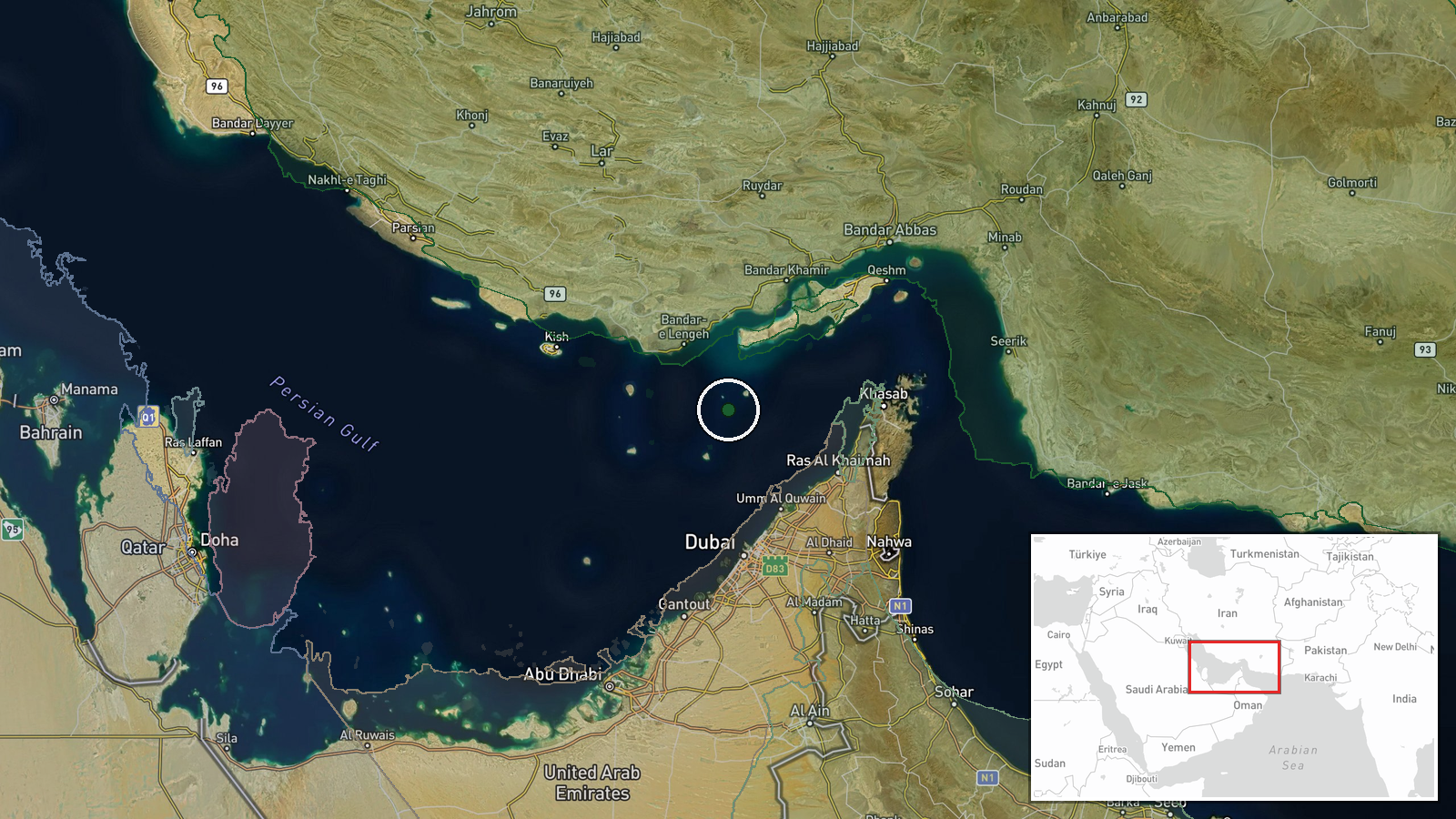
The Strait of Hormuz, a narrow maritime passage between Iran and Oman connecting the Persian Gulf to the Gulf of Oman. The capture occurred in waters Iran claims under its jurisdiction. The strait is approximately 54 kilometers wide at its narrowest point and handles roughly one-third of global seaborne oil trade.
▶ View this event on the live map
Intel Mapper aggregates open-source reports from monitored Telegram and X channels, geolocates them, cross-checks duplicates across sources and assigns a confidence score. Entries are updated as new confirmations arrive. Read how we verify events.