Russian artillery hits nine Sumy Oblast settlements, Ukrainian General Staff says
What happened
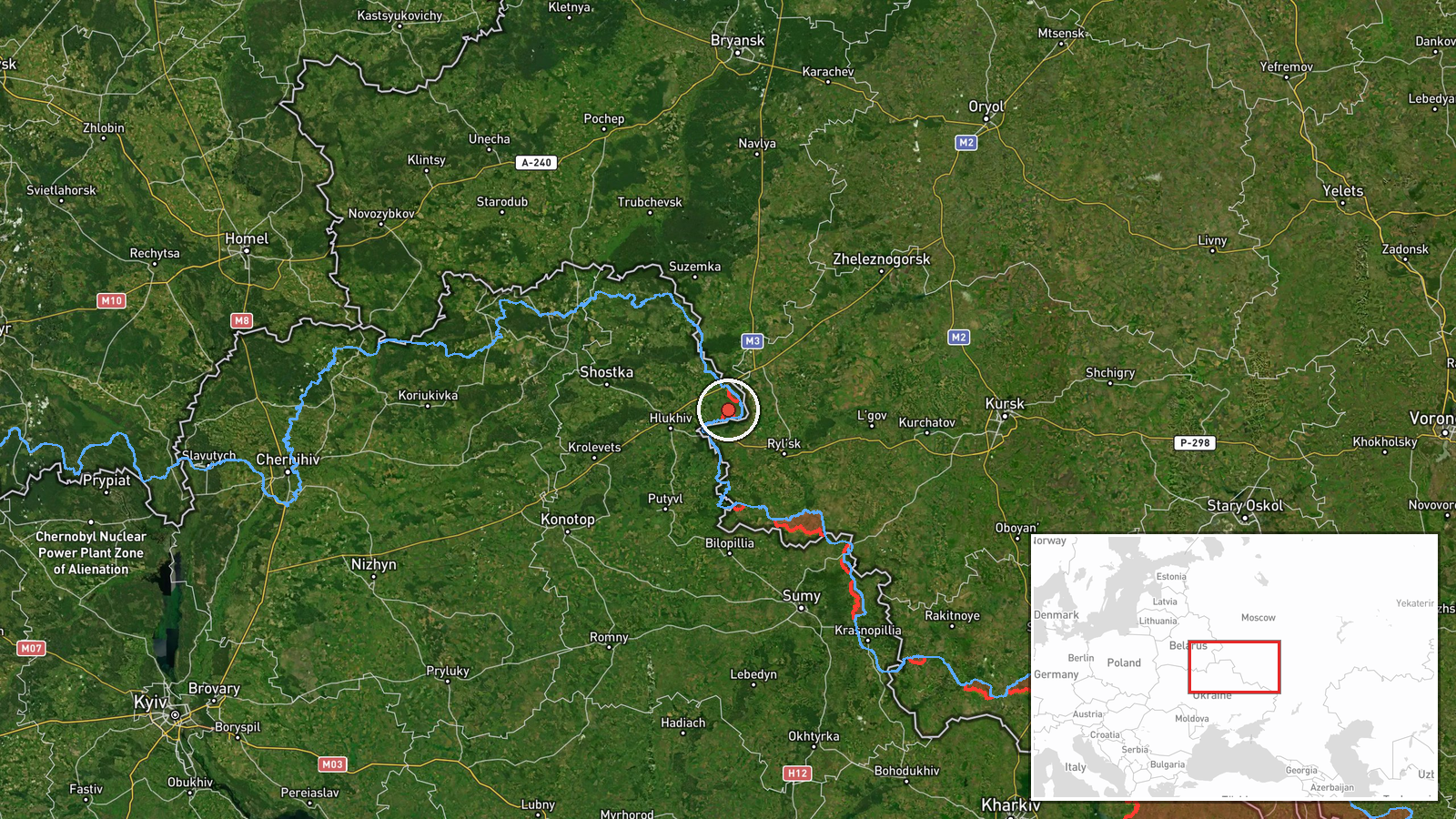
According to an operational update from the Ukrainian General Staff, posted on Telegram as of 08:00 on 17 October 2026, Russian artillery shelled nine settlements in Sumy Oblast in northeastern Ukraine: Ulanove, Fotovyzh, Sadky, Mala Korchakivka, Rudenok, Tovstodubove, Volfyne, Neskuchne and Khrapivshchyna. The same update says the enemy also carried out an aviation strike in the area of Buvaline. The original wording reports the shelling as an attack on settlements without giving casualty figures, damage assessments or details of the munitions used. The event rests on a single channel, and the map pin is placed on Ulanove, which is listed as the primary location.
Context and assessment
Sumy Oblast borders the Russian regions of Bryansk, Kursk and Belgorod, which makes its border villages a recurring target when fighting concentrates on the North Slobozhansky axis. The related events show that pressure there was already active before this update. Earlier on 16 October, the General Staff reported eleven combat clashes on that axis by 22:00, including near Tovstodubove, one of the settlements named in the shelling report. The overlap suggests that the same sector was under sustained contact over a short window rather than a single isolated incident. Drone reports add to the picture: Shahed-type drones were logged heading toward Sumy on the afternoon of 16 October and again in the early hours of 17 October, and another was reported toward Baturyn in between. Taken together, these reports point to repeated activity over the city and the northern border area. Cross-border fighting is also visible on the Russian side, where a Ukrainian strike on an electronic warfare station near Novozybkov in Bryansk Oblast was reported for 15 to 16 October. Operationally, a fire mission spread across nine villages in one update may indicate area or sector fire rather than a single targeted strike, though this cannot be confirmed from the report alone. The aviation strike near Buvaline could reflect the use of guided or glide munitions, which are commonly used against ground targets near the front, but the data does not specify the weapon.
Sources and confidence
The report comes from one source: the Telegram channel of the Ukrainian General Staff (@GeneralStaffZSU), which is listed as the only source with a confidence score of 8.0. The channel is an official military account, which gives it institutional weight, but it is also a party to the conflict, and its reports are not independently verified in this record. No corroboration from the Sumy Oblast administration, local media, other outlets or geolocated imagery appears in the data. The score is high because the report is specific, names settlements and gives a timestamp, and the same channel's other reports in the record are consistent with the wider pattern. It is held below the maximum because the claim is single-sourced and gives no casualty or damage detail. Confidence would rise with confirmation from regional officials, local reports or imagery of damage in the named villages, and would fall if the channel corrected or withdrew the report or if independent sources contradicted it.
Location
The pin is placed on Ulanove in Sumy Oblast at settlement precision, using coordinates of roughly 51.76 N, 34.30 E, and location confidence is recorded as high because the source names the village directly. Buvaline, the site of the aviation strike, is not geolocated in the data and is not pinned separately. Sumy Oblast lies in the northeast of Ukraine, in a largely agricultural landscape of fields, small villages and river valleys, with the Russian border a short distance to the north and east. The listed settlements are dispersed across the oblast's northern districts, so the single pin should be read as representative of a cluster rather than the exact site of each impact.
Related events nearby
- Ukrainian General Staff reports 11 combat clashes on the North Slobozhansky axis by 22:00, including near Tovs2026-10-16 19:01 UTC · Combat · Tovstodubove, Sumy Oblast, Ukraine
- Ukrainian air monitoring: 1 Russian Shahed-type drone heading toward Sumy.2026-10-17 04:26 UTC · Drone Transit · Sumy, Ukraine
- Ukrainian air monitoring: 1 Russian Shahed-type drone heading toward Sumy.2026-10-16 15:08 UTC · Drone Transit · Sumy, Ukraine
- Ukrainian air monitoring: 1 Russian Shahed-type drone heading toward Baturyn.2026-10-17 02:21 UTC · Drone Transit · Baturyn, Ukraine
- Ukrainian Defense Forces struck a Russian electronic warfare station near Novozybkov, Bryansk Oblast, on Octob2026-10-16 14:29 UTC · Combat · Ozarionnyi, Bryansk Oblast, Russia
▶ View this event on the live map

Intel Mapper aggregates open-source reports from monitored Telegram and X channels, geolocates them, cross-checks duplicates across sources and assigns a confidence score. Entries are updated as new confirmations arrive. Read how we verify events.