Ukrainian monitoring tracks Russian Geran-3 drone transiting Belarus near border
What happened
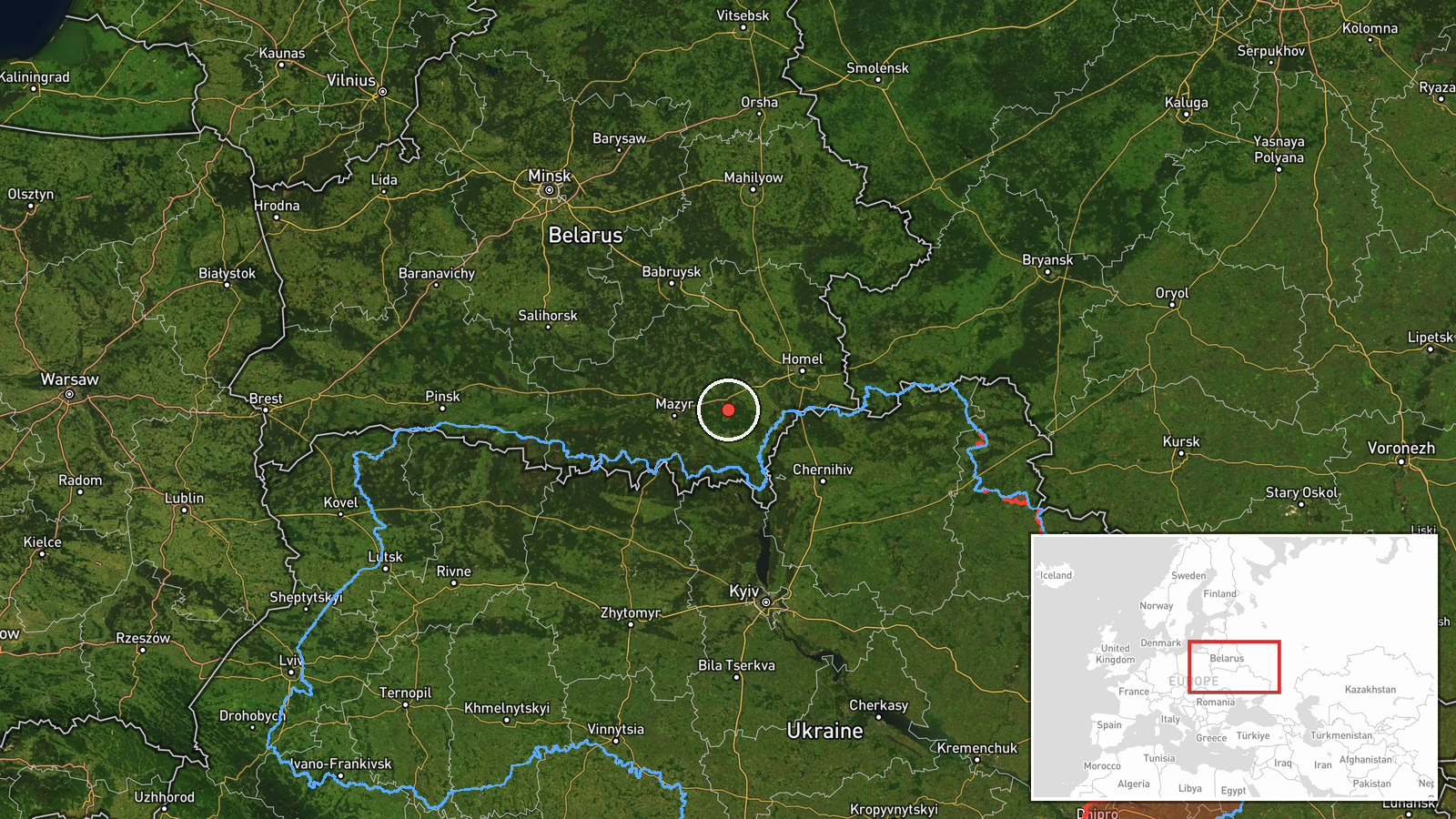
Ukrainian air defence monitoring reported detecting one Russian jet-powered Shahed (Geran-3) drone over Belarus on 13 October at 16:25 UTC, moving along a course running near the Belarus-Ukraine border in the northern Chernihiv region. The report was posted by the Kyiv independent monitoring channel. No attack or interception was reported in the available data.
Context and assessment
This detection is part of an extended pattern of Russian Geran-3 drone activity on 13 October, with Ukrainian monitors tracking multiple such aircraft originating from Belarus and transiting through Ukrainian airspace westward throughout the day. Earlier reports logged the same drone type passing through the Chornobyl Exclusion Zone and Chernihiv Oblast en route to central Ukrainian targets, suggesting a coordinated strike operation. The Geran-3 is a jet-powered variant with greater range and speed than earlier Shahed models, enabling deeper penetration and potentially harder interception. Detection over Belarus indicates either re-entry or continued westward transit outside Ukrainian airspace, which may suggest either operational patterns or monitoring coverage gaps.
Sources and confidence
Single source: Kyiv independent monitoring Telegram channel (@kpszsu). Confidence of 8.0 reflects corroboration by four related drone transit detections by the same monitor on the same day along a coherent flight corridor, lending credibility to the monitoring network. Confidence would be raised by secondary confirmation from NATO or other independent air monitoring; lowered if subsequent reports contradicted the flight path or timing.
Location
Belarus, northern border region near Chernihiv Oblast, Ukraine. Coordinates 52.1°N, 30.0°E place the detection in the region-level precision category, roughly in central-western Belarus. The border proximity and the course description 'along the border' suggest a flight path aligned with the international boundary rather than deep over Belarusian territory.
Related events nearby
- Ukrainian air monitoring reports multiple Russian jet-powered Shahed (Geran-3) drones transiting through Chorn2026-10-13 14:11 UTC · Drone Transit · Chornobyl Exclusion Zone, Kyiv Oblast, Ukraine
- Ukrainian air monitoring: 2+ Russian jet-powered Shahed (Geran-3) drones from Belarus toward Chernihiv Oblast.2026-10-13 15:56 UTC · Drone Transit · Chernihiv Oblast, Ukraine
- Ukrainian air monitoring detected 1 Russian jet-powered Shahed (Geran-3) drone transiting northern Kyiv Oblast2026-10-13 16:55 UTC · Drone Transit · Northern Kyiv Oblast, Ukraine
- Ukrainian air monitoring: 1 Russian jet-powered Shahed (Geran-3) drone passing Chornobyl, heading toward Dymer2026-10-13 13:47 UTC · Drone Transit · Dymer, Ukraine
- Ukrainian air monitoring: 1 Russian jet-powered Shahed (Geran-3) drone from Kyiv Oblast toward Dymer.2026-10-13 13:26 UTC · Drone Transit · Dymer, Ukraine
▶ View this event on the live map

Intel Mapper aggregates open-source reports from monitored Telegram and X channels, geolocates them, cross-checks duplicates across sources and assigns a confidence score. Entries are updated as new confirmations arrive. Read how we verify events.