Russian Geran-3 drone tracked toward Balta in central Ukraine
What happened
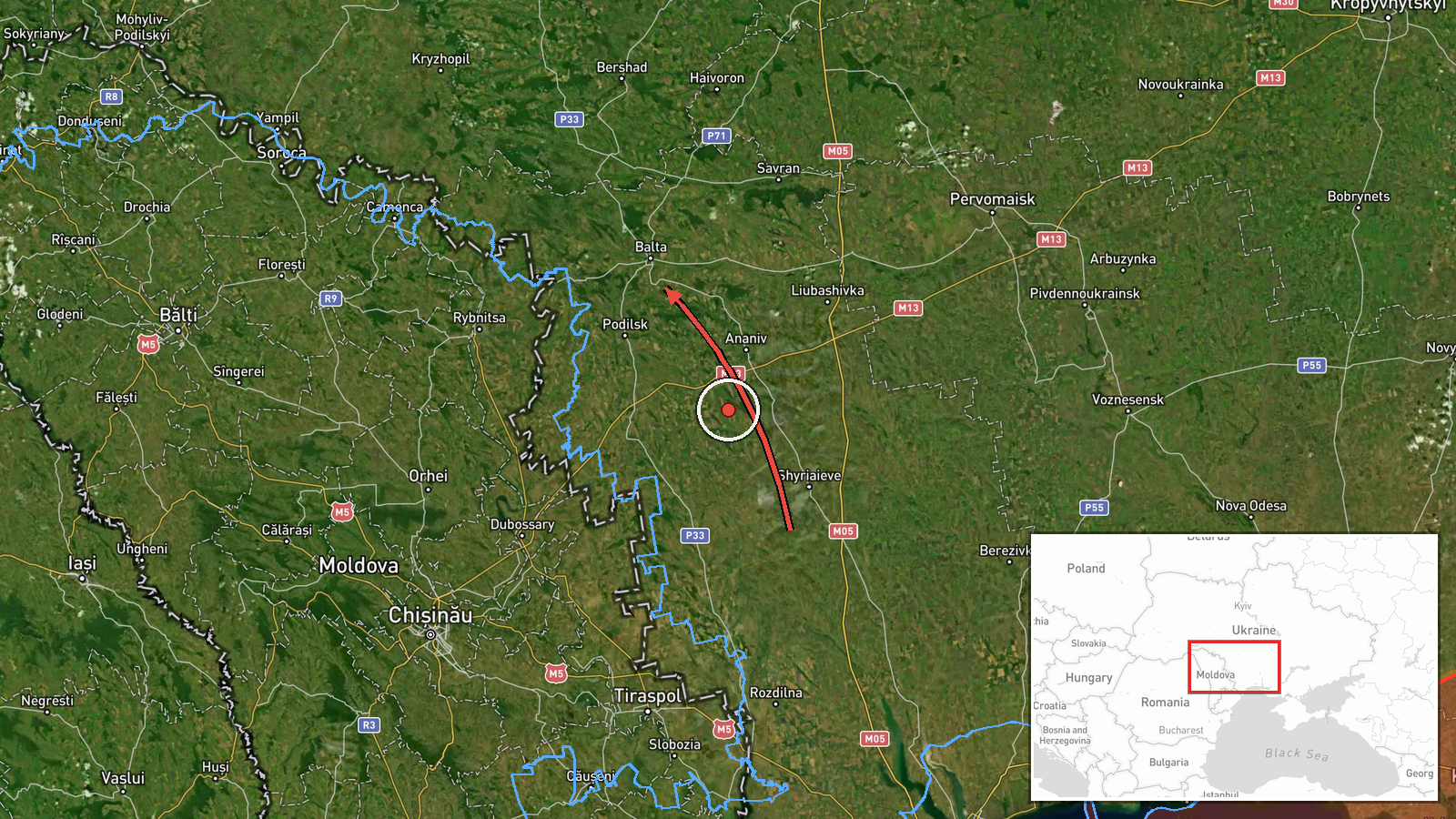
Ukrainian air monitoring detected one Russian jet-powered Shahed (Geran-3) drone transiting from Odesa Oblast on a course toward Balta on October 13 at 17:58 UTC. The drone was identified by its engine signature and trajectory. Balta lies in central Vinnytsia Oblast, approximately 180 kilometers northwest of the Russian-occupied Crimea. The report was posted to the Telegram channel of Ukraine's State Special Communications Service (KPSZSU).
Context and assessment
Balta is a civilian population center in central Ukraine without significant military infrastructure, suggesting the drone may have been bound for targets beyond the town or represented part of a wider strike pattern. On the same day, Ukrainian monitors tracked at least four additional Geran-3 drones from Odesa Oblast toward targets including Chechelnyk, Kryzhopil, and Nemyriv—all settlements in the same region. This repetitive targeting of towns in Vinnytsia and Kirovohrad oblasts may indicate sustained Russian efforts to strike civilian or logistical targets in central Ukraine, or the drones may have been transiting toward objectives further west or north.
Sources and confidence
Single-source reporting from KPSZSU's official Telegram channel, which monitors Russian air activity in real time. Cross-confirmation from the same source for related drone transits the same day increases plausibility but does not independently verify each individual sighting. Confidence of 8.0 reflects the source's institutional credibility and the drone type's established signature; raising confidence would require corroboration from independent tracking or impact reports.
Location
Balta is a town of approximately 7,000 people in Vinnytsia Oblast, central Ukraine, located at 47.94°N, 29.62°E. It sits on the Southern Bug River and lies roughly 180 kilometers northwest of Crimea and 120 kilometers east of the Romanian border. The town has rail connections and serves as a regional transport hub.
Related events nearby
- Ukrainian air monitoring: 1 Russian jet-powered Shahed (Geran-3) drone from Odesa Oblast toward Balta.2026-10-13 18:04 UTC · Drone Transit · Balta, Ukraine
- Ukrainian air monitoring: 1 Russian jet-powered Shahed (Geran-3) drone from Odesa Oblast toward Balta.2026-10-13 13:28 UTC · Drone Transit · Balta, Ukraine
- Ukrainian air monitoring: 1 Russian jet-powered Shahed (Geran-3) drone from Odesa Oblast toward Chechelnyk.2026-10-13 16:59 UTC · Drone Transit · Chechelnyk, Ukraine
- Ukrainian air monitoring: 2+ Russian jet-powered Shahed (Geran-3) drones heading toward Kryzhopil.2026-10-13 18:11 UTC · Drone Transit · Kryzhopil, Ukraine
- Ukrainian air monitoring: 1 Russian jet-powered Shahed (Geran-3) drone heading toward Kryzhopil.2026-10-13 17:01 UTC · Drone Transit · Kryzhopil, Ukraine
▶ View this event on the live map

Intel Mapper aggregates open-source reports from monitored Telegram and X channels, geolocates them, cross-checks duplicates across sources and assigns a confidence score. Entries are updated as new confirmations arrive. Read how we verify events.