Russian ballistic missile reported heading toward Bila Tserkva
What happened
Ukrainian air monitoring reported one Russian ballistic missile in flight toward Bila Tserkva early on October 14 at approximately 02:00 UTC. The alert was issued by the official Kyiv Post Special Forces Unit Telegram channel. No impact assessment or damage report was provided in the initial monitoring data. This represents an escalation in weapon type compared to unmanned systems detected in the same region hours earlier.
Context and assessment
Bila Tserkva, a city of roughly 170,000 in central Kyiv Oblast approximately 80 kilometers south of Kyiv, has been a recurring target for Russian strikes throughout the conflict due to its industrial base and transport infrastructure. The ballistic missile report follows a concentrated wave of Russian drone activity across the broader Kyiv Oblast region on October 13, including multiple Geran-3 (Shahed) drone transits toward Bila Tserkva, Vasylkiv, Obukhiv, and Kaharlyk. The shift toward ballistic missiles may indicate Russian efforts to increase strike penetration or overwhelm air defense systems through mixed-payload attacks. Such patterns typically precede or accompany larger coordinated bombardment campaigns.
Sources and confidence
Report sourced from Telegram channel @kpszsu (Kyiv Post Special Forces Unit), an official Ukrainian military monitoring channel. Single-source reporting with no independent cross-confirmation noted in available data. Confidence score of 8.0 reflects the official Ukrainian source status and real-time nature of air monitoring alerts, though impact confirmation would strengthen assessment. Additional confirmation from air defense engagement or independent monitoring would raise confidence; retraction or conflicting reports would lower it.
Location
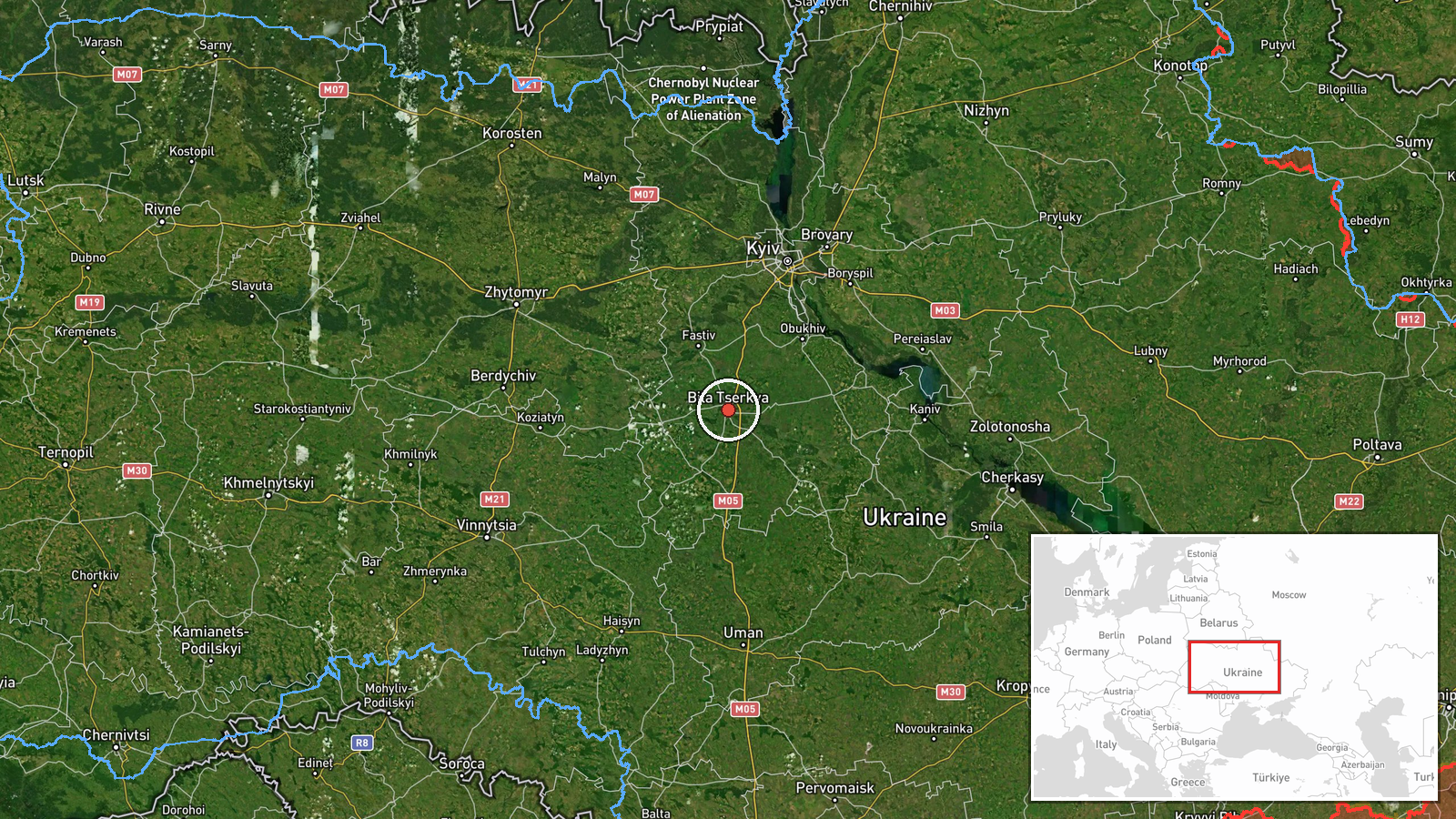
Bila Tserkva is located in central Kyiv Oblast at approximately 49.8°N, 30.1°E, roughly 80 kilometers south of Kyiv city center. The settlement sits on the Ros River and serves as a regional transport hub. Precision is rated as high based on settlement-level targeting data from Ukrainian air monitoring systems.
Related events nearby
- Ukrainian air monitoring: 1 Russian jet-powered Shahed (Geran-3) drone heading toward Bila Tserkva.2026-10-13 13:39 UTC · Drone Transit · Bila Tserkva, Ukraine
- Ukrainian air monitoring: 2+ Russian jet-powered Shahed (Geran-3) drones from Kyiv Oblast toward Vasylkiv.2026-10-13 14:03 UTC · Drone Transit · Vasylkiv, Ukraine
- Ukrainian air monitoring: 1 Russian jet-powered Shahed (Geran-3) drone heading toward Vasylkiv.2026-10-13 13:51 UTC · Drone Transit · Vasylkiv, Ukraine
- Ukrainian air monitoring: 1 Russian jet-powered Shahed (Geran-3) drone heading toward Obukhiv.2026-10-13 13:36 UTC · Drone Transit · Obukhiv, Ukraine
- Ukrainian air monitoring: 1 Russian jet-powered Shahed (Geran-3) drone from Kyiv Oblast toward Kaharlyk.2026-10-14 01:09 UTC · Drone Transit · Kaharlyk, Ukraine
▶ View this event on the live map

Intel Mapper aggregates open-source reports from monitored Telegram and X channels, geolocates them, cross-checks duplicates across sources and assigns a confidence score. Entries are updated as new confirmations arrive. Read how we verify events.