Russian Shahed drone tracked toward Rivne in northwestern Ukraine
What happened
Ukrainian air monitoring reported a single Russian jet-powered Shahed (Geran-3) drone heading toward Rivne on October 15 at 01:52 UTC. The report originated from the official Kyiv Post Strategic Communications account (@kpszsu) on Telegram. Related monitoring indicated the drone subsequently passed through Rivne Oblast heading southwest, with the track also noting transit toward Kivertsi in the same timeframe.
Context and assessment
Rivne, in northwestern Ukraine near the Polish border, has been a recurring target in Russian drone operations. The Shahed-136/Geran-3 is a loitering munition typically employed against infrastructure, military facilities, or populated areas at operational depth. Repeated drone detections in the Rivne region on October 14–15 suggest sustained Russian targeting effort in this sector. A Russian missile strike on Lutsk, the regional capital 80 kilometers east, killed six civilians on October 14, indicating a broader campaign affecting Volyn Oblast and adjacent areas. The consistent appearance of Shahed transits in this corridor may reflect Russian efforts to degrade regional military or civilian infrastructure.
Sources and confidence
Single source: official Ukrainian Air Force monitoring channel (@kpszsu) via Telegram. No independent cross-confirmation reported. Confidence score of 8.0 reflects the official Ukrainian source and geographic precision, but single-source reporting and lack of visual confirmation limit certainty. Confirmation of impact or interception would raise confidence; contradictory NATO or independent tracking would lower it.
Location
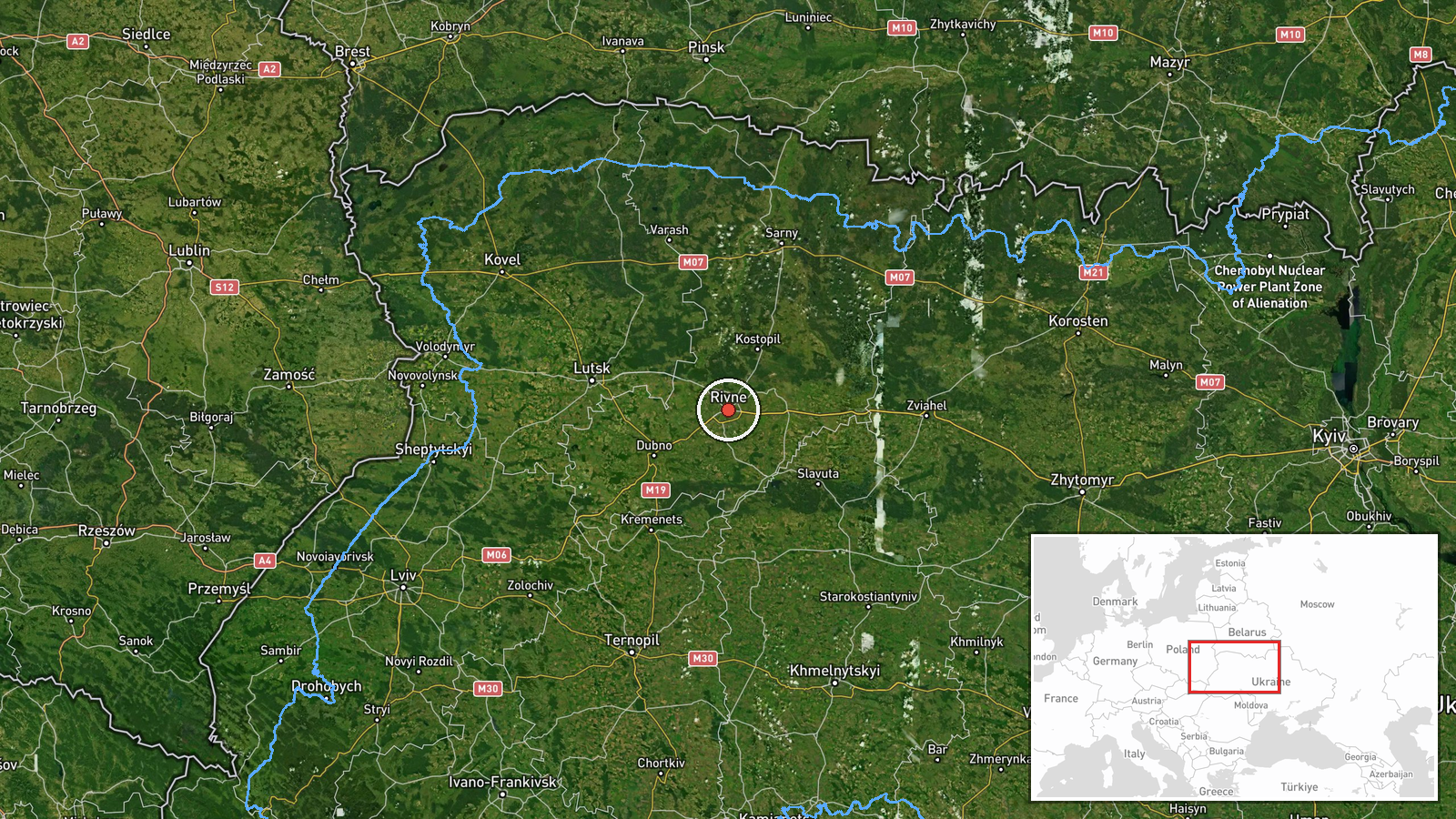
Rivne city, Rivne Oblast, northwestern Ukraine (50.62°N, 26.25°E), approximately 370 kilometers west-northwest of Kyiv and 80 kilometers west of Lutsk. The city sits in relatively flat terrain near the Polish frontier, making it strategically significant as both a logistical hub and potential staging area for westward-directed military operations.
Related events nearby
- Ukrainian air monitoring: 1 Russian jet-powered Shahed (Geran-3) drone heading toward Rivne.2026-10-15 02:29 UTC · Drone Transit · Rivne, Ukraine
- Ukrainian air monitoring: 1 Russian jet-powered Shahed (Geran-3) drone passing Rivne Oblast, heading southwest2026-10-15 01:54 UTC · Drone Transit · Rivne Oblast, Ukraine
- Ukrainian air monitoring: 1 Russian jet-powered Shahed (Geran-3) drone heading toward Rivne.2026-10-14 03:44 UTC · Drone Transit · Rivne, Ukraine
- Ukrainian air monitoring: 1 Russian jet-powered Shahed (Geran-3) drone heading toward Kostopil.2026-10-14 03:08 UTC · Drone Transit · Kostopil, Ukraine
- Ukrainian air monitoring: 1 Russian jet-powered Shahed (Geran-3) drone passing Pivnichnyi, heading toward Kive2026-10-15 01:55 UTC · Drone Transit · Kivertsi, Ukraine
▶ View this event on the live map

Intel Mapper aggregates open-source reports from monitored Telegram and X channels, geolocates them, cross-checks duplicates across sources and assigns a confidence score. Entries are updated as new confirmations arrive. Read how we verify events.