Russian Geran-3 drone tracked toward Rivne in northwestern Ukraine
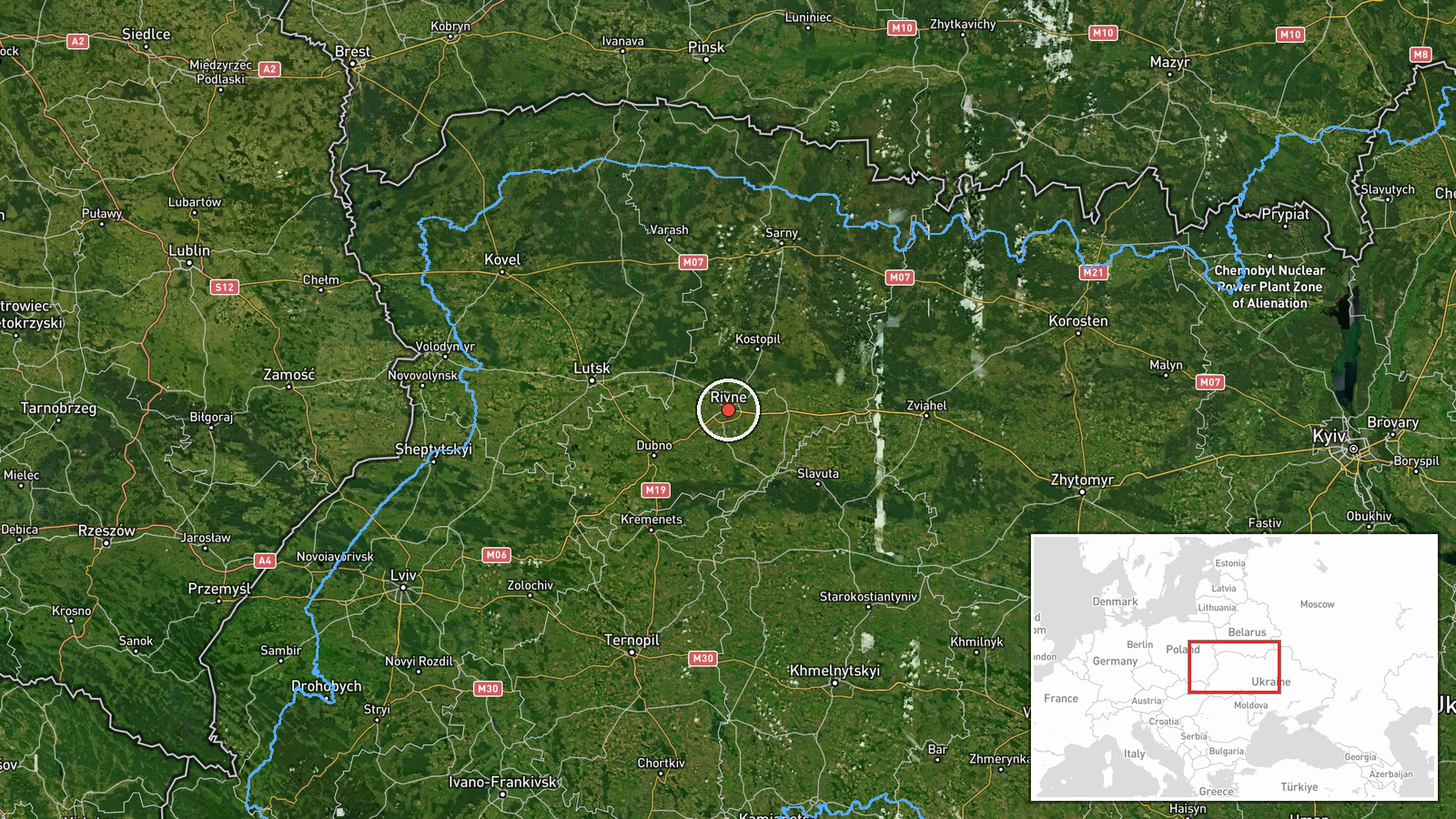
What happened
Ukrainian air monitoring detected one Russian jet-powered Shahed drone (designated Geran-3) transiting toward Rivne in northwestern Ukraine on October 15 at 02:29 UTC. The alert was published by the official Telegram channel of the Ukrainian State Emergency Service. This represents a single-source report of drone movement rather than a confirmed strike or interception.
Context and assessment
Rivne, located in northwestern Ukraine roughly 350 kilometers from Russian territory, has been subject to repeated Russian drone reconnaissance and attack operations throughout the ongoing conflict. The related events show at least three separate Geran-3 sightings in the Rivne area within a 25-hour window, along with activity near nearby Kivertsi and Kostopil. The Geran-3, a jet-powered variant of the Shahed family, carries greater range and speed than earlier models, enabling strikes deep into Ukrainian territory. The frequency of such transits over Rivne suggests either sustained targeting of installations in the region or use of established flight corridors toward western objectives.
Sources and confidence
Single source: Telegram channel @kpszsu (Ukrainian State Emergency Service). Confidence score of 8.0 reflects official Ukrainian air monitoring channels but absence of independent corroboration. Cross-confirmation from related transit reports in the same region on the same date provides supporting context. Confirmation of strike result or air defense response would raise confidence; contradictory reports from other monitors would lower it.
Location
Rivne, a city of roughly 245,000 in northwestern Ukraine (50.62°N, 26.25°E), lies in Rivne Oblast approximately 320 kilometers west-southwest of Moscow and near Ukraine's border with Belarus and Poland. The settlement precision is based on Ukrainian air monitoring coordinates. The region's distance from front lines makes it a target primarily for long-range drone and missile operations.
Related events nearby
- Ukrainian air monitoring: 1 Russian jet-powered Shahed (Geran-3) drone passing Rivne Oblast, heading southwest2026-10-15 01:54 UTC · Drone Transit · Rivne Oblast, Ukraine
- Ukrainian air monitoring: 1 Russian jet-powered Shahed (Geran-3) drone heading toward Rivne.2026-10-15 01:52 UTC · Drone Transit · Rivne, Ukraine
- Ukrainian air monitoring: 1 Russian jet-powered Shahed (Geran-3) drone heading toward Rivne.2026-10-14 03:44 UTC · Drone Transit · Rivne, Ukraine
- Ukrainian air monitoring: 1 Russian jet-powered Shahed (Geran-3) drone passing Pivnichnyi, heading toward Kive2026-10-15 01:55 UTC · Drone Transit · Kivertsi, Ukraine
- Russian missile strike on civilian objects in Lutsk killed 6 people and injured 12 (including a child). Emerge2026-10-14 14:17 UTC · Ballistic Missile · Lutsk, Volyn Oblast, Ukraine
▶ View this event on the live map

Intel Mapper aggregates open-source reports from monitored Telegram and X channels, geolocates them, cross-checks duplicates across sources and assigns a confidence score. Entries are updated as new confirmations arrive. Read how we verify events.