Russian Geran-3 drone detected heading toward Okhtyrka in Sumy Oblast
What happened
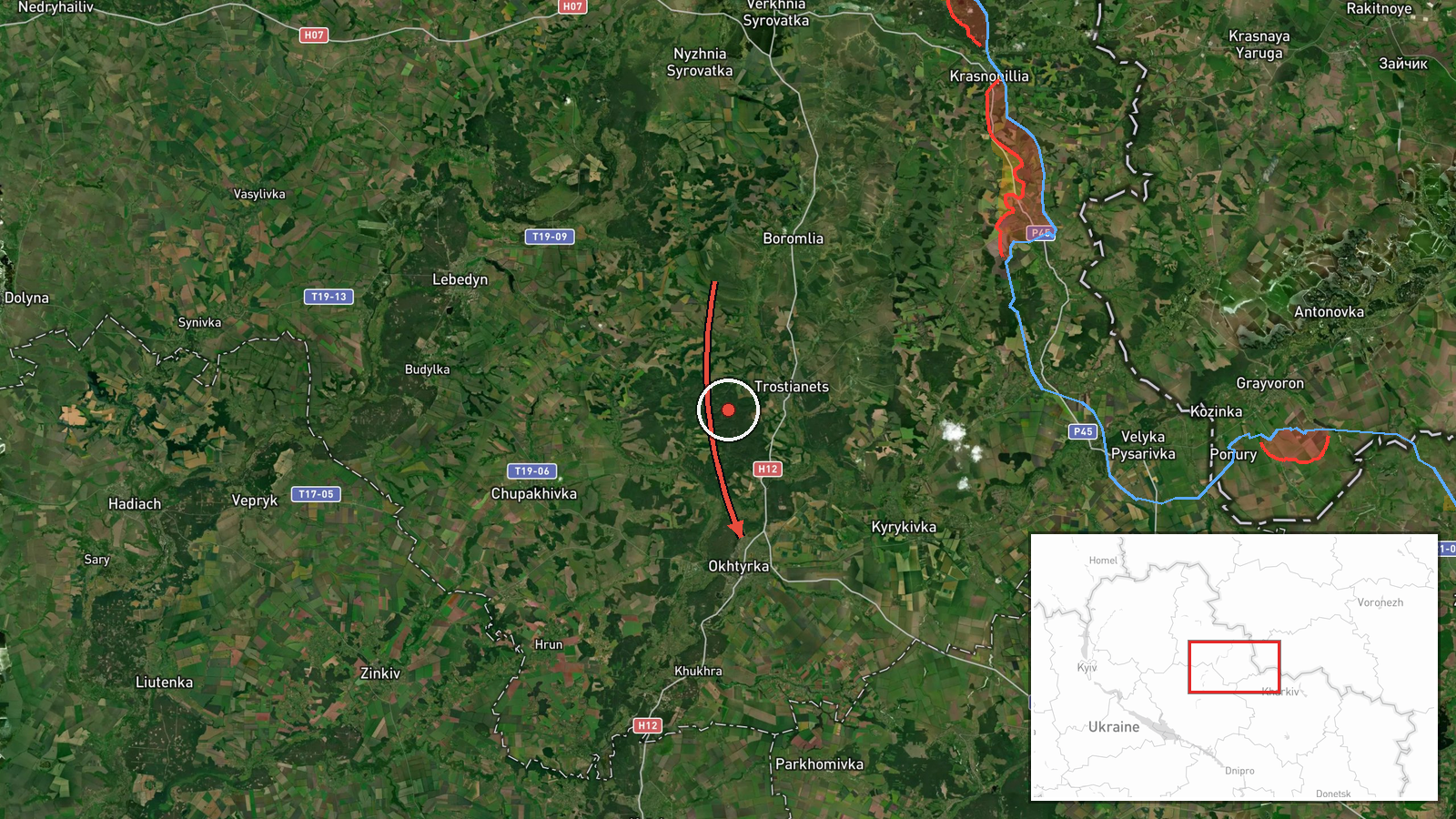
Ukrainian air monitoring reported one Russian jet-powered Shahed (Geran-3) drone transiting from the south toward Okhtyrka in Sumy Oblast on the morning of 15 October at 01:53 UTC. The report was posted by the Telegram channel of the Command of Air Forces of Ukraine's Air Defence. No outcome or impact is stated in the initial report, which documents the drone's observed trajectory rather than the result of engagement or strike.
Context and assessment
Okhtyrka, a city of approximately 45,000 in central Sumy Oblast, has been subject to repeated Russian air and missile activity throughout the conflict as a logistics hub and garrison town. This single drone report coincides with a broader Russian air operation on 14–15 October involving at least 12 Shahed-type drones passing through the Kharkiv and Poltava regions toward multiple northeastern Ukrainian targets including Kolomak, Hadyach, and Kharkiv city. The timing and clustering of drone transits, combined with a ballistic missile strike on Kharkiv on 14 October, suggests a coordinated multi-domain strike campaign targeting civilian and military infrastructure across the region.
Sources and confidence
Report originated from the official Telegram channel of Ukraine's Command of Air Forces (@kpszsu), which publishes real-time air monitoring alerts. Confidence score of 8.0 reflects a single authoritative Ukrainian source with no cross-confirmation from independent channels. Confirmation would come from Ukrainian air defence response reports or damage assessments; any divergence between reported track and actual impact would lower confidence.
Location
Okhtyrka is a city in central Sumy Oblast in northeastern Ukraine, located approximately 100 km north-northwest of Kharkiv. The settlement straddles the Sula River and sits at the junction of regional supply routes. Sumy Oblast borders Russia to the east and north, making the region a frequent transit corridor for Russian aviation.
Related events nearby
- Ukrainian air monitoring: 12 Russian Shahed-type drones passing Bohodukhiv, heading toward Kolomak.2026-10-14 13:02 UTC · Drone Transit · Kolomak, Ukraine
- Ukrainian air monitoring: 1 Russian jet-powered Shahed (Geran-3) drone from Poltava Oblast toward Hadyach.2026-10-15 01:54 UTC · Drone Transit · Hadyach, Ukraine
- Ukrainian air monitoring: 1 Russian Shahed-type drone heading toward Kharkiv.2026-10-15 01:55 UTC · Drone Transit · Kharkiv, Ukraine
- Russian missile strike on a residential building in Kharkiv. A civilian filmed the moment of impact inside the2026-10-14 19:01 UTC · Ballistic Missile · Kharkiv, Kharkiv Oblast, Ukraine
▶ View this event on the live map

Intel Mapper aggregates open-source reports from monitored Telegram and X channels, geolocates them, cross-checks duplicates across sources and assigns a confidence score. Entries are updated as new confirmations arrive. Read how we verify events.